
Chick fil a mac and cheese recipe brings together tender elbow macaroni, a rich three-cheese sauce, and a lightly browned cheddar topping. This homemade version uses American cheese, extra sharp cheddar, and an Italian cheese blend to create a creamy interior beneath a bubbly surface. A short finish under the broiler gives the dish its characteristic golden appearance without requiring a lengthy baking period.
Success depends on a few important details: cooking the macaroni to the intended tenderness, building a smooth milk-based sauce, tempering the egg yolk, and melting the cheese over gentle heat. Each decision influences whether the finished macaroni stays creamy or becomes thick, grainy, or overly browned.
What Defines This Chick Fil A Mac and Cheese Recipe
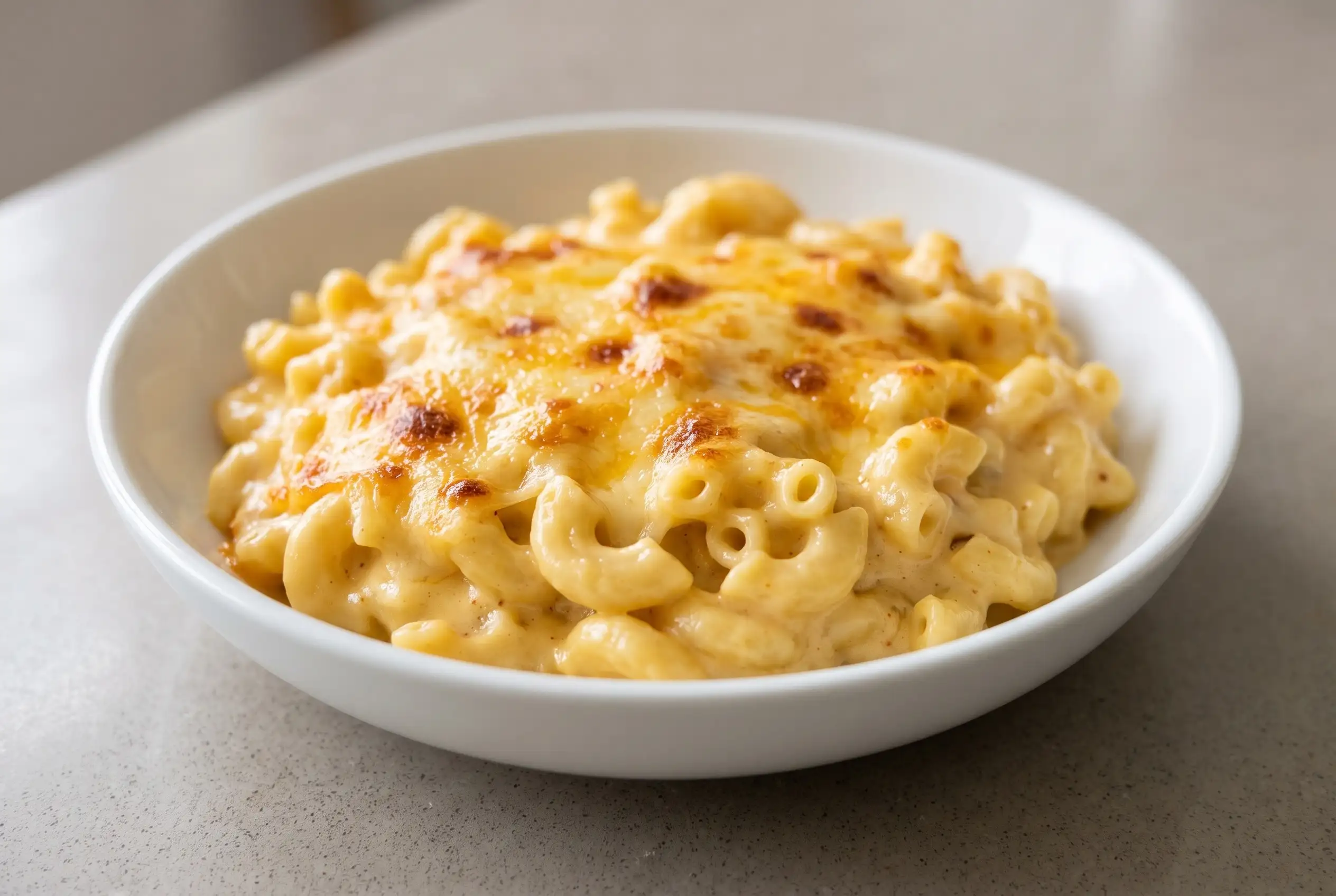
The defining feature of this copycat Chick fil a mac and cheese is the contrast between its soft, creamy macaroni and its browned cheddar surface. Unlike a macaroni casserole that spends an extended period in the oven, the assembled dish goes directly under the broiler for its finishing color.
Its sauce begins with butter, flour, and whole milk, creating a thickened base capable of coating the pasta. An egg yolk is incorporated before the cheese, while paprika provides a small amount of seasoning alongside salt.
American cheese helps form a smooth sauce, extra sharp cheddar supplies a pronounced cheese flavor, and the Italian blend completes the mixture. Keeping part of the cheddar aside for the topping ensures that the browned surface remains distinct from the creamy interior.
The Three-Cheese Blend Behind the Creamy Texture
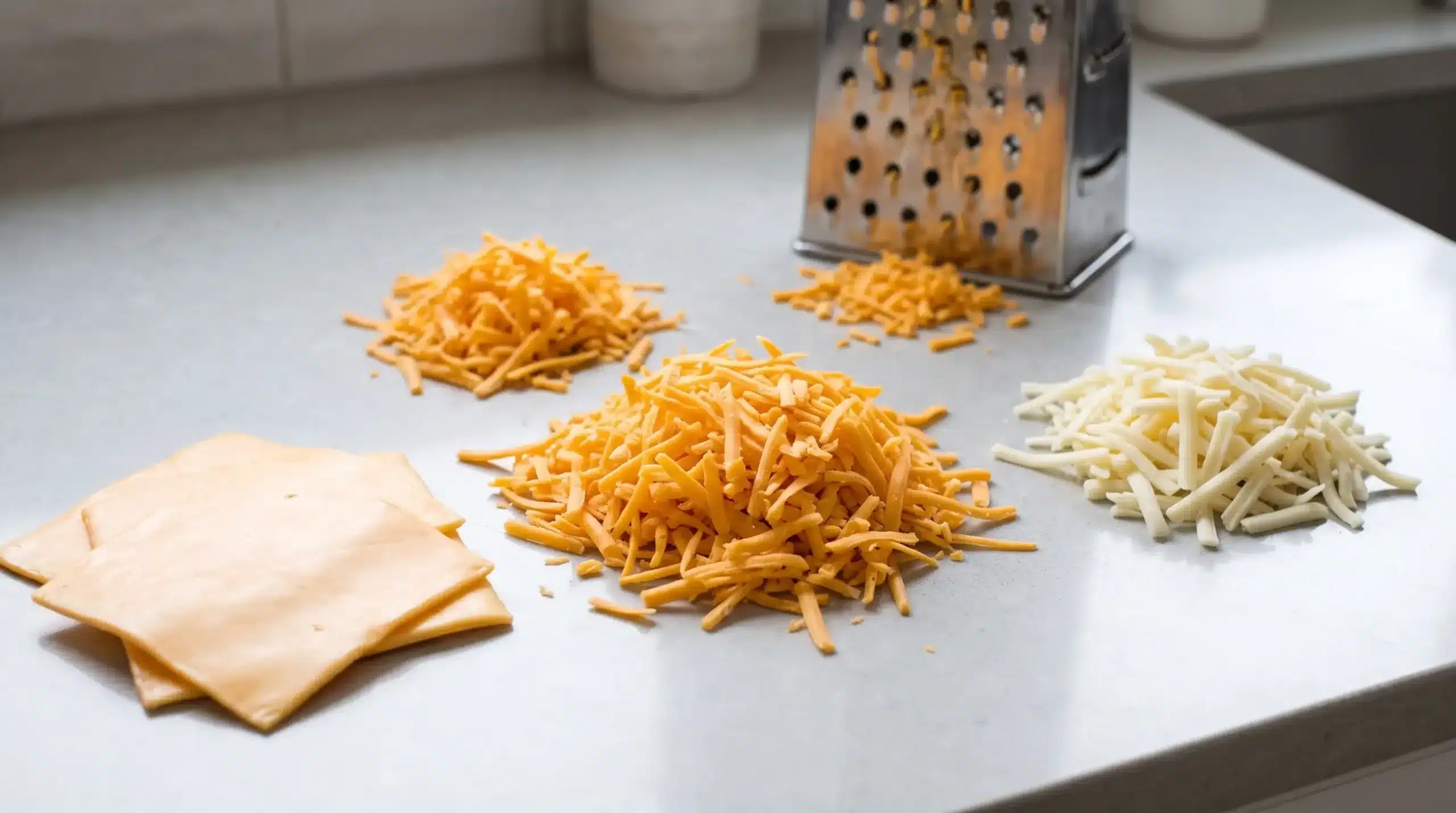
Cheese selection matters because the mixture must melt evenly and remain smooth enough to cover the elbow macaroni. The recipe combines sliced American cheese with freshly grated extra sharp cheddar and shredded Italian blend cheese. These cheeses are introduced after the milk mixture has thickened and the heat has been reduced.
Freshly grated cheddar is especially useful here. Grating it before cooking makes it easier to incorporate gradually and avoids the anti-caking ingredients sometimes found in packaged shredded cheese. Those additives can affect how smoothly cheese melts into a sauce.
The cheddar has two separate jobs. One portion melts into the sauce, while the remaining portion covers the assembled pasta. Keeping these portions separate preserves enough cheese for a substantial topping without weakening the sauce underneath.
Why Elbow Macaroni Needs Its Intended Tenderness
Elbow macaroni is the specified pasta shape because its curved form holds the thick cheese sauce throughout the dish. The supplied directions call for boiling it in salted water for 20 minutes to achieve the intended soft texture. Because pasta brands and cooking characteristics vary, check the macaroni during cooking and use the specified tenderness as the practical guide. Drain it thoroughly before combining it with the sauce.
Building a Smooth Milk and Butter Base
Before any cheese enters the pot, butter and flour are whisked together over medium heat to create a roux. Whole milk then becomes the liquid foundation of the sauce. Adding the milk gradually makes it easier to work the flour mixture into a uniform consistency.
Constant whisking matters most during the early additions of milk, when the sauce is still thick. Once the mixture becomes fluid, the remaining milk can be incorporated more easily. Continue whisking until the sauce visibly thickens and no obvious flour lumps remain.
The paprika and salt are included in the roux stage, allowing them to disperse throughout the finished sauce. Avoid aggressive boiling once the milk has been incorporated, since excessive heat can make the mixture harder to control before the cheeses are added.
The Egg Yolk Technique That Protects Sauce Consistency
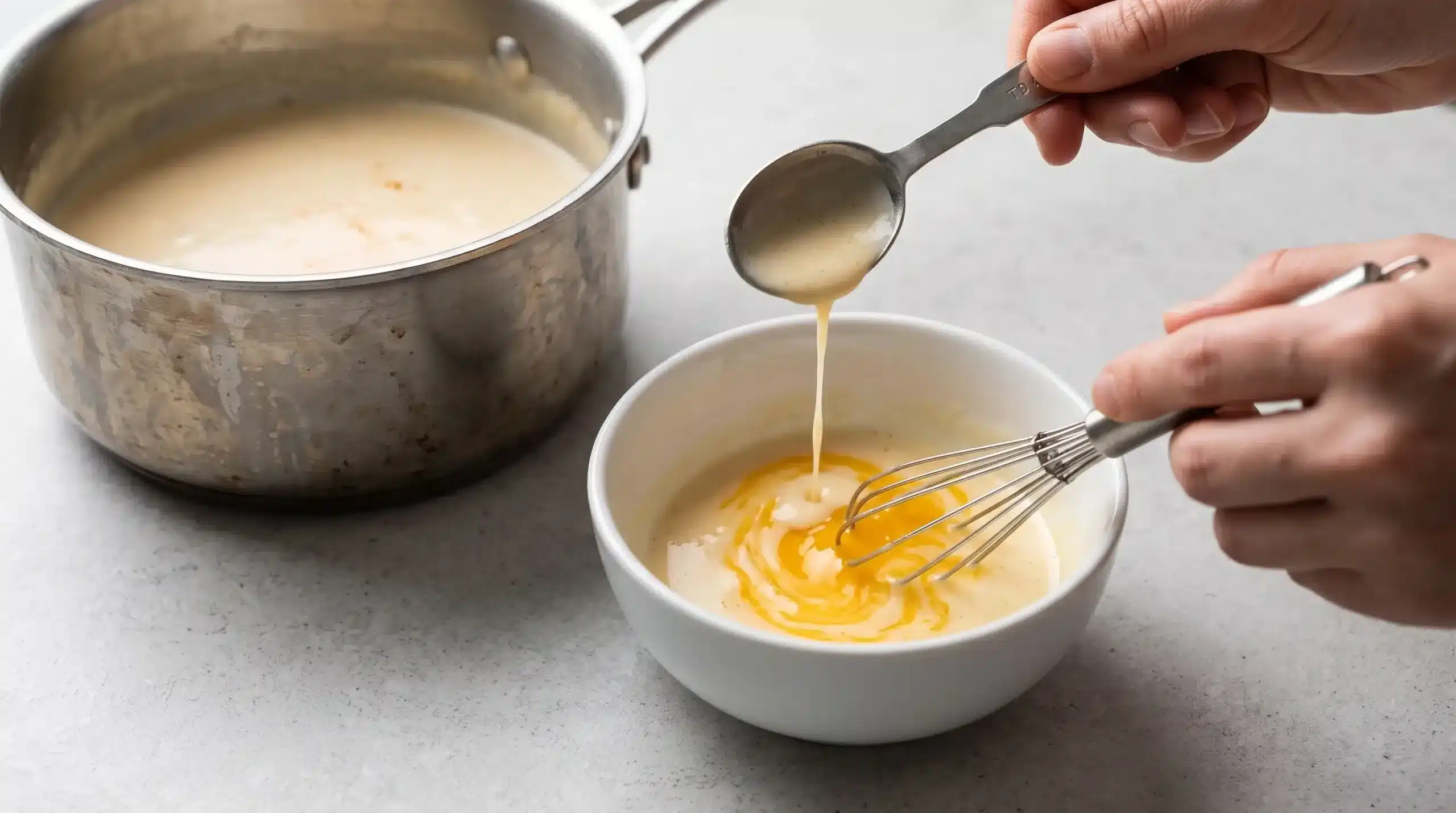
An egg yolk enters the sauce after the milk mixture has thickened, but adding it directly to very hot liquid risks cooking it unevenly. Tempering addresses that problem by first whisking a spoonful of the warm sauce into the yolk in a separate small bowl.
Once the yolk mixture is warmed and loosened, it can be whisked back into the main pot. Continuous mixing distributes it without leaving visible pieces of cooked egg. Keep the sauce gently heated and avoid bringing it to a vigorous boil afterward.
For the chick fil a mac and cheese recipe, this small step deserves attention because the finished sauce should remain uniformly creamy. A few extra moments spent tempering the yolk are more useful than trying to correct a sauce containing set egg afterward.
Controlling Heat While the Cheese Melts
Low heat is the central cooking control once the American cheese, cheddar, and Italian cheese blend enter the sauce. The cheeses should melt with steady stirring, allowing the mixture to become smooth without bubbling aggressively.
High heat can cause a cheese sauce to lose its uniform texture as fat separates from the cheese proteins, leaving an oily rather than creamy mixture. If the sauce begins bubbling strongly, reduce the heat or briefly move the pot away from the burner. Add the torn American cheese and grated cheeses with enough stirring time for them to incorporate completely.
When the mixture becomes smooth, the macaroni can be folded in gently. Vigorous stirring is unnecessary and may break already-soft pasta. The sauce should cling to the elbows while still moving readily when stirred.
How the Sauce and Pasta Should Look Before Broiling
Coated macaroni should appear consistently creamy before it reaches the baking dish. Look for cheese sauce between the elbows as well as on their surfaces, with no large dry patches or obvious pools of separated liquid. For pasta dishes such as broccoli mac and cheese, distributing the sauce throughout the macaroni before serving is particularly important when additional ingredients need an even coating. A smooth coating at this stage is important because the broiler primarily finishes the topping; it is not intended to correct an improperly mixed sauce.
The 9×13-Inch Dish and Its Cheddar Topping
A 9×13-inch baking dish provides space for spreading the macaroni into a relatively even layer. Transfer the coated pasta without pressing it down tightly, then distribute the reserved extra sharp cheddar over the surface.
An even topping allows the cheese to melt and brown across the dish. Large piles may brown unevenly while leaving other areas relatively uncovered. Spreading the grated cheddar consistently also helps make each serving contain both the creamy macaroni and a portion of the golden topping.
Because the topping is the last ingredient added, keep the reserved cheddar separate from the sauce-making ingredients. Accidentally melting all the cheddar into the pot would leave less available for the broiled finish that distinguishes this preparation.
Broiler Timing for a Golden, Bubbly Surface
The broiler can brown cheese quickly, so the assembled macaroni requires close attention. Place the oven-safe baking dish under the broiler and watch for melted cheddar developing golden spots and visible bubbling. Remove the dish once the desired browning appears, before the surface develops dark, burned patches.
Broiler strength and rack position differ between ovens. Use a rack position appropriate for the baking dish and the oven manufacturer’s instructions, and avoid leaving the macaroni unattended. Confirm that the dish is rated for broiler use, since not every baking dish can tolerate direct high heat.
The chick fil a mac and cheese recipe is ready to serve after this finishing stage. Since the macaroni and cheese sauce are already cooked, keeping the dish under the broiler longer does not provide a meaningful cooking advantage.
Common Chick Fil A Mac and Cheese Mistakes to Avoid
Several preventable problems can change the texture of homemade chick fil a mac and cheese. The most consequential errors occur during sauce preparation and final browning, when heat and mixing become especially important.
- Lumpy roux: Adding milk too quickly can leave flour pockets. Incorporate the first additions slowly while whisking continuously.
- Scrambled egg yolk: Pouring cold yolk directly into the hot sauce can produce cooked egg particles. Temper it separately before returning it to the pot.
- Grainy cheese sauce: Excessive heat after adding cheese can encourage separation. Maintain low heat and stir gently.
- Uneven pasta coating: Poorly drained or inadequately mixed macaroni can prevent a consistent creamy finish. Drain thoroughly and fold until coated.
- Burned cheddar topping: Leaving the baking dish unattended under the broiler can darken the cheese rapidly. Watch continuously and remove it as soon as the surface is browned.
If the sauce becomes unusually thick before the pasta is added, a small splash of warm milk can help loosen it. Add only a little at a time to avoid turning the sauce watery. A sauce that has separated severely may not return completely to its original texture.
Cheese Sauce Texture Troubleshooting at a Glance
Visual cues are particularly useful when preparing this chick fil a mac and cheese recipe because ingredients can behave differently depending on heat and stirring. The following comparisons help identify where an adjustment is needed before assembly.
| What You Notice | Likely Cause | Practical Response |
|---|---|---|
| Small flour lumps | Milk incorporated too quickly into the roux | Whisk thoroughly before adding more milk |
| Sauce too thick to coat pasta evenly | Excessive thickening or moisture loss | Stir in a little warm milk until it loosens |
| Visible oily separation | Cheese exposed to excessive heat | Remove from heat and stir gently; recovery may be limited |
| Pieces of cooked egg | Yolk heated too rapidly | Prevent by tempering carefully; strain before adding cheese if necessary |
| Pale topping without browning | Cheddar has melted but not browned | Continue broiling briefly while watching closely |
Serving the Macaroni While the Topping Is Fresh
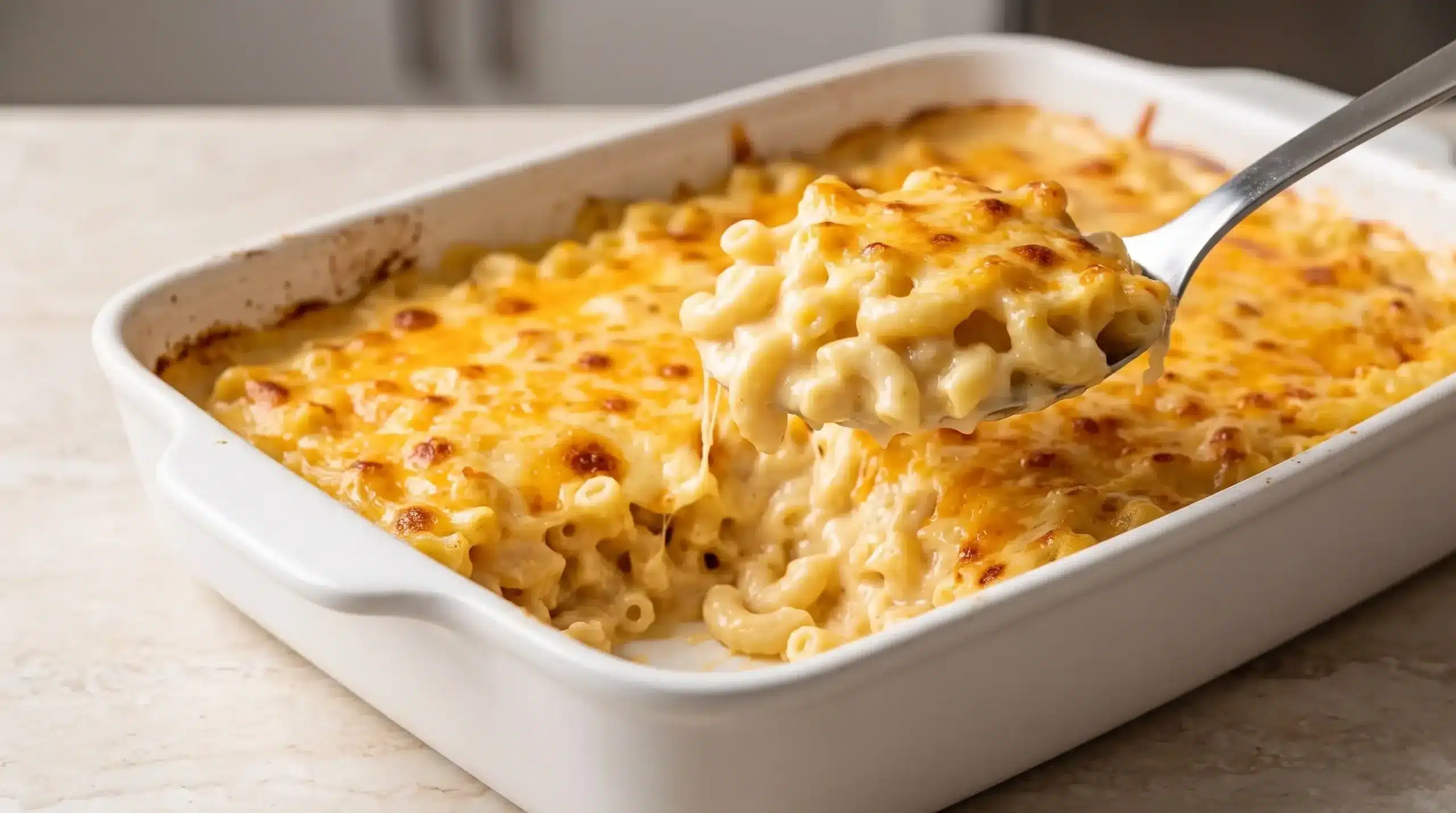
Serve the macaroni soon after removing it from the broiler, once the bubbling has settled enough for safe portioning. At that point, the cheddar topping is visibly browned and the sauce underneath remains warm and fluid.
Use a broad serving spoon to lift portions from the baking dish without excessively stirring the topping back into the macaroni. Allowing a short settling period can also make serving easier, especially when the cheese is still extremely hot.
As a substantial side dish, the macaroni can accompany a simple meal without additional sauce. It can also be served as the main component of a plate, with vegetables alongside to contrast its rich cheese coating.
Refrigerating and Reheating the Creamy Macaroni
Leftovers should be transferred to shallow, covered containers and refrigerated promptly, within two hours of cooking. Keep refrigerated portions at 40°F (4°C) or below and use them within three to four days. Freeze portions if longer storage is needed.
Reheating can make the cheese sauce thicker because the pasta continues absorbing moisture during storage. Warm individual portions gently with a small splash of milk, stirring as needed to restore a looser consistency. Heat leftovers thoroughly to 165°F (74°C).
A reheated portion will not necessarily reproduce the freshly broiled surface. If a browned topping is important, an oven-safe portion can receive a brief broiler finish after reheating, provided the container is suitable for that use.
Small Adjustments That Keep the Copycat Character
Adjustments work best when the original balance of American cheese, extra sharp cheddar, and Italian blend is largely preserved. Changing the proportions substantially can produce a different sauce texture and flavor, even when the same pasta shape is used.
For a more pronounced cheddar flavor, the extra sharp cheddar already specified provides that character without requiring an additional variety. Anyone seeking a milder result can consider using a less sharp cheddar, though the finished flavor will move away from the supplied formulation.
Maintain the reserved cheddar topping when adapting the cheese blend. The broiled finish is an important part of the copycat chick fil a mac and cheese presentation, and replacing it with a different topping would change the dish’s defining texture.
A Smooth Sauce Makes the Chick Fil A Mac and Cheese Recipe Work
Macaroni coated evenly in a gently melted cheese sauce develops the creamy texture expected from this preparation. The browned topping then adds a contrasting surface without requiring the entire dish to bake for an extended period. Keeping the sauce smooth before assembly and stopping the broiler at the right moment are the decisions that most directly determine the finished result.
Chick Fil A Mac and Cheese Questions About Texture and Ingredients
Can I use pre-shredded cheddar instead of freshly grated cheese?
Pre-shredded cheddar can be used, but packaged shreds may contain anti-caking agents that affect melting. Freshly grated cheddar is preferable when a particularly smooth cheese sauce is the priority.
Can I leave out the egg yolk?
Omitting the egg yolk changes the original formulation and may slightly alter the sauce’s body. The butter, flour, milk, and cheeses can still create a thick cheese sauce, but the result will not follow the specified ingredient combination exactly.
Is American cheese necessary for the copycat flavor and consistency?
American cheese is part of the specified three-cheese combination and contributes to its smooth melting behavior. Replacing it entirely with cheddar may change the consistency, so keeping the American cheese is the closer approach to the original formulation.
Can I prepare the macaroni ahead of time?
The components can be prepared in advance, but the assembled macaroni should be refrigerated promptly and reheated thoroughly before serving. For the freshest browned surface, reserve the broiler finishing step until the dish is hot and ready to serve.
Can the chick fil a mac and cheese recipe be frozen?
Cooked macaroni and cheese can be frozen in suitable airtight containers, although thawing and reheating may affect the sauce’s smoothness. Thaw overnight in the refrigerator and reheat thoroughly, adding a little milk if needed to improve consistency.
Why does my cheese topping brown faster in some areas?
Broilers do not always distribute heat evenly, and thicker patches of grated cheese can develop color at different rates. An evenly spread topping helps, but a few darker areas are normal. Remove the dish before those spots become burned.
Chick Fil A Mac and Cheese Recipe with Cheddar Topping
Ingredients
Method
- Fill a large pot with water, add salt, and bring it to a rolling boil. Stir in the elbow macaroni and boil for 20 minutes to achieve the soft pasta texture specified in the recipe.
- Pour the cooked macaroni into a colander, allow the water to drain completely, and reserve the pasta for combining with the cheese sauce.
- Set a large pot over medium heat and melt the unsalted butter. Add the flour, 1 teaspoon salt, and paprika, whisking until the ingredients combine into a uniform roux.
- Add the whole milk in a slow, steady stream, whisking throughout to keep the mixture free of lumps.
- Continue stirring the sauce for 1–2 minutes as it thickens and develops a smooth consistency.
- Add the egg yolk to a small bowl. While whisking the yolk, gradually incorporate a spoonful of the hot milk mixture to warm it gently.
- Whisk the warmed egg yolk mixture back into the pot. Maintain gentle heat, stirring continuously, until the yolk is fully blended and the sauce reaches 160°F (71°C).
- Turn the heat down to low. Add the American cheese pieces, 8 ounces (227 g) of the grated extra-sharp cheddar, and the entire amount of Italian cheese blend.
- Mix gently over low heat until all three cheeses melt into a uniform, creamy sauce. Do not allow the mixture to boil.
- Add the cooked, drained macaroni to the prepared cheese sauce. Fold the pasta through the sauce until the macaroni is coated throughout.
- Spoon the macaroni and cheese into a 9-by-13-inch baking dish, distributing it evenly across the bottom.
- Cover the surface with the remaining 8 ounces (227 g) of freshly grated extra-sharp cheddar, spreading the cheese evenly.
- Preheat the broiler, then position the baking dish beneath it. Broil briefly, monitoring the surface continuously, until the cheddar is fully melted, bubbling, and lightly browned in spots.
- Take the baking dish out of the oven and serve immediately while the macaroni remains creamy beneath the melted cheddar topping.