
Creamy tomato chicken pasta combines tender pieces of chicken breast, cooked pasta, and a smooth tomato cream sauce in a single skillet finish. Diced tomatoes, garlic, onion, and Italian seasoning give the sauce its savory character, while heavy cream softens the tomato flavor and helps coat the pasta evenly. The result is a practical dinner with familiar ingredients and a gently rich texture.
For an easy creamy tomato chicken pasta, the important decisions happen in the skillet: cook the chicken thoroughly, soften the aromatics, and allow the tomato and cream mixture to thicken before combining everything. Penne and fettuccine both work, although each creates a slightly different eating experience. Fresh basil adds a finishing touch just before serving.
Why Creamy Tomato Chicken Pasta Works for Weeknight Dinners
Chicken, pasta, and tomato cream sauce can be prepared without complicated equipment or separate sauces. A large skillet provides enough space to brown the diced chicken, soften the vegetables, and bring the sauce together. Cooking the pasta separately also makes it easier to manage its texture while the other ingredients develop flavor.
Another advantage is flexibility. The base combination can accommodate additional vegetables, a different pasta shape, or a lighter cream alternative. Those changes affect the finished texture, but they do not require changing the central idea of pasta coated in a tomato-based sauce with cooked chicken.
Because the sauce contains both tomatoes and dairy, it has a balance of tanginess and creaminess. Italian seasoning gives the dish an herbal background, and red pepper flakes provide adjustable heat. The flavors remain straightforward enough to pair with a side salad or garlic bread.
Choosing Pasta That Holds the Tomato Cream Sauce
Penne and fettuccine are the two suggested pasta options, and the choice influences how the sauce is distributed. Penne has a hollow center that can collect small pieces of tomato and sauce, while fettuccine offers broad strands with plenty of surface area for a creamy coating. Neither requires a different sauce formula.
Spaghetti and rotini are also suitable alternatives. Spaghetti creates a more strand-focused dish, while the curves of rotini can hold small bits of chicken, onion, and tomato. Whole wheat or gluten-free pasta may be used according to dietary preference, following the cooking instructions on the selected package.
Whichever shape is selected, cook the pasta until it is al dente, tender with a slightly firm bite. Drain it promptly rather than leaving it sitting in water. Pasta that is already too soft can lose additional texture when tossed into the warm tomato cream sauce, so retaining some firmness before the skillet finish helps preserve a pleasant texture.
Tomatoes and Cream Need the Right Balance
Canned diced tomatoes are central to the sauce’s texture. Their pieces remain recognizable, creating a slightly chunky base beneath the smoother cream. Using the tomatoes with their juices keeps the tomato character present and provides liquid for the sauce to simmer.
Heavy cream gives chicken pasta with tomato cream sauce its characteristic smoothness. As the tomato and cream mixture simmers, it thickens enough to cling to the cooked pasta. A creamy tomato garlic pasta relies on a rich tomato-based coating, making gentle simmering especially important when adjusting the sauce’s consistency. Half-and-half is a suggested lighter alternative, although the sauce may be thinner and less rich.
Garlic and onion work alongside Italian seasoning and red pepper flakes to establish the savory base. The seasoning can remain mild or become more pronounced through an adjustment to the pepper flakes. Salt and black pepper are best adjusted after the sauce and pasta have been combined, when the overall flavor is easier to judge.
Evenly Diced Chicken Creates a Better Skillet Finish
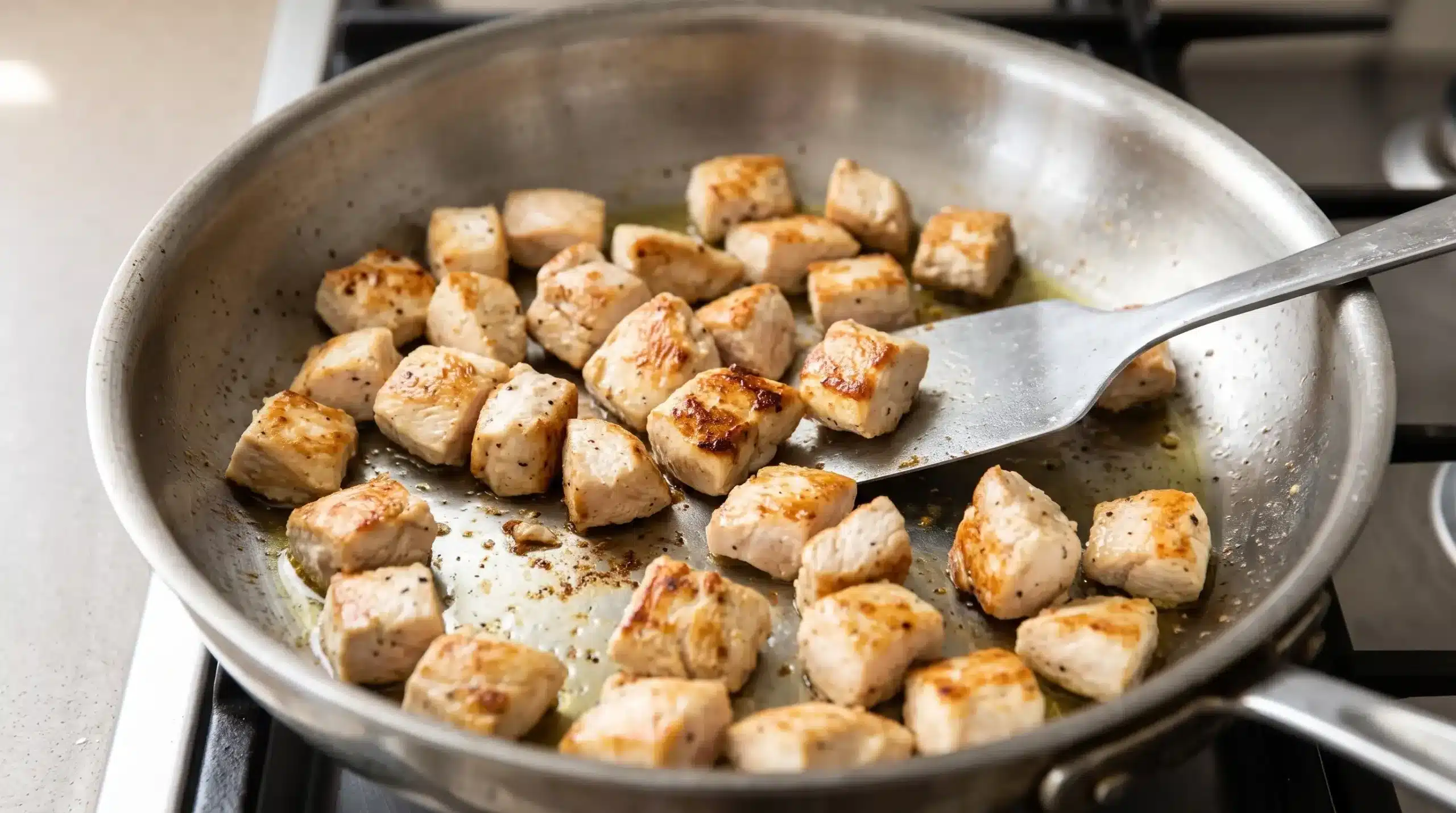
Chicken breast is cut into bite-sized pieces so it can cook directly in the skillet and distribute throughout the pasta. Pieces of similar size are easier to cook evenly, making it less likely that some portions will finish while larger pieces remain undercooked. The olive oil helps the chicken make contact with the heated skillet as it develops a golden exterior.
A golden surface is useful for appearance and flavor, but color alone does not establish that chicken is fully cooked. For a dependable safety check, the thickest chicken pieces should reach an internal temperature of 165°F (74°C) before the remaining sauce ingredients are added. This matters because the later sauce simmer is intended mainly to thicken the tomato and cream mixture.
Avoid crowding the skillet excessively. When the pieces have room, their surfaces can brown more effectively. If the skillet is small, cooking the chicken in batches is a practical adjustment before continuing with the aromatics.
Control the Simmer for a Smooth Creamy Tomato Sauce
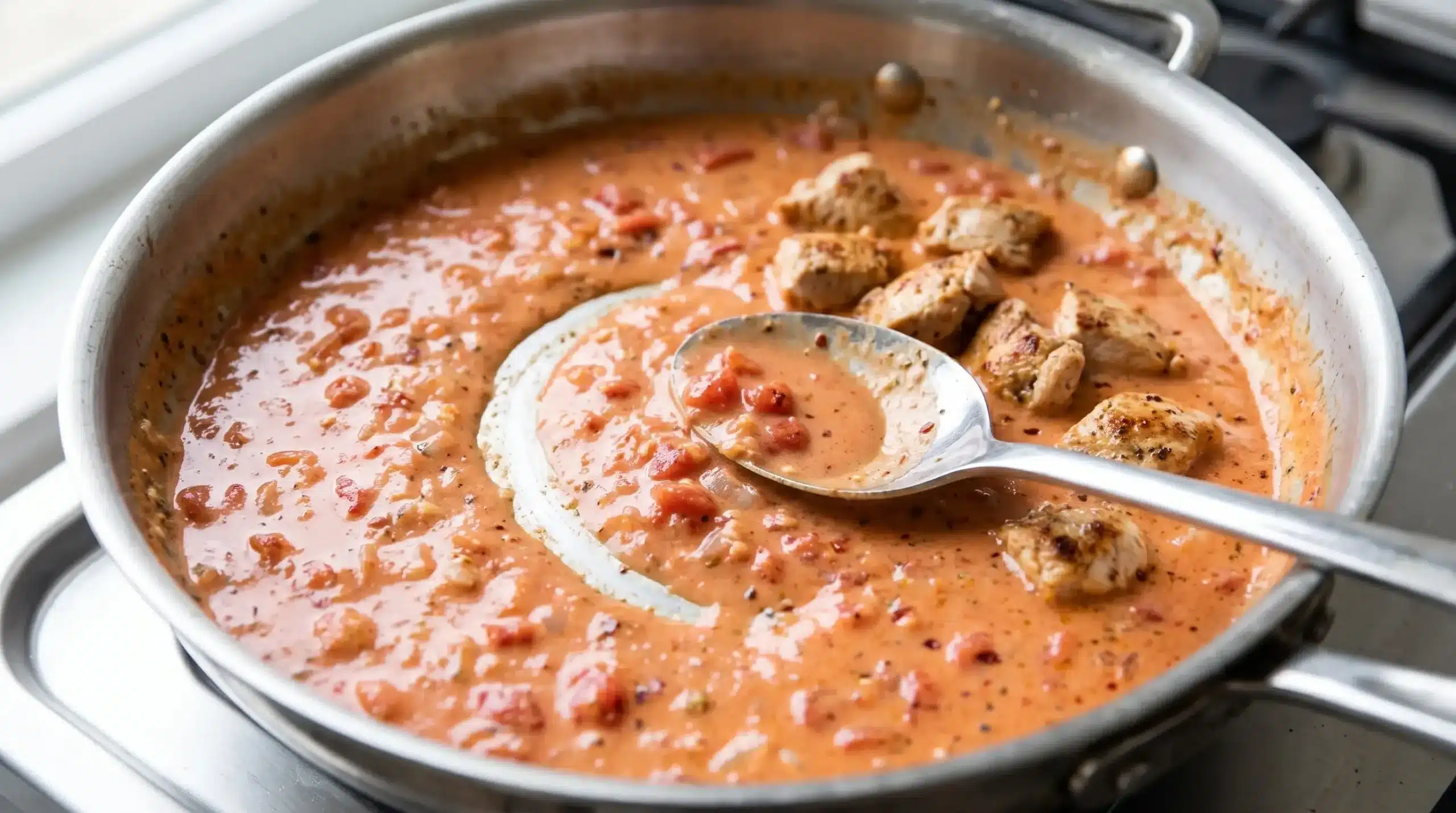
The sauce needs enough heat to thicken, but it does not require vigorous boiling. After the onion has softened and the garlic has been sautéed, the diced tomatoes, cream, and seasonings are combined. A gentle simmer for 5–7 minutes allows the mixture to become more cohesive without unnecessarily reducing it.
Watch how the sauce moves when stirred. At first, the tomato liquid and cream may appear relatively loose. As the mixture simmers, it should begin to coat the spoon more noticeably. Small tomato pieces will remain visible, which is normal for a sauce made with diced tomatoes.
If the mixture becomes thicker than intended, a small splash of water can loosen it. Should it still appear watery, a little more gentle simmering may help. Make these adjustments gradually because the cooked pasta will absorb and carry some of the sauce once added.
With creamy tomato chicken pasta, maintaining moderate heat is especially helpful after the cream enters the skillet. Excessive heat can make dairy-based sauces less smooth, while gentle cooking gives more control over the finished consistency.
Common Mistakes That Affect Creamy Tomato Chicken Pasta
Most problems with creamy tomato chicken pasta come from uneven chicken cooking, poorly managed pasta texture, or sauce consistency. Recognizing these issues early makes them easier to prevent while the ingredients are still separate.
- Uneven chicken pieces: Large variations in size make it harder to cook every piece thoroughly. Cut the breast into similar portions and check doneness before adding the sauce ingredients.
- Firm onion pieces: Adding the tomato and cream before the onion becomes translucent can leave a sharper texture. Allow the onion to soften during the sauté stage.
- Overcooked pasta: Very soft pasta can become mushy when tossed with warm sauce. Follow the package directions and drain promptly.
- Thin tomato sauce: Combining everything before the suggested simmer may leave liquid collecting beneath the pasta. Give the sauce time to thicken first.
- Excessive pepper flakes: The heat can become stronger than intended. Begin with the stated amount and increase only after tasting.
These corrections are most effective before the cooked pasta is added. Once the noodles are coated, extended heating can alter their texture, so the skillet finish should be brief and focused on even distribution.
Coating Penne or Fettuccine Without Breaking the Pasta
Cooked pasta should enter the skillet when the sauce has already reached a suitable consistency. Toss it gently so the chicken and diced tomatoes spread throughout the noodles. Broad fettuccine strands benefit from lifting and turning, while penne can be folded through the sauce with a spoon.
Look for a coating across the pasta instead of a large pool of sauce at the bottom of the skillet. If the mixture feels too thick to toss comfortably, add a small amount of water and mix again. Avoid prolonged stirring once the pasta is evenly coated, particularly when using delicate or gluten-free varieties.
Seasoning at this point accounts for the complete mixture. A sauce that tasted sufficiently seasoned on its own may need a small adjustment after the pasta is added, while one that already tastes balanced may need nothing more.
Adjusting Red Pepper Flakes for Different Heat Preferences
Red pepper flakes provide the spicy element in the original preparation. Using the suggested quantity produces a seasoned tomato cream sauce with some heat, although the perceived intensity depends on the flakes and individual preference. For a milder version, reduce the amount; for additional heat, increase it cautiously. Because cream softens the overall impression of spice, taste the combined sauce before making a larger adjustment.
Spinach and Bell Peppers Offer Simple Vegetable Variations
Spinach and bell peppers are suitable additions when more vegetables are desired. Their preparation should reflect their different textures: bell peppers need an opportunity to soften, while spinach cooks down quickly. Adding vegetables should not prevent the chicken from cooking thoroughly or interfere with the sauce reaching its intended consistency.
Extra vegetables can introduce moisture, particularly spinach as it wilts. Keep an eye on the finished sauce and allow excess liquid to reduce gently if needed. A small adjustment to the final seasoning can also help maintain a balanced flavor when the quantity of vegetables increases.
For a vegetarian adaptation, the chicken may be omitted and replaced with additional vegetables. Tofu is another suggested protein alternative, while shrimp provides a different nonvegetarian option. Each substitute needs to be cooked appropriately for its own characteristics; the chicken cooking instructions should not automatically be applied to a different protein.
Serving the Pasta Warm with Basil and Simple Sides
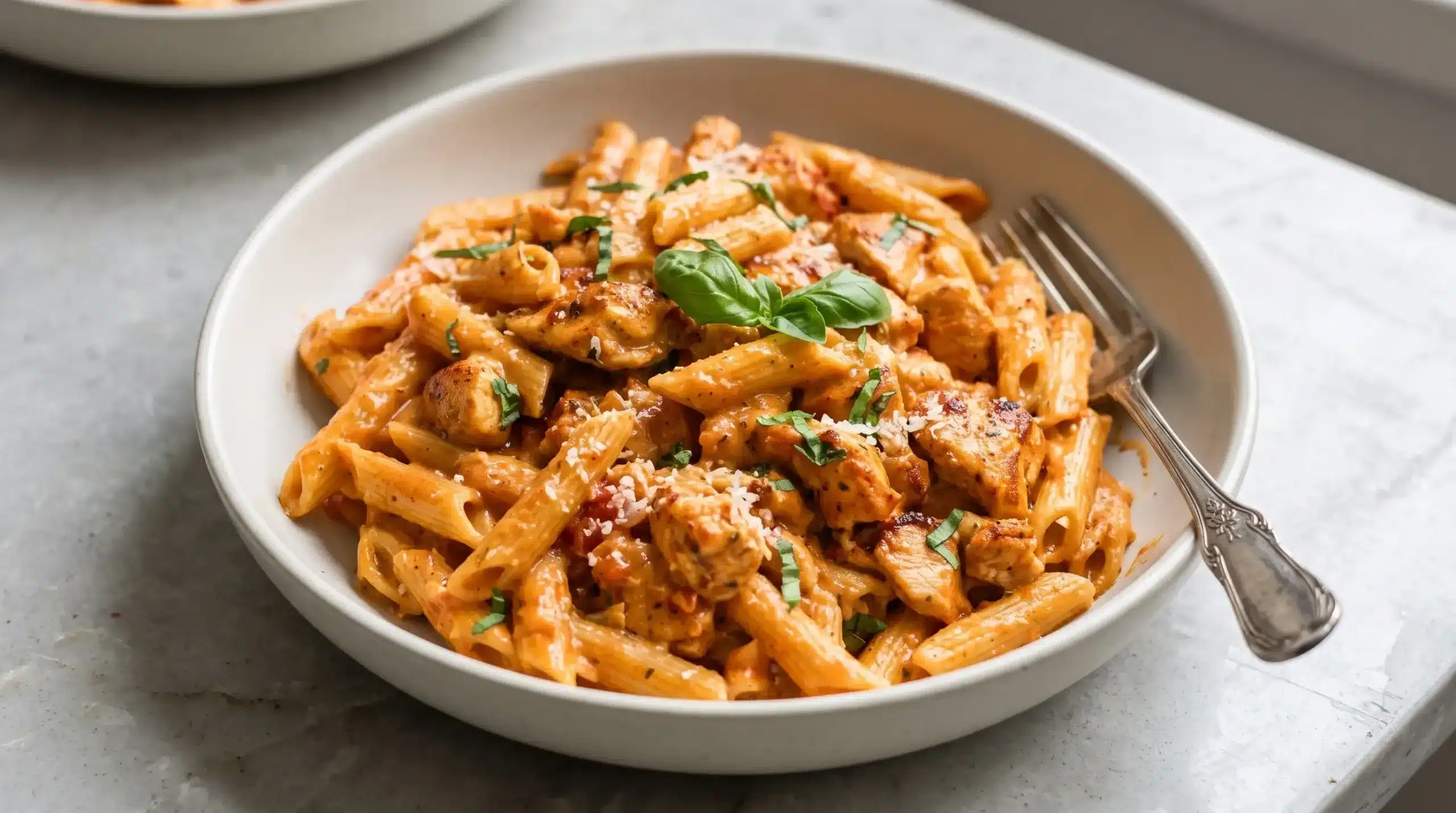
Fresh basil is intended as a finishing garnish. Add it just before serving so its fresh aroma remains distinct from the cooked Italian seasoning in the sauce. Individual plates work well, particularly when the chicken and tomato pieces have been distributed evenly through the pasta.
A side salad can provide a cooler, lighter contrast to the creamy sauce. Garlic bread is another serving suggestion, especially when some tomato cream sauce remains on the plate. Neither accompaniment needs to compete with the garlic, tomato, and herb flavors already present in the main dish.
Serve the pasta while warm and the sauce is still fluid. As creamy pasta cools, the coating can tighten around the noodles, changing the texture. If dinner is delayed briefly, a gentle stir may help redistribute the sauce before plating.
Refrigerating Leftover Chicken Pasta Safely
Leftover creamy tomato chicken pasta can be transferred into an airtight container and refrigerated for about three days. Place leftovers in the refrigerator promptly, within two hours of cooking, and use shallow containers when necessary to help the food cool efficiently. Keeping the pasta and sauce together is convenient, although the noodles may absorb more liquid during storage.
Reheating Tomato Cream Sauce Without Drying It Out
Refrigerated pasta often feels thicker than it did immediately after cooking. The noodles absorb some moisture, while the cream sauce becomes less fluid when chilled. Adding a small amount of water or extra cream during reheating can restore a looser coating.
Both the microwave and stovetop are suitable reheating options. On the stove, use moderate heat and stir gently to distribute warmth. In the microwave, heat in intervals and stir between them to avoid leaving cooler areas in the middle of the portion.
Reheat leftovers until they reach 165°F (74°C) throughout. Adding liquid should improve texture, not replace thorough reheating. Avoid repeatedly heating the entire stored batch when only one serving is needed.
How Pasta Choices Change the Finished Dish
Different pasta shapes and cream options affect both the appearance and mouthfeel of the finished meal. The following comparisons can help when choosing among the alternatives already suitable for this preparation.
| Choice | Expected texture | Practical consideration |
|---|---|---|
| Penne | Short, firm pieces with sauce inside the tubes | Easy to mix with diced chicken and tomatoes |
| Fettuccine | Broad strands covered in creamy sauce | Turn gently to coat without tangling excessively |
| Rotini | Twisted pasta that catches small sauce ingredients | Useful when distributing tomato and chicken pieces |
| Whole wheat pasta | Typically firmer with a more pronounced grain flavor | Follow its specific package cooking instructions |
| Gluten-free pasta | Texture varies with the flour blend | Check doneness carefully to avoid excessive softening |
| Half-and-half instead of heavy cream | Lighter sauce with less richness | Maintain a gentle simmer and expect a thinner coating |
Although each alternative changes something about the meal, the tomato and chicken combination remains the defining feature. Choose based on the preferred noodle texture and sauce richness, keeping the basic cooking sequence intact.
Chicken and Tomatoes in a Balanced Pasta Meal
Chicken breast supplies protein, while pasta contributes carbohydrates that make the meal substantial. Tomatoes also contribute nutrients, including vitamins and antioxidant compounds. Heavy cream and olive oil provide fat and influence the richness of the finished sauce.
For a meal with more vegetables, spinach or bell peppers can be incorporated, or a side salad can accompany the pasta. Portion size and ingredient substitutions influence the overall nutritional profile, so the original preparation and a lighter version will not necessarily provide identical amounts of energy or fat.
Whole wheat pasta offers another way to change the meal’s composition without replacing the tomato cream sauce. It can contribute more fiber than conventional refined pasta, depending on the product selected. Personal dietary requirements should guide choices such as dairy substitutions and gluten-free noodles.
A Well-Reduced Sauce Brings Creamy Tomato Chicken Pasta Together
The tomato cream sauce determines how successfully the cooked chicken and pasta come together. When it has simmered gently to a coating consistency, the noodles can be tossed through without becoming surrounded by excess liquid. Properly cooked chicken and pasta then retain their individual textures within the creamy mixture.
For creamy tomato chicken pasta, that brief attention to sauce thickness has a greater effect than adding extra ingredients. A smooth coating, evenly distributed chicken, and fresh basil at serving give the finished dish its intended character.
Creamy Tomato Chicken Pasta Questions About Substitutions and Make-Ahead Cooking
Can the tomato cream sauce be prepared ahead of time?
The sauce can be made in advance and stored in the refrigerator in an airtight container. Prepare the pasta fresh when serving, then warm the sauce gently and combine it with the noodles. If the sauce has thickened during refrigeration, add a small amount of liquid as needed.
Can fresh tomatoes replace canned diced tomatoes?
Fresh tomatoes can be considered as an alternative, but their moisture content and texture vary. The original preparation uses canned diced tomatoes, which provide both tomato pieces and juice. With fresh tomatoes, the sauce may need additional simmering or a small liquid adjustment to achieve a similar consistency.
Is half-and-half suitable if a lighter sauce is preferred?
Half-and-half is an option mentioned for a lighter variation. It contains less fat than heavy cream and may produce a less substantial sauce. Keep the heat gentle and assess the consistency before adding the pasta.
Can frozen spinach be used instead of fresh spinach?
Frozen spinach can work as an optional addition if it is thawed and excess moisture is squeezed out first. Removing that liquid helps prevent the tomato cream sauce from becoming watery. Stir the spinach into the sauce and heat it thoroughly before serving.
What should I do if the pasta tastes too spicy?
If too many red pepper flakes have been added, incorporating a little additional cream may soften the perceived heat, although it will also change the sauce’s richness and consistency. For future batches, begin with fewer flakes and adjust the seasoning after tasting.
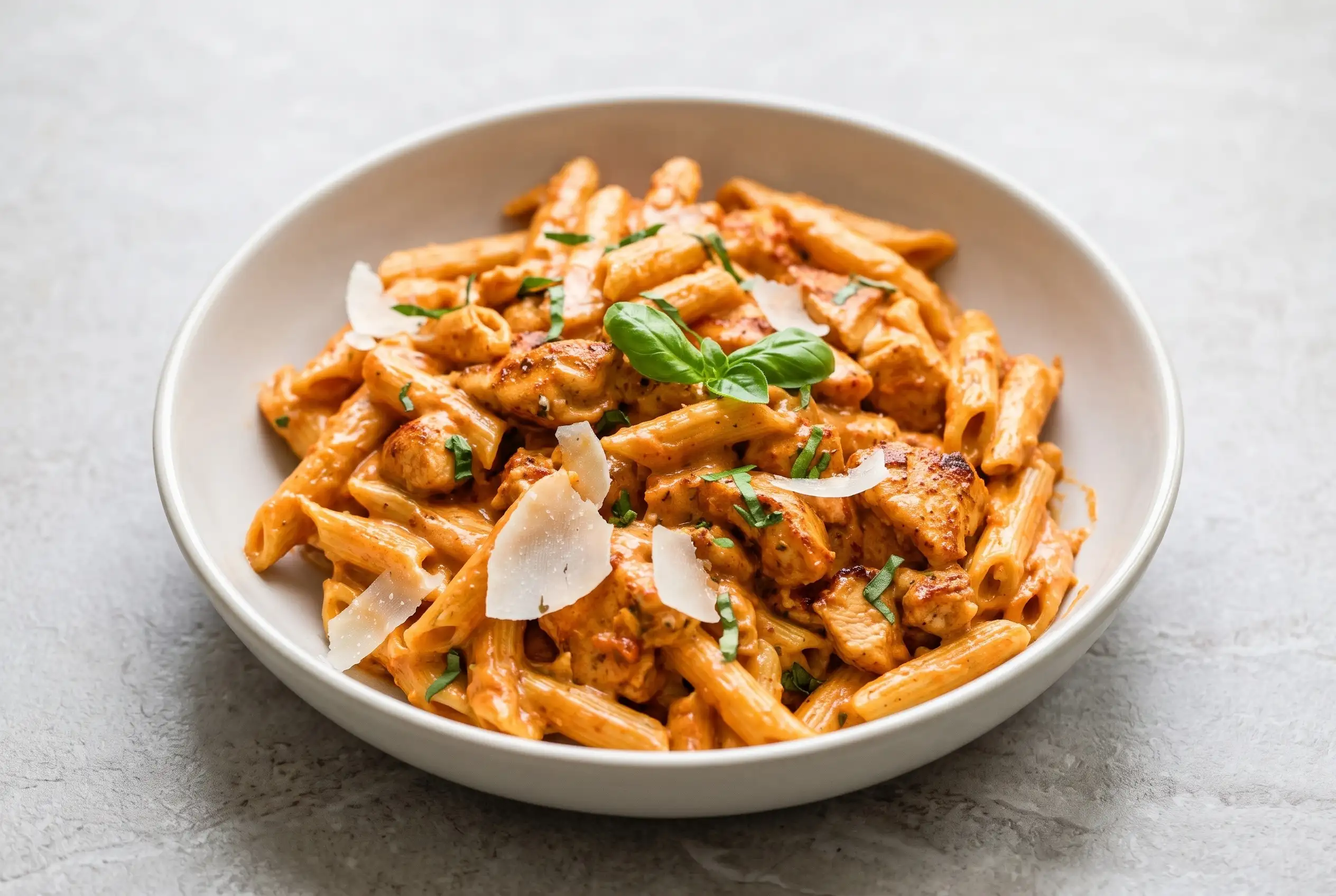
Creamy Tomato Chicken Pasta with Garlic and Fresh Basil
Ingredients
Method
- Bring a large pot of water to a boil. Prepare the pasta following the package instructions until tender, then drain and reserve.
- Warm the olive oil in a large skillet over medium heat.
- Place the diced chicken in the heated skillet. Stir periodically as it cooks, allowing the pieces to develop light browning. Check that the thickest pieces have reached an internal temperature of 165°F (74°C).
- Add the minced garlic and diced onion to the chicken. Continue sautéing until the onion turns translucent and the garlic releases its aroma.
- Pour in the diced tomatoes and their juices, followed by the heavy cream, Italian seasoning, and red pepper flakes. Stir thoroughly to create a uniform sauce.
- Adjust the heat to keep the sauce at a gentle simmer. Stir occasionally for 5–7 minutes, allowing the tomato cream mixture to thicken slightly.
- Transfer the drained pasta into the skillet. Gently mix with the chicken and tomato cream sauce until everything is evenly coated.
- Taste and adjust the seasoning with salt and black pepper.
- Portion the creamy tomato chicken pasta onto serving plates, finish with fresh basil, and serve warm.