
Keto philly cheesesteak roll ups bring together thinly sliced beef, melted provolone, sautéed bell peppers, and sweet onion inside lightly browned low-carb tortillas. They deliver the familiar savory flavors of a Philly cheesesteak without a traditional bread roll, making them a practical option for lunch, dinner, or a warm handheld snack.
The skillet does most of the work, but a few details matter: softened vegetables, properly browned beef, fully melted cheese, and tortillas rolled tightly enough to hold their filling. Paying attention to those elements helps create a crisp exterior with a tender, cheesy center.
Why Keto Philly Cheesesteak Roll Ups Work Without Bread
A traditional cheesesteak relies on bread to contain its beef, vegetables, and cheese. Here, low-carb tortillas provide the wrapping structure while keeping the filling at the center of the eating experience. Their relatively thin shape also allows the outside to brown in a skillet.
Because the filling is cooked before assembly, the final skillet stage concentrates on warming and browning the tortilla. The cheese helps hold the beef and vegetables together, while the folded tortilla makes individual portions easier to serve.
Compared with an open sandwich, keto philly cheesesteak roll ups are also convenient for handling. Each portion can be picked up without needing utensils, although serving them on a plate while hot makes the melted filling easier to manage.
Ribeye or Sirloin Changes the Cheesesteak Filling
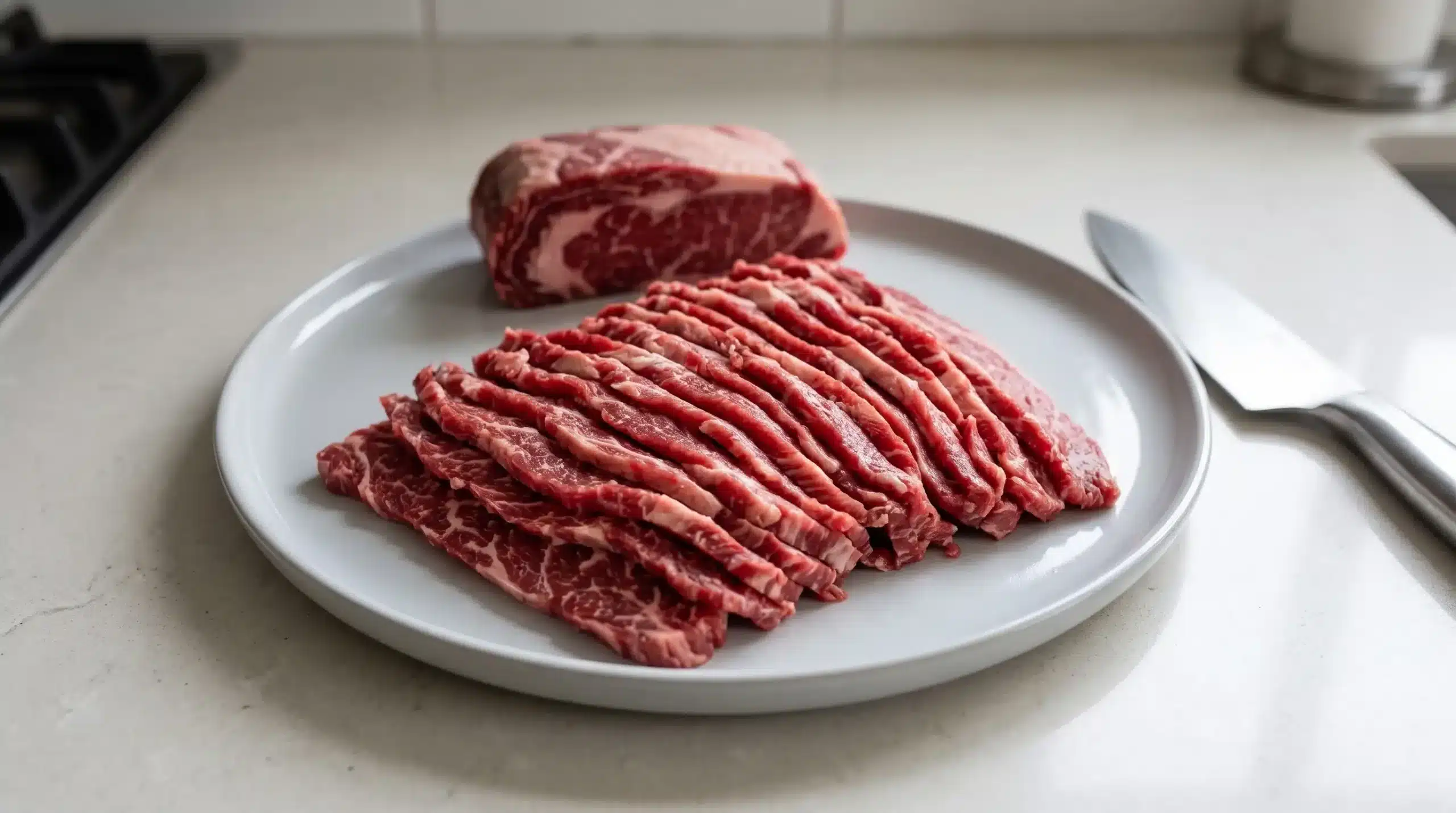
Beef selection influences both richness and texture. Thinly sliced ribeye generally contains more marbling, which can produce a richer filling, while sirloin is usually leaner and offers a more pronounced beef texture. Either cut works with the peppers, onion, and provolone. For a minced-beef variation, ground beef Philly cheesesteaks use a finer-textured filling; drain excess rendered fat before adding the cheese to prevent the tortillas from becoming greasy.
Uniformly thin strips are particularly useful because the meat cooks quickly over medium-high heat. Thick or uneven pieces may finish at different times, leaving some strips tougher while others are still browning.
For easier preparation, keep the beef cold before slicing and use a sharp knife to cut narrow strips. Avoid treating the meat like a large steak that needs extended cooking. Small pieces have more exposed surface area and can brown quickly, especially in a hot skillet.
Provolone Gives the Beef and Vegetables a Cohesive Filling
Sliced provolone is important to the structure of these roll-ups because it melts across the cooked beef mixture. Reducing the heat before adding the cheese allows it to soften without continuing to cook the thin beef aggressively. As the cheese melts, it coats the filling and makes portioning easier.
Soft Bell Peppers and Sweet Onion Balance the Beef
Mixed bell peppers and chopped sweet onion need enough time in the skillet to lose their raw firmness. Cooking them in olive oil over medium heat for approximately 5–7 minutes provides a softer texture that fits inside a tightly wrapped tortilla.
Chopping the vegetables into similarly sized pieces helps them cook evenly. Large pepper chunks can make the rolls bulky, while oversized onion pieces may remain noticeably firmer than the surrounding filling.
Vegetable moisture also affects assembly. If noticeable liquid remains in the skillet, allowing some of it to evaporate before filling the tortillas can help prevent a wet center. The vegetables should remain tender without turning the tortilla filling into a watery mixture.
Skillet Heat Controls Browning and Melting
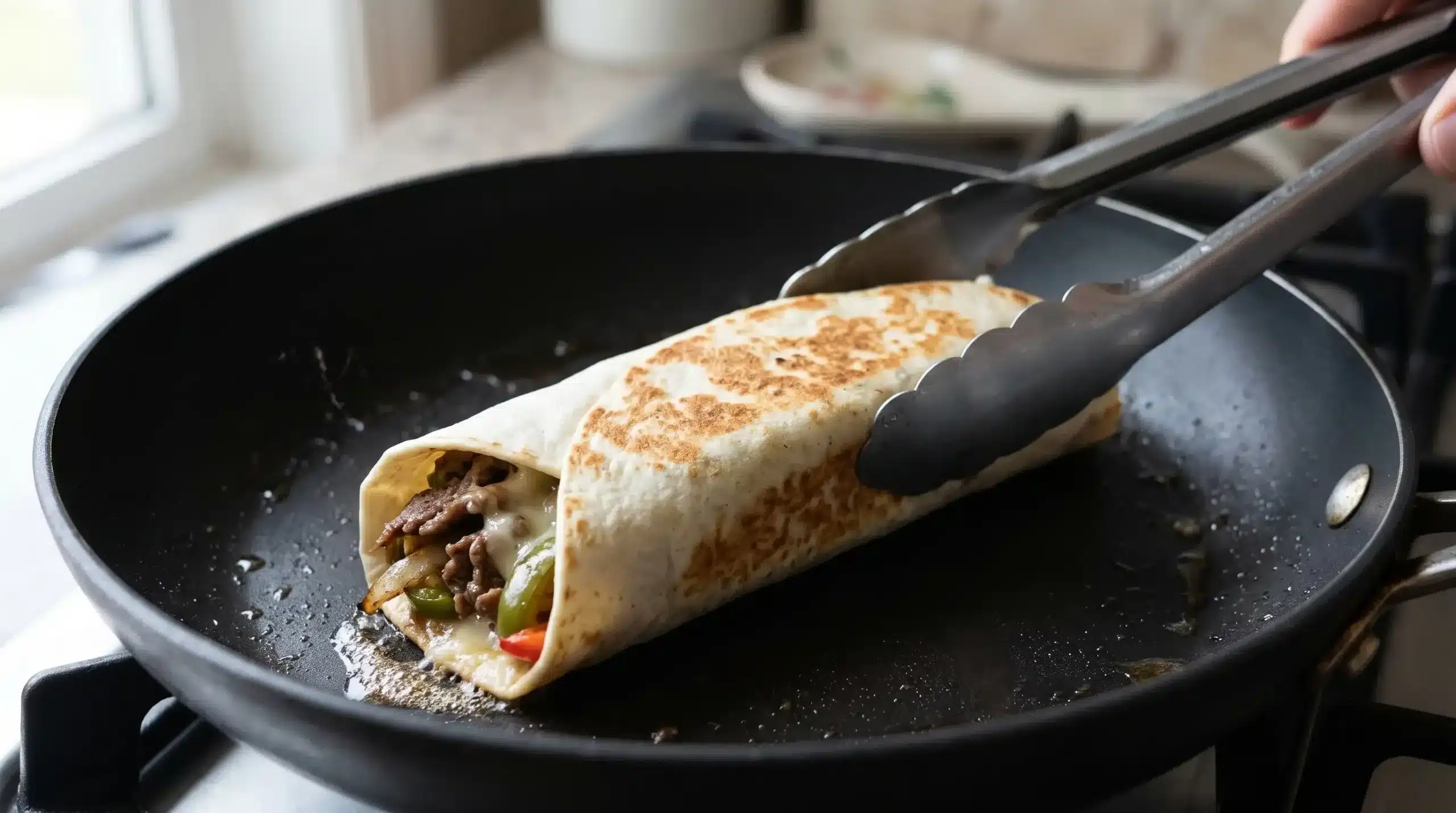
Two heat levels serve different purposes when preparing keto philly cheesesteak roll ups. Medium heat softens the peppers and onion without excessive browning. Medium-high heat then helps the thinly sliced beef develop color, while low heat supports gentle cheese melting.
The main cooking judgment is recognizing when to change the heat. Beef that remains pale may need better contact with the hot skillet, but excessive cooking can dry out thin strips. Once the meat is browned and appropriately cooked, there is little benefit in keeping it over strong heat while the cheese melts.
After assembly, the tortillas return to the skillet seam-side down. Positioning the seam against the hot surface first helps the folded edge stay closed. Turning the rolls carefully allows the remaining sides to develop a golden exterior without disturbing the filling.
Low-Carb Tortillas Need a Secure Fold
Four low-carb tortillas form the outer layer of the keto cheesesteak tortilla roll ups. Their size and flexibility affect how comfortably the beef mixture fits. A tortilla that is too full becomes difficult to close and may open when turned in the skillet.
Place the filling where it can be enclosed without stretching the tortilla excessively. Folding the sides inward, when the tortilla size permits, can help keep small pieces of beef and peppers contained.
If a tortilla feels stiff, gently warming it can make folding easier. Choose tortillas that remain pliable when rolled, and check their packaging for carbohydrate information because formulations differ between brands.
When comparing low-carb tortillas for these cheesesteak roll-ups, look beyond the front-of-package claims. The Nutrition Facts label lists total carbohydrate and dietary fiber separately, making it easier to compare products with different formulations. Check the serving size as well, particularly when one tortilla represents more or less than a single labeled serving.
Common Keto Philly Cheesesteak Roll Ups Mistakes to Avoid
Most problems with these roll-ups appear during filling preparation or the final browning stage. The following mistakes are worth checking before the tortillas reach the skillet.
- Uneven beef strips: Thick pieces can cook differently from thin ones. Slice the meat consistently before heating the skillet.
- Undercooked vegetables: Firm pepper and onion pieces can make the roll difficult to shape. Give them time to soften before adding the beef.
- Excess skillet liquid: Moist filling can soften the tortilla. Allow unnecessary liquid to reduce before assembly.
- Overloaded tortillas: Too much beef and cheese pushes the filling toward the open edges. Divide it evenly and leave enough room to fold.
- High heat during melting: Continuing to cook the beef over strong heat while the provolone melts can make the meat dry. Lower the heat for this stage.
- Loose seams: A poorly secured fold may open during browning. Begin with the seam facing the skillet surface.
Seasoning the Beef Without Covering Its Flavor
Salt and black pepper provide the basic seasoning for the sliced beef. Garlic powder or paprika can be added for a different savory profile, but the filling already has substantial flavor from the browned meat, sweet onion, peppers, and cheese. Start with a restrained amount of additional seasoning so the central cheesesteak flavors remain recognizable.
Cheese Substitutions for a Different Melt
Provolone is the original choice, although mozzarella and cheddar are possible alternatives. Mozzarella tends to create a mild, stretchy texture, while cheddar provides a more pronounced cheese flavor. The choice changes the finished filling without requiring a different tortilla or vegetable mixture.
When substituting, use a cheese that melts well and distributes across the beef. Slices can be convenient because they cover the mixture evenly, but the cheese should become soft enough to hold the meat and vegetables together before rolling.
Combining cheeses is another possibility, provided the total filling remains manageable. Excess cheese can escape from the tortilla during browning, so the available space inside each roll matters as much as the melting characteristics.
Vegetable and Spicy Variations for Cheesesteak Roll Ups
Mushrooms, spinach, and zucchini offer ways to change the vegetable filling. Mushrooms contribute a tender, savory texture, while spinach becomes compact as it wilts. Zucchini can also fit the mixture when chopped into small pieces and cooked until suitably tender.
Extra vegetables may release moisture, especially mushrooms and zucchini. Cooking off excess liquid before assembly helps preserve the browned tortilla exterior. Keeping the added vegetables proportionate to the beef also prevents the filling from becoming difficult to roll.
For heat, chopped jalapeños or hot sauce can be added to the beef mixture. Jalapeños introduce small pepper pieces, whereas hot sauce distributes spicy flavor more evenly. Use enough to suit your preference without soaking the tortillas.
Serving Low Carb Philly Cheesesteak Roll Ups Warm
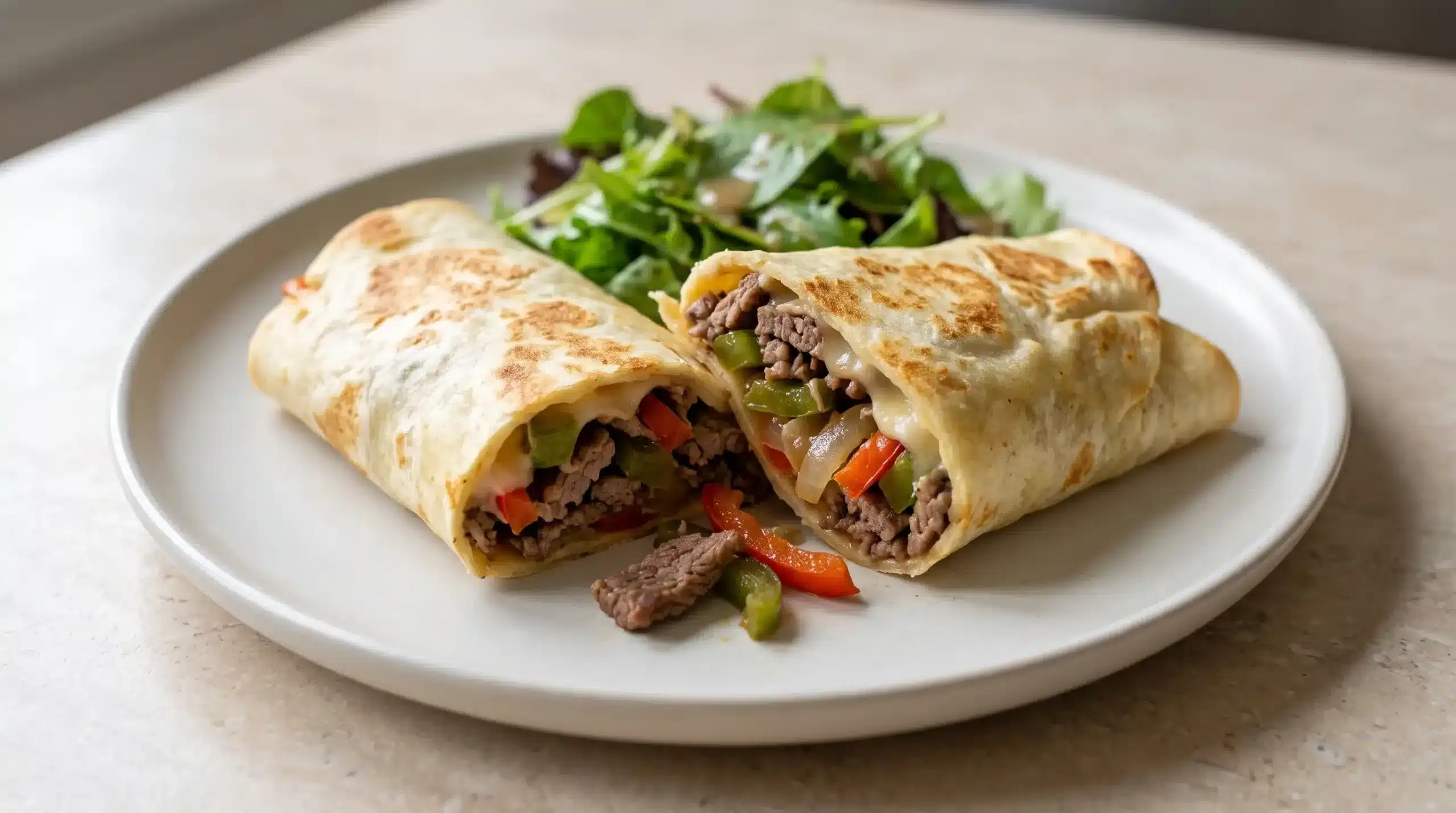
Low carb philly cheesesteak roll ups are most appealing shortly after their final skillet browning, when the cheese is melted and the tortilla remains lightly crisp. Letting them settle briefly before handling makes the hot filling easier to contain.
A simple green salad provides a fresh accompaniment without competing with the beef and cheese. A low-carb dipping sauce can also be served separately, allowing each roll to retain its browned exterior until it is eaten.
For a shared appetizer, cutting the rolls into smaller portions can make serving easier. Use a sharp knife and cut carefully so the filling stays within the tortilla. Larger, uncut rolls are more convenient as individual lunch or dinner portions.
Refrigerating and Reheating the Filled Tortillas
Leftover keto philly cheesesteak roll ups can be kept in an airtight container in the refrigerator for up to three days. Refrigerate them promptly after cooking, and avoid leaving the meat-and-cheese filling at room temperature for extended periods.
A skillet is useful when preserving some of the tortilla’s browned texture matters. Reheat gently and turn as necessary so the outside warms without becoming overly dark before the center is hot.
Microwave reheating is another option, although it generally produces a softer tortilla. Whichever method is used, ensure the filling is thoroughly reheated; leftovers containing beef should reach 165°F (74°C). Avoid repeatedly cooling and reheating the same portion.
Freezer Planning for the Beef and Tortilla Filling
Freezing the components before final assembly gives more flexibility than freezing fully browned rolls. The prepared filling can be cooled, wrapped or packed securely, and frozen for up to one month, following the original recipe’s suggested storage period. Keep the tortillas separate until the filling is ready to use.
Thaw frozen filling safely in the refrigerator, then reheat it thoroughly before assembling and browning the tortillas. Moisture released during thawing may need to be reduced so that the wrapped filling does not become soggy.
Assembled rolls may lose some of their crispness after freezing and reheating. For a fresher skillet finish, storing the tortillas separately and rolling them after the filling has been reheated is a practical approach.
Carbohydrate Choices Matter for Keto Cheesesteak Rolls
Although keto philly cheesesteak roll ups replace the traditional sandwich bread with low-carb tortillas, their exact carbohydrate content depends on the ingredients purchased. Tortilla brands can vary significantly in total carbohydrates, fiber, and serving size, and vegetables also contribute some carbohydrates.
For anyone following a specific daily carbohydrate limit, checking the tortilla nutrition label is more useful than assuming every product marked low-carb has the same composition. The beef and provolone provide substantial protein and fat, but the finished meal’s nutritional profile depends on actual portions and any substitutions.
These rolls can fit a carbohydrate-conscious eating pattern, but the label keto does not establish a universal carbohydrate total. Selecting tortillas based on individual dietary requirements keeps the meal aligned with the intended eating plan.
A Quick Reference for Cheesesteak Roll-Up Decisions
Several ingredient choices affect how the finished rolls eat. This comparison focuses on the differences that matter when selecting products or adjusting the filling.
| Choice | Effect on the Finished Roll | Practical Consideration |
|---|---|---|
| Ribeye beef | Richer filling with more marbling | Keep slices thin for quick, even cooking |
| Sirloin beef | Leaner beef texture | Avoid prolonged cooking that may dry the strips |
| Provolone | Smooth, cohesive melted cheese layer | Melt over low heat |
| Mozzarella | Milder flavor and stretchy melted texture | Keep the cheese quantity manageable |
| Cheddar | More pronounced cheese flavor | Distribute evenly across the filling |
| Low-carb tortillas | Foldable outer layer with a browned surface | Check flexibility and nutrition labels |
Well-Browned Tortillas Complete Keto Philly Cheesesteak Roll Ups
Golden tortilla surfaces and a securely enclosed filling are the most useful signs of a properly finished roll-up. The beef and vegetables should already be cooked, and the provolone should be melted before the tortillas reach their last skillet stage. That separation of cooking tasks helps protect the meat from unnecessary heat.
With balanced filling portions and a firm seam, keto philly cheesesteak roll ups retain their handheld shape while offering tender beef, softened vegetables, melted cheese, and a lightly crisp exterior. The final browning is what brings those textures together.
Keto Philly Cheesesteak Roll Ups Questions About Tortillas and Substitutions
Can I use chicken instead of beef in these roll-ups?
Thinly sliced chicken breast can replace the beef for a different version. Cook the chicken thoroughly before adding the cheese, ensuring it reaches an internal temperature of 165°F (74°C). The peppers, onion, and low-carb tortillas can remain the same.
Are keto philly cheesesteak roll ups gluten-free?
They can be made gluten-free when suitable gluten-free tortillas are used and all other packaged ingredients are checked for gluten-containing additives or cross-contact warnings. A product labeled low-carb is not necessarily gluten-free, so the two requirements should be verified separately.
Why do my tortillas crack when I roll them?
Cracking can occur when tortillas lack flexibility, especially if they are cold or relatively dry. Lightly warming them before adding the filling may improve their pliability. Different low-carb tortilla formulations behave differently, so selecting a softer variety can also help.
Can I prepare the filling before serving?
The beef, vegetables, and cheese mixture can be prepared in advance and refrigerated safely. When ready to serve, reheat the filling thoroughly, place it into the tortillas, and complete the final skillet browning. Assembling near serving time helps preserve the outer texture.
How can I keep the cheese from leaking out?
Allow the cheese to melt into the beef mixture before portioning it, and avoid positioning large amounts directly against the tortilla edges. Leave enough space to secure the fold, then turn the rolls gently so that the filling remains contained.
Can I make easy keto philly cheesesteak roll ups without a dipping sauce?
Yes. Melted provolone, seasoned beef, sautéed peppers, and sweet onion already form a complete savory filling. A dipping sauce is optional and can be omitted when a simpler handheld meal or a more controlled carbohydrate intake is preferred.
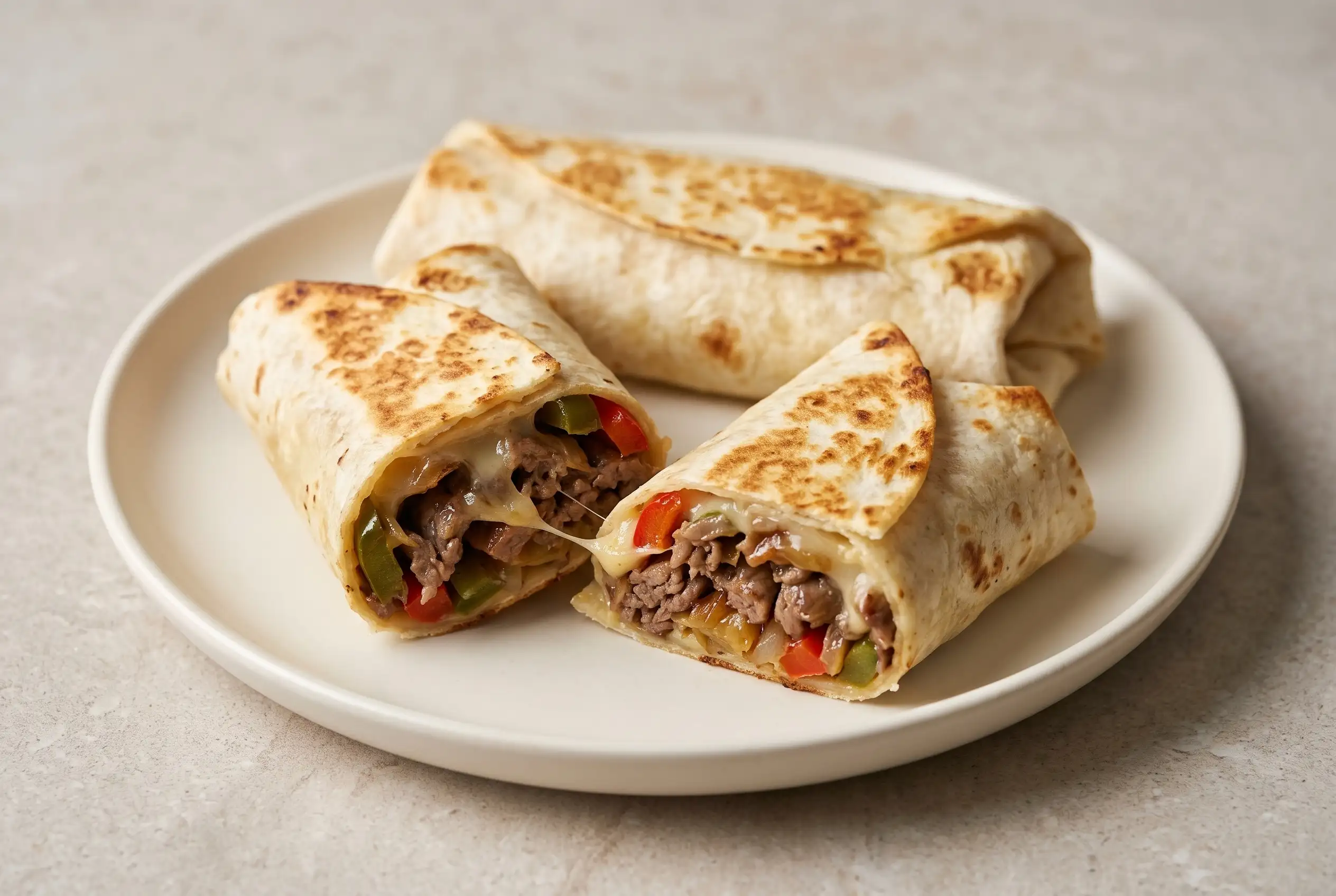
Keto Philly Cheesesteak Roll Ups with Provolone Cheese
Ingredients
Method
- Cut the beef into thin strips and chop the bell peppers and sweet onion. Set out the provolone slices and low-carb tortillas so they are ready for filling.
- Place a large skillet over medium heat and add the olive oil. Sauté the chopped onion and bell peppers for 5–7 minutes, stirring occasionally, until the vegetables become tender.
- Raise the heat to medium-high and add the beef strips to the vegetables. Season with salt and black pepper, then stir occasionally for 3–5 minutes until the beef is browned and fully cooked. For food safety, whole-cut beef should reach an internal temperature of 145°F (63°C), followed by a 3-minute rest.
- Turn the heat down to low and distribute the provolone slices across the beef and vegetables. Continue heating until the cheese has melted over the mixture.
- Portion the cheesy beef and vegetable mixture equally between the 4 low-carb tortillas. Position each portion in the middle, tuck the tortilla sides inward, and roll firmly to enclose the filling.
- Transfer the assembled roll-ups back to the skillet with their seams facing down. Toast for 3–4 minutes total, carefully rotating them so each side develops a golden, lightly crisp exterior.
- Take the roll-ups out of the skillet and serve warm with the provolone still melted.