
Caramel apple cheesecake bars combine a buttery graham cracker crust, a creamy cheesecake filling, tender diced apples, and swirls of caramel sauce. Baked together in a rectangular dish, these layers create a dessert that can be chilled, sliced, and served without the need for a traditional round cheesecake.
The combination works especially well for fall gatherings, when apples and cinnamon are familiar dessert flavors. Preparing the bars also involves a few important decisions: choosing apples that balance the caramel, keeping the cream cheese filling smooth, and allowing enough cooling time before slicing. Each affects the texture and appearance of the finished dessert.
Why Caramel Apple Cheesecake Bars Work So Well
A graham cracker base provides a firm, slightly crumbly foundation for the soft cheesecake layer. The crust also makes individual portions easier to lift and serve once the filling has cooled and set.
Sweet caramel and cinnamon complement the apples, while cream cheese adds a mild tang that prevents the overall flavor from depending entirely on sugar. Using tart apples makes that contrast more noticeable.
Unlike a cheesecake served in wedges, caramel apple cheesecake bars can be divided into rectangular portions. Their chilled texture makes them convenient for preparing ahead of a meal or gathering, particularly when several desserts will be offered.
The Apple Choice That Balances Sweet Caramel
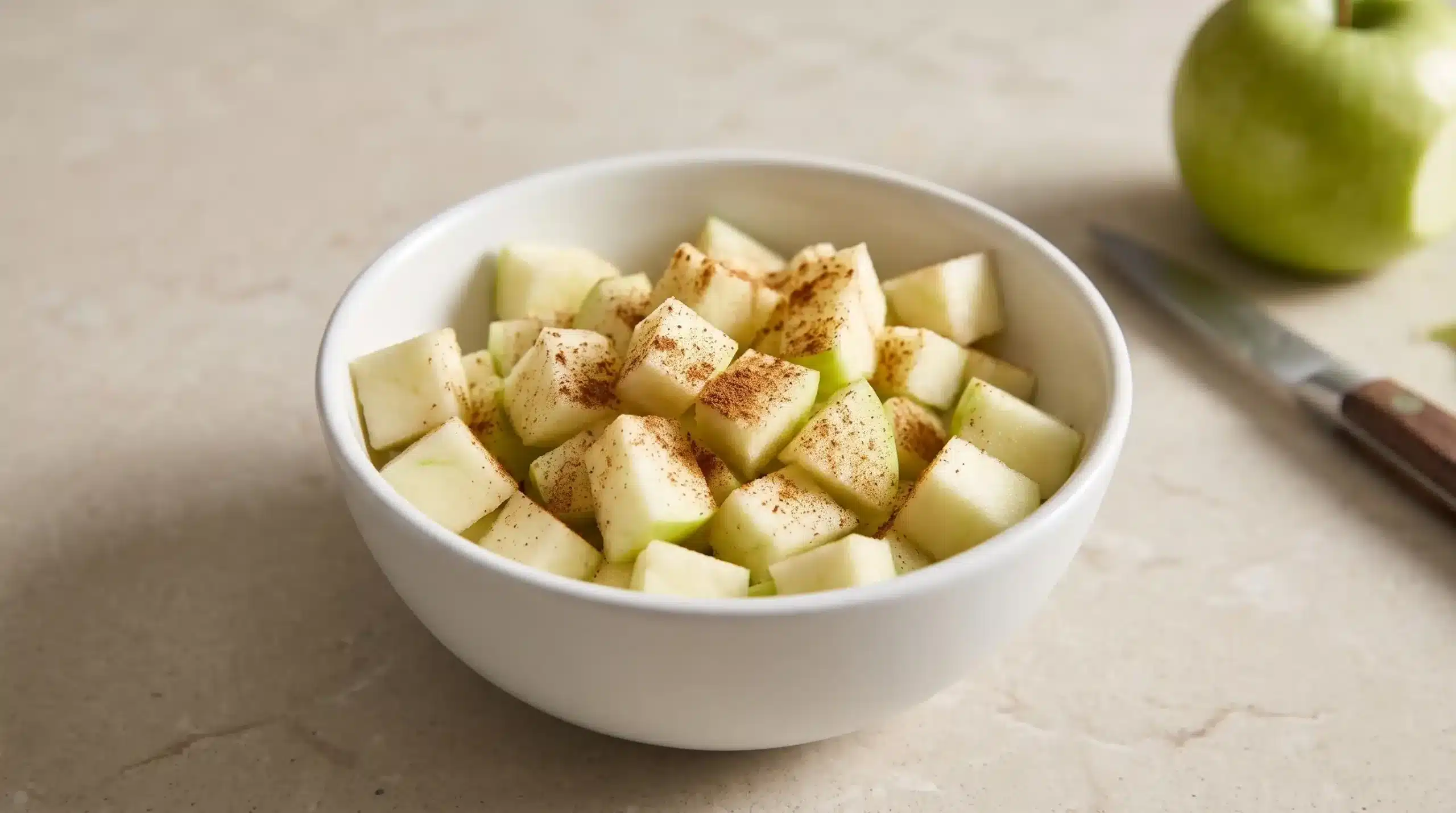
Granny Smith apples are a useful choice because their tartness offsets the sugar and caramel sauce. Other apples can work, but varieties with a sweeter flavor will produce a noticeably sweeter filling. Choose apples that are firm enough to dice into small pieces.
Peeling removes the tougher skin from the filling, while dicing helps distribute the fruit throughout the cheesecake. Keep the pieces reasonably consistent in size so that one portion does not contain large chunks while another has very little apple.
Freshly prepared apples can be mixed directly with cinnamon before being incorporated into the filling. If the diced fruit must stand briefly before use, lemon juice can help prevent browning by slowing the enzymatic reaction that occurs when cut apples are exposed to air. This step is optional when the apples are prepared immediately before mixing.
A Graham Cracker Crust That Supports Clean Slices
The crust begins with graham cracker crumbs combined with melted unsalted butter. Pressing the mixture firmly across the bottom of the baking dish helps create an even base beneath the creamy filling. Pay particular attention to the corners, where loose crumbs can make portions harder to remove.
For caramel apple cheesecake bars with graham cracker crust, an even thickness is more useful than an unusually heavy layer. A consistent base supports the filling without leaving some portions with noticeably more crust than others.
Those who prefer a thicker base can increase both the crumbs and butter slightly, as suggested by the original preparation. Keep the proportions balanced so the mixture remains cohesive when pressed into the dish.
Smooth Cream Cheese Makes the Filling More Even
Softened cream cheese is important for achieving a smooth filling. Cold cream cheese is more difficult to beat evenly with sugar and can leave small lumps that remain visible after baking. Allowing it to soften before mixing makes the process easier.
Eggs should be incorporated individually, giving each enough mixing time to blend into the cream cheese mixture. Vanilla extract completes the cheesecake base before the apples and cinnamon are folded in.
Once the fruit is added, gentler mixing helps keep the diced pieces distributed throughout the filling. The mixture should remain creamy, with apples scattered through it, not collected in one area of the baking dish.
Caramel Swirls Without Losing the Cheesecake Layer
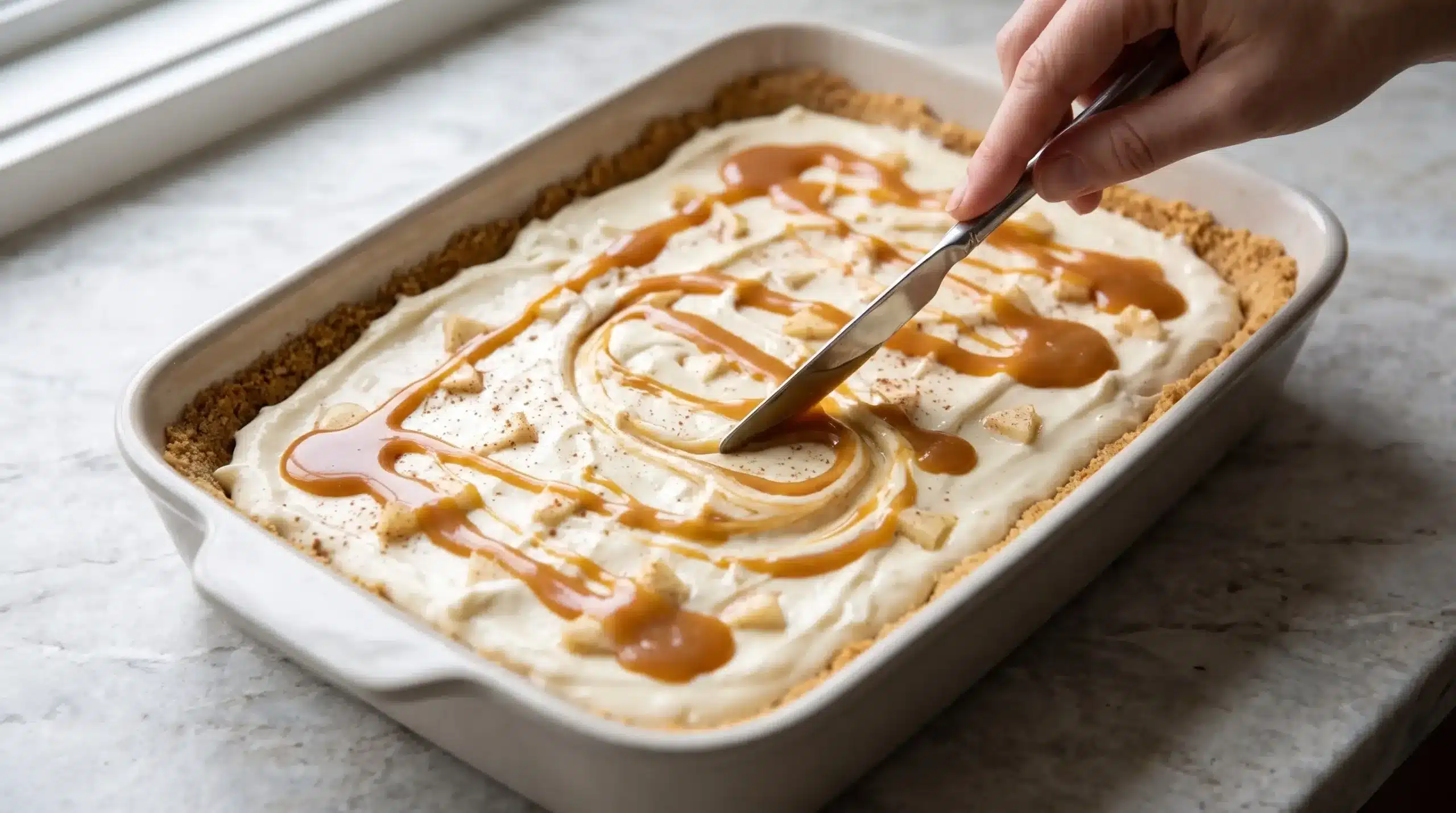
Caramel sauce is added over the assembled cheesecake filling and gently swirled with a knife. Shallow movements create visible streaks without thoroughly blending the caramel into the cream cheese. Both homemade and store-bought caramel sauce are suitable for this purpose, provided the sauce can be drizzled easily.
The Baking Cues That Matter Most for Apple Cheesecake Bars
The oven should be preheated to 350°F (175°C), with the cheesecake mixture spread evenly in a greased 9×13-inch baking dish. An even surface encourages consistent baking, particularly around the edges and center.
During baking, watch the center of the cheesecake instead of relying exclusively on its appearance at the edges. The filling should look set, without a loose or liquid center. A slight movement in the middle is different from visibly wet batter.
Expect the original baking window to fall around 30–35 minutes, although oven behavior and the distribution of apples can affect how the dessert looks as it finishes. Avoid continuing to bake solely to obtain a darker surface, since the cheesecake is intended to remain creamy.
Cooling is part of finishing the dessert, not simply a delay before serving. The filling needs time to become firm enough for slicing, and serving it chilled gives the cheesecake its intended texture.
Common Caramel Apple Cheesecake Bar Mistakes to Avoid
Most problems with these bars come from uneven preparation or cutting before the filling has firmed. The following checks address the most useful points of prevention.
- Cold cream cheese: Beating it before it softens can leave lumps. Begin with softened cream cheese and mix until smooth before adding the remaining filling ingredients.
- Loose crust: Crumbs that are not pressed firmly into the pan may separate during serving. Compress the buttered crumbs evenly, including along the edges.
- Uneven apple pieces: Large or inconsistent chunks can make portions difficult to cut uniformly. Dice the peeled apples into similarly sized pieces.
- Overmixed caramel: Extensive swirling can blur the distinction between caramel and cheesecake. Use a knife to make a few gentle swirls across the surface.
- Unsettled center: Removing the pan while the middle is still visibly liquid can leave the bars too soft. Check that the center has set before ending the bake.
- Early slicing: Cutting the cheesecake while warm can produce messy edges. Let it cool and chill before portioning.
Cooling and Chilling for Neater Cheesecake Squares
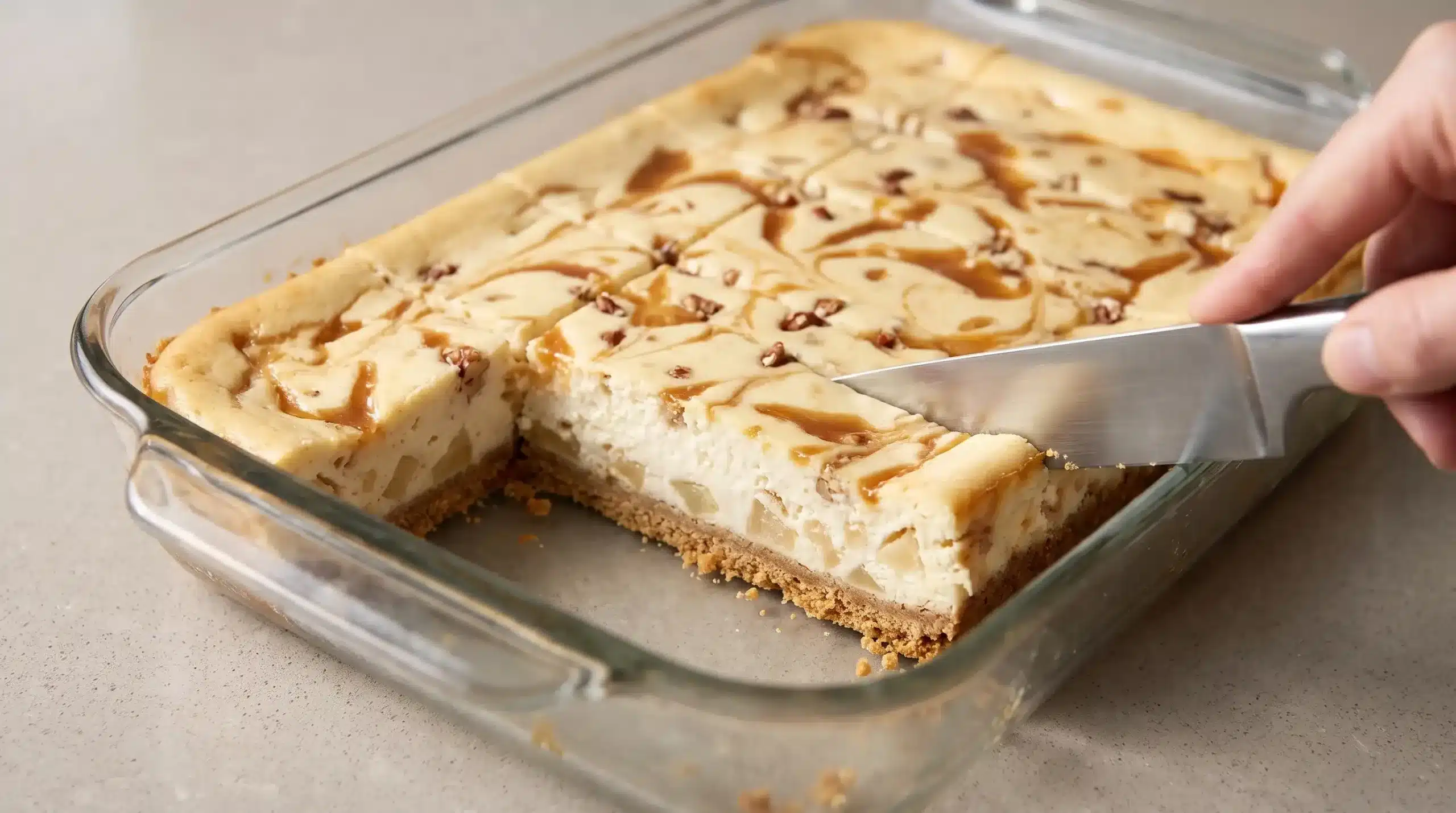
Freshly baked cheesecake is softer than the chilled dessert intended for serving. Allow the pan to cool after leaving the oven, then transfer it to the refrigerator once it is no longer hot. Avoid leaving a cream cheese dessert at room temperature for an extended period.
Chilling helps the filling become firmer and easier to divide into individual bars. If the center still seems very soft when cutting begins, additional refrigerator time may improve its handling.
A clean knife produces more defined edges. Wiping the blade between cuts prevents the creamy filling and caramel from accumulating on it and transferring to the next portion. Cut through the crust carefully so it remains attached to each bar.
Serving Chilled Bars with Simple Accompaniments
These cheesecake squares are intended to be served chilled, directly from the refrigerator. They can be arranged on a dessert plate individually or presented together on a serving platter.
For a richer presentation, add a small dollop of whipped cream or a scoop of vanilla ice cream. Both are optional, since the caramel and cream cheese already provide considerable richness. When assembling a dessert platter, serve the bars in small portions alongside strawberry crunch cheesecake tacos to offer guests a choice of fruit-filled cheesecake treats. Coffee or tea makes a practical beverage pairing, especially when the desserts are served after a meal.
Apple, Spice, and Sauce Variations
Different apple varieties can alter the balance of sweetness and tartness without changing the fundamental preparation. Mixing varieties is also possible, provided the fruit is peeled and diced consistently.
For a warmer spice profile, add a small pinch of nutmeg or allspice alongside the cinnamon. Either option changes the flavor without requiring a different crust or cheesecake base. A modest amount is sufficient because the caramel and apples should remain recognizable.
Chopped nuts may be incorporated into the filling for added texture. Alternatively, chocolate sauce can replace caramel for a different dessert profile, although the result will no longer have the characteristic caramel-apple combination.
A Gluten-Free Graham Cracker Alternative
Gluten-free graham cracker crumbs can replace conventional crumbs when preparing a gluten-free version. Check the labels of the crumbs and other packaged ingredients, including caramel sauce, to confirm they meet the intended dietary requirements. The crust still needs sufficient melted butter to hold together when pressed into the baking dish.
Refrigerator and Freezer Storage for Cheesecake Bars
Because the filling contains cream cheese and eggs, caramel apple cheesecake bars should be kept refrigerated once cooled. Place the cut portions in an airtight container to limit drying and protect them from absorbing other refrigerator odors.
For longer storage, wrap portions carefully and place them in freezer-suitable packaging. Freezing individual bars can make it easier to remove only the amount needed later. Thaw frozen portions in the refrigerator before serving, avoiding extended time on the counter.
| Storage method | Suggested period | Packaging | Serving preparation |
|---|---|---|---|
| Refrigerator | Up to 1 week in the original guidance; 3–4 days is a more conservative food-safety choice | Airtight container | Serve chilled |
| Freezer | About 2–3 months for quality | Well-wrapped bars in freezer-safe packaging | Thaw in the refrigerator |
| After refrigerator thawing | Use promptly | Keep covered and refrigerated | Serve cold without additional baking |
Freezing may slightly alter the texture of the cheesecake or apples after thawing. Keeping the bars well wrapped helps reduce freezer burn, while gradual refrigerator thawing supports a more consistent serving texture.
Making Caramel Apple Cheesecake Bars Ahead of a Gathering
Preparing the dessert in advance can simplify serving because the cheesecake requires cooling and chilling anyway. Completing the baking before the day of a gathering allows the filling to firm in the refrigerator without competing with other last-minute food preparation.
Keep the bars covered until serving time, and cut them once sufficiently chilled. If transporting the dessert, use a suitable chilled container and keep it cold until it can be refrigerated again.
What Each Portion Contributes Nutritionally
The original nutritional estimate puts an individual serving at approximately 300 calories, with 5 grams of protein and 18 grams of fat. Actual values vary with the cream cheese, caramel sauce, crust proportions, and portion size. Apples contribute some fiber, but these bars remain a sweet dessert containing substantial sugar and fat.
A Firm Crust and Set Center Complete the Cheesecake Bars
An evenly pressed graham cracker base and a set, creamy center give caramel apple cheesecake bars the structure needed for tidy portions. The tartness of the apples and the gentle cinnamon flavor keep the sweet caramel distinct from the cheesecake filling.
Careful cooling finishes what baking begins. Once chilled, the bars can be cut without disturbing the layers unnecessarily, leaving the apples distributed through the cheesecake and the caramel swirls visible across the surface.
Caramel Apple Cheesecake Bars Questions About Baking and Substitutions
Can I make caramel apple cheesecake bars without a separate crust-baking step?
Yes. The supplied preparation presses the graham cracker and butter mixture directly into the greased pan before adding the cheesecake filling. The crust and filling bake together, so a separate prebaking stage is not required by these instructions.
Can I use store-bought caramel sauce if it is very thick?
A thick caramel sauce may be difficult to swirl evenly. Let it reach a pourable consistency according to the product’s directions before drizzling it over the cheesecake. Avoid adding excessive liquid, which could change the filling’s consistency.
Should the apples be cooked before adding them to the cheesecake filling?
No precooking is included in the original preparation. The peeled, diced apples are folded directly into the cheesecake mixture with cinnamon, then baked with the filling. Precooking would introduce a different moisture and texture balance.
Can I prepare the filling with a different type of cream cheese?
Regular softened cream cheese is the basis of the stated ingredients. A different formulation, particularly one with substantially different moisture or fat content, may affect how the cheesecake sets. Using the specified type is the most straightforward choice for preserving the intended texture.
What if the caramel sauce sinks into the filling?
Some caramel may settle into the soft cheesecake during baking. This does not necessarily mean the dessert has failed. For a more visible pattern, drizzle the sauce over the surface and make shallow swirls without stirring through the entire depth of the filling.
Can the bars be served directly from the freezer?
The intended serving texture is chilled and creamy, not frozen solid. Transfer frozen portions to the refrigerator to thaw before serving. This allows the cheesecake and apple pieces to soften gradually while keeping the dessert at a safe refrigerated temperature.
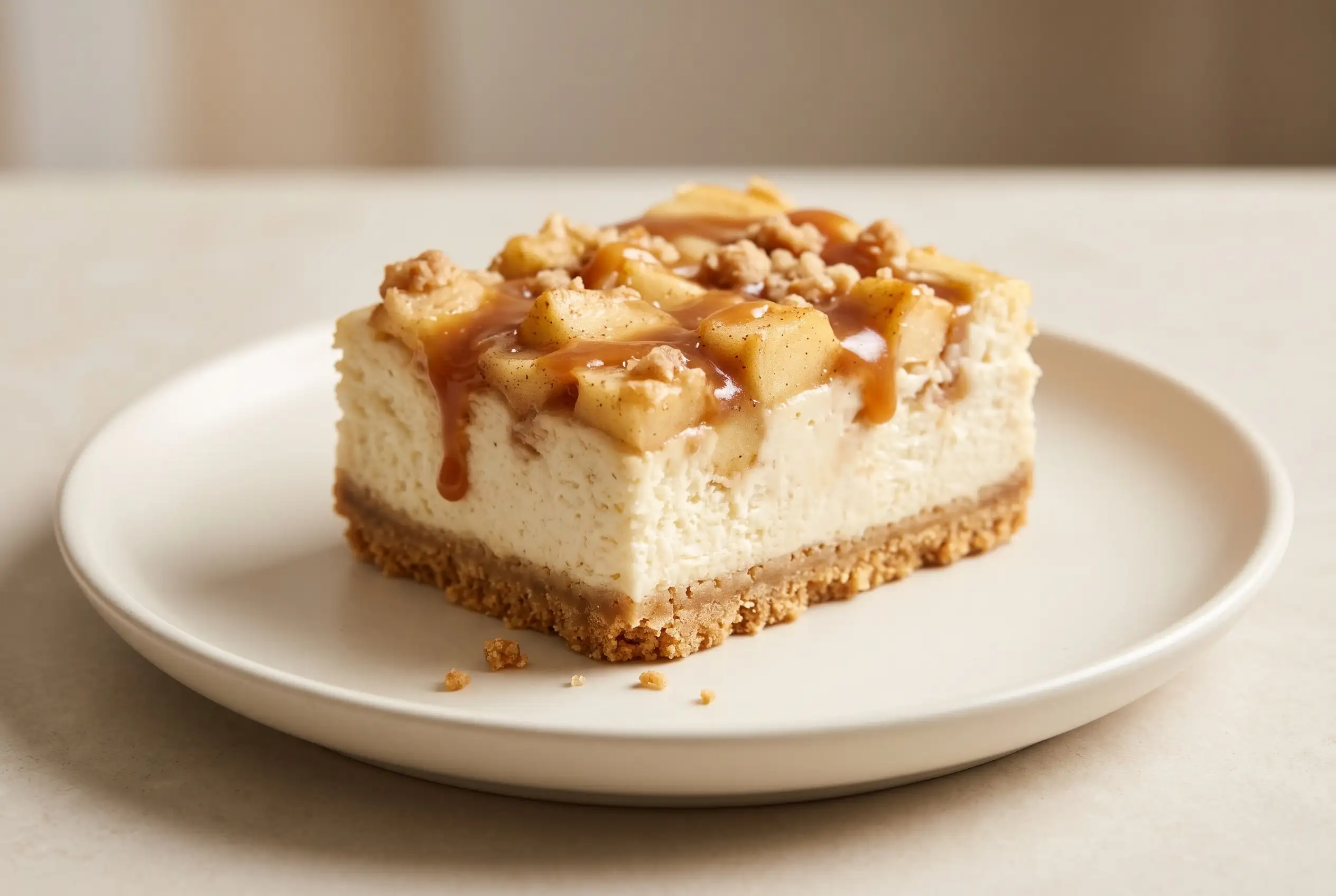
Caramel Apple Cheesecake Bars with Graham Cracker Crust
Ingredients
Method
- Set the oven to 350°F (175°C). Lightly grease a 9×13-inch baking dish.
- Stir the graham cracker crumbs and melted butter together in a mixing bowl until combined. Transfer the mixture to the baking dish and press it into a compact, uniform layer across the base.
- In a large mixing bowl, beat the softened cream cheese with the granulated sugar until the mixture is creamy and free of lumps.
- Mix in the eggs individually, allowing each egg to blend into the filling before adding the next. Add the vanilla extract and stir to combine.
- Add the diced apples and ground cinnamon to the cream cheese mixture. Fold gently until the apple pieces are distributed throughout the filling.
- Transfer the apple cheesecake mixture onto the prepared graham cracker base. Use a spatula to distribute the filling evenly.
- Pour the caramel sauce in a drizzle across the cheesecake surface. Run the tip of a knife through the caramel to form a swirled pattern, keeping the blade above the crust.
- Place the baking dish in the preheated oven and bake for 30–35 minutes. The outer portion should be set, with no liquid remaining in the center. Check that the egg-based cheesecake filling reaches 160°F (71°C) at its center.
- Take the cheesecake out of the oven and allow it to cool. Transfer the baking dish to the refrigerator for approximately 2 hours, or until the cheesecake is completely chilled.
- Slice the chilled cheesecake into 12 evenly sized bars and serve cold.