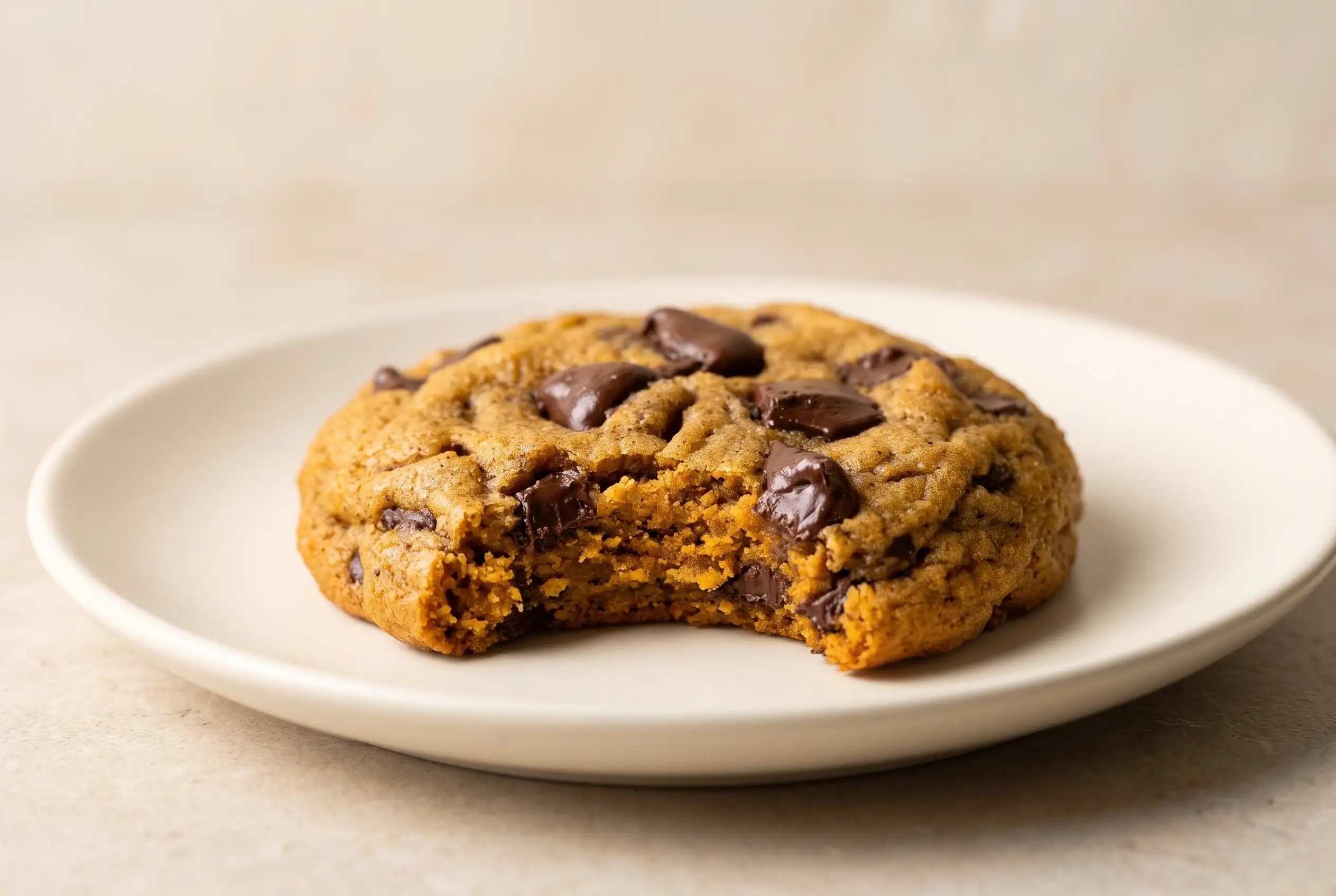

Fudgy brookies combine the rich, moist center of a brownie with the convenient shape and chewy edges of a chocolate cookie. Also known as Fudgy Chewy Browkies (Brookies), these chocolate treats develop thin, crackly tops while keeping a soft interior filled with melted chocolate and chocolate chips.
Unlike traditional layered brookies, these are made from a single chocolate batter that is portioned onto a baking tray. Whipped eggs, two types of sugar, melted dark chocolate, and careful folding help create their distinctive texture. The most important details are keeping air in the mixture, avoiding excessive mixing, and removing the cookies once their surfaces have set.
The Brownie-Cookie Texture Behind Fudgy Brookies
A typical brownie has a dense, chocolate-rich interior, while a cookie develops a more defined exterior as it bakes. These brookies sit between the two. Their centers stay soft and fudgy, but their edges become firm enough to hold each portion together after cooling.
Because the batter contains melted dark chocolate as well as cocoa powder, its chocolate flavor is more pronounced than that of a plain chocolate chip cookie. Additional chocolate chips provide small pockets of chocolate throughout each portion.
One characteristic worth watching is the surface. A properly baked batch develops visible cracks across the top while remaining moist underneath. That appearance helps distinguish these treats from soft chocolate cookies with smooth, rounded surfaces.
Dark Chocolate and Sugar Choices That Affect the Brookies
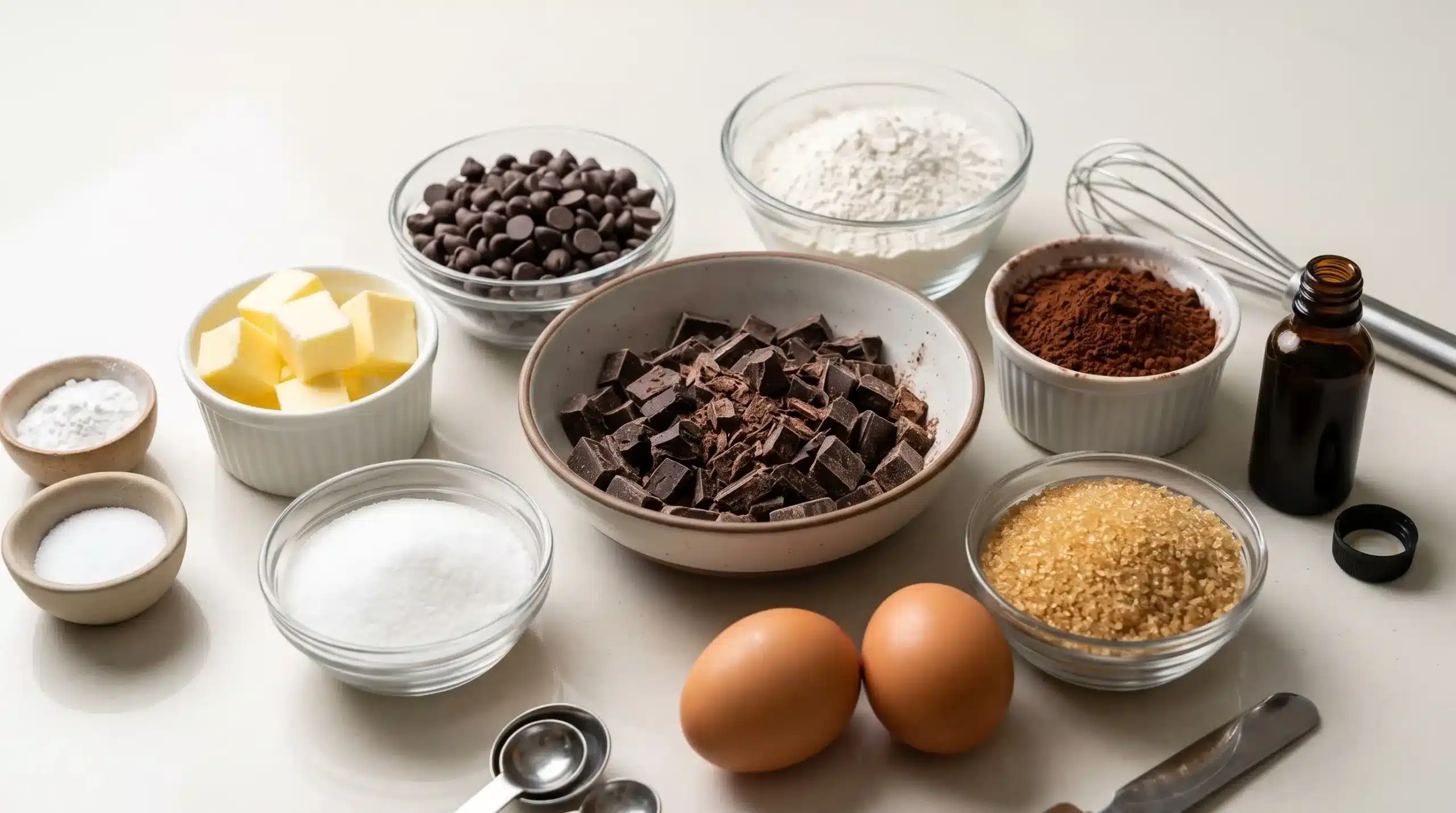
The combination of chopped dark chocolate and butter forms the rich base of the batter. Both ingredients are melted together until smooth, making it easier to distribute chocolate evenly through the whipped egg mixture. Chocolate quality matters because the dark chocolate supplies much of the finished flavor.
Caster or granulated sugar is paired with Demerara or raw sugar. Whipping these sugars with room-temperature eggs creates a thick, light mixture that helps establish the finished texture. Demerara sugar has larger crystals than caster sugar, so it may require particular attention during whisking to become thoroughly incorporated.
The recipe also contains a relatively small amount of flour compared with its chocolate ingredients. That balance is important for a soft brownie-like center. Adding too much flour or mixing aggressively after incorporating it can interfere with the intended consistency.
Either salted or unsalted butter can be used. Since the batter already contains salt, the salted version may produce a slightly more noticeable salty contrast. Vanilla rounds out the chocolate mixture without changing the overall character of the brookies.
The Thick Whipped Egg Mixture Is the Critical Starting Point
Room-temperature eggs are particularly useful for this chewy brookies recipe because they combine readily with sugar during whipping. An electric hand whisk on high speed should turn the eggs and sugars into a noticeably lighter, thicker, fluffier mixture after about five minutes.
That visible change matters more than simply stirring until the sugar appears combined. The whisking incorporates air, which contributes to the structure and distinctive surface of the baked cookies.
Once the eggs are whipped, they should be handled gently. Vigorous stirring during later mixing can knock out much of the incorporated air, leaving a denser batter with less of the characteristic crackly appearance.
Gentle Folding Keeps the Chocolate Batter Balanced
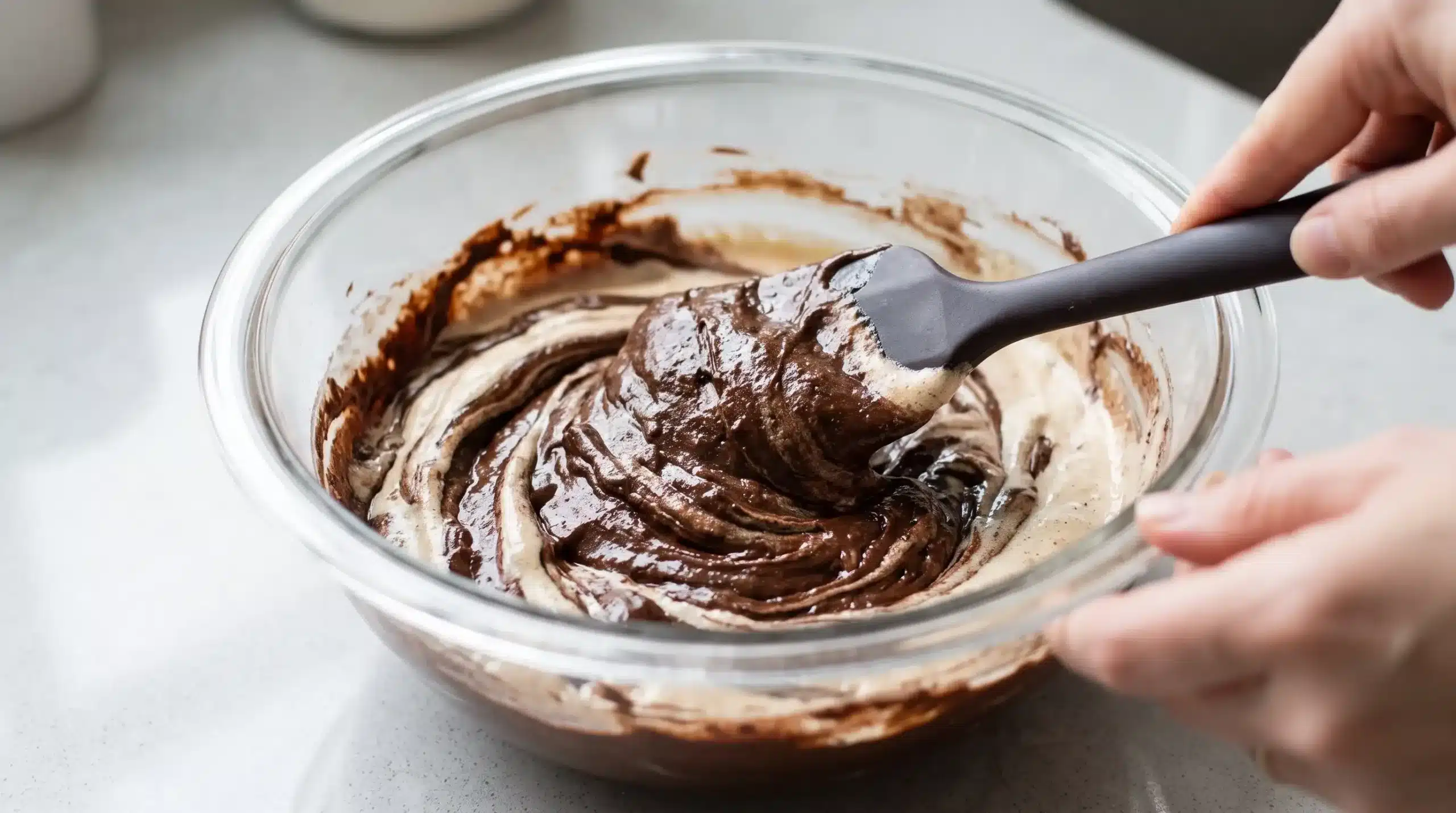
Melted chocolate and butter should be smooth and fluid before joining the whipped eggs. After melting them over simmering water, avoid introducing excessive heat into the egg mixture. Allow the chocolate mixture to cool slightly if it is still very hot, while keeping it fluid enough to fold easily.
Use a spatula to incorporate the chocolate with broad, gentle movements. The mixture will become darker and richer as the two components combine. Continue only until the chocolate is distributed without obvious streaks.
The sifted flour, cocoa powder, baking powder, and salt are folded in separately with the chocolate chips. Stop when the dry ingredients are incorporated. A smooth-looking batter does not require prolonged stirring, and excessive mixing is unnecessary for fudgy brownie cookies.
Oven Temperature and Crackly Tops Control Doneness
Fan-assisted ovens and conventional ovens use different temperature settings for these brookies. Preheat a fan oven to 160°C (320°F), or use 170°C (338°F) with conventional heating. Lining the baking tray with parchment paper helps prevent sticking and makes removing the delicate cookies easier.
Fan-assisted ovens move heated air around the tray more continuously than conventional ovens, and circulating hot air can speed up baking. This is why convection recipes commonly call for a lower oven temperature. For these brookies, use the specified setting for your oven type and begin checking for crackly tops and set edges near the end of the baking time.
Portion the batter by tablespoons, leaving generous space between scoops. Each portion spreads during baking, so closely packed scoops may merge before their edges have set.
Bake for approximately 12–14 minutes, watching for set surfaces with visible cracks. The centers should retain some moisture. Waiting until every cookie looks completely dry can work against the soft brownie texture that defines fudgy brookies.
Residual heat continues to affect the cookies after they leave the oven. Keeping them on the tray briefly allows their structure to firm up before they are moved, reducing the chance of damaging the still-soft centers.
Reading the Brookies Before Removing Them from the Oven
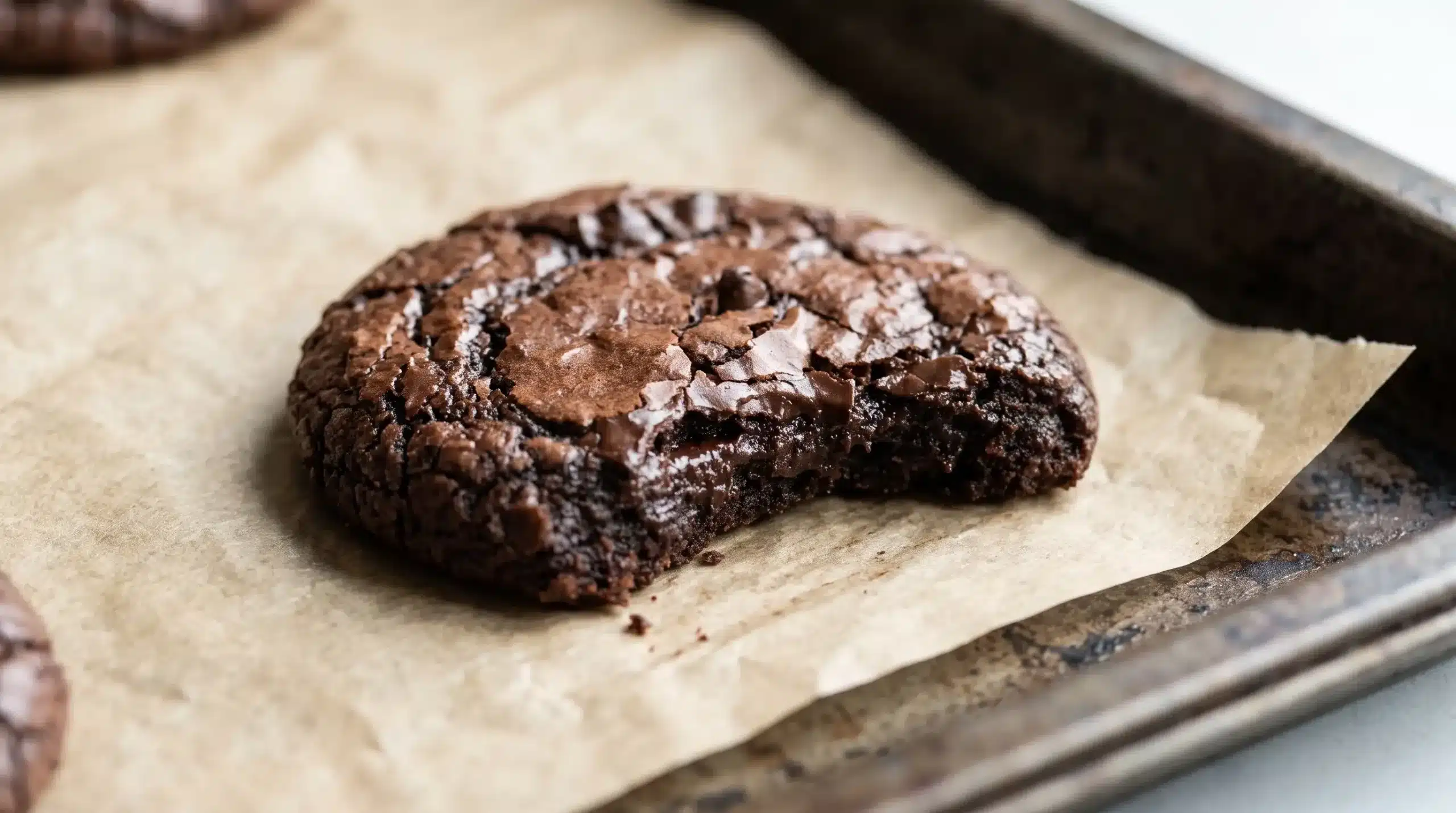
Visual signals are especially important when baking a soft-centered chocolate cookie. The dark surface makes subtle color changes difficult to judge, so cracks, set edges, and the consistency of the middle are more useful indicators.
| What You Notice | What It Suggests | Practical Decision |
|---|---|---|
| Glossy, visibly wet surface | The batter may still be underbaked | Continue baking and check again shortly |
| Crackly top with set edges | The expected brownie-cookie structure has developed | Check the center before removing the tray |
| Toothpick with a few moist crumbs | The center is baked but retains moisture | Remove from the oven and allow tray cooling |
| Toothpick coated in wet batter | The middle needs additional baking | Return to the oven briefly and reassess |
| Firm, dry-looking center | The cookies may have baked beyond the intended fudgy stage | Remove promptly to prevent further drying |
A toothpick test is useful, although melted chocolate chips can leave chocolate on the toothpick even when the surrounding cookie is baked. Consider the surface and edges alongside the test instead of relying on a single mark.
Common Fudgy Brookies Mistakes to Avoid
Small differences in preparation can change the consistency of chocolate-heavy cookies. Most avoidable problems involve the whipped eggs, chocolate temperature, batter handling, or baking time.
- Overheating the chocolate: Keep the bowl above gently simmering water without letting its base touch the water. Stir occasionally until the chocolate and butter melt smoothly.
- Underwhipping the eggs: Continue whisking until the sugar and egg mixture becomes visibly thick, pale, and fluffy instead of stopping as soon as the ingredients combine.
- Overmixing the flour: Fold only until the dry ingredients disappear into the batter. Additional stirring can reduce the lightness developed during whipping.
- Crowding the tray: Leave enough room for the tablespoon-sized portions to spread without touching one another.
- Overbaking the centers: Check for crackly surfaces and moist crumbs instead of waiting for a completely dry interior.
- Moving the cookies immediately: Allow about ten minutes of cooling on the baking tray before transferring them to a rack.
If a batch seems unusually delicate straight from the oven, avoid lifting the cookies immediately. Their texture changes as they cool, and the short resting period is part of achieving a manageable exterior without deliberately baking away the moisture inside.
Chocolate Chips Create Pockets Within Each Cookie
The additional chocolate chips are mixed into the dry ingredients before they join the wet batter. This helps distribute them through the mixture as the flour and cocoa are folded in.
Dark chocolate chips keep the overall flavor firmly chocolate-focused, while milk chocolate chips introduce sweeter pockets within the rich base. Either option works with the chopped dark chocolate already melted into the batter.
For a different texture, chopped nuts can also be included. Keep additions moderate so the soft chocolate batter can still hold together when portioned.
Cooling Turns Soft Brownie Cookies into Easy-to-Handle Treats
Freshly baked brownie cookies can feel fragile because their centers have not finished firming. Leave them on the parchment-lined tray for approximately ten minutes before moving them to a cooling rack.
During this period, the outer structure becomes easier to handle while the interior remains moist. Moving them too early risks breaking their edges or disturbing the soft middle.
For a firmer eating texture, allow the cookies to cool completely. If a softer dessert is preferred, they can also be enjoyed while still slightly warm, once they are sufficiently set to lift without falling apart.
Sea Salt Gives the Chocolate Surface a Savory Contrast
A light sprinkle of sea salt immediately after baking is an optional finishing touch. Applying it while the surfaces are still warm helps it settle onto the cookies.
Use a restrained amount, particularly when preparing the batter with salted butter. The salt should provide a small contrast to the chocolate and sugar without dominating each bite.
Serving Fudgy Brookies Warm or at Room Temperature
Serving temperature changes the eating experience. Warm brookies have a softer chocolate center, while fully cooled cookies are easier to handle and have a more established chewy consistency.
For dessert, a scoop of ice cream provides a cool accompaniment to the rich chocolate. A dollop of whipped cream offers another simple pairing without requiring additional changes to the batter.
When arranging them for sharing, allow the cookies to become sufficiently firm before stacking or transferring them to a serving plate. Their soft interiors are a desirable feature, but freshly baked portions need careful handling.
Easy Chocolate Variations Without Losing the Fudgy Center
Changing the mix-ins can produce different versions of the same brownie-cookie base. The most suitable variations use ingredients already compatible with chocolate cookies and avoid major changes to the batter’s proportions.
- Nutty brookies: Add chopped nuts for a firmer, crunchy contrast against the soft interior.
- Milk chocolate version: Choose milk chocolate chips for sweeter pockets of chocolate throughout the cookies.
- White chocolate variation: Include white chocolate pieces for a sweeter contrast with the dark chocolate base.
- Caramel pieces: Add small caramel pieces for another sweet element within the chocolate batter.
Keep the original chocolate-rich batter as the foundation when experimenting. Large quantities of extra mix-ins can make spooning and shaping more difficult, particularly because the batter is intended to spread during baking.
Airtight Storage Protects the Chewy Brookies Texture
Leftover brookies can be stored in an airtight container at room temperature for approximately three to five days. Let them cool before closing the container to avoid trapping excessive moisture while they are still warm.
For longer storage, place the cooled cookies in a suitable airtight container and freeze them for up to one month. Separate layers with parchment paper so the cookies do not stick together.
When serving frozen leftovers, allow them to thaw until they reach the desired eating temperature. Keeping the portions separated during freezing also makes it easier to remove only the number needed.
Portion Size Shapes the Brookies’ Soft Center
Tablespoon-sized scoops are the intended portions for these chocolate cookies. Keeping the scoops reasonably consistent helps them spread and bake at a similar rate on the same tray.
Larger scoops may require different baking behavior, so the original tablespoon portions offer a useful reference when aiming for crackly tops with soft centers. Avoid flattening them unnecessarily before baking because the batter is already designed to spread.
Fudgy Brookies Work Best When Their Centers Stay Moist
Crackly surfaces, set edges, and a few moist crumbs are the most meaningful signs of successful fudgy brookies. Together, they indicate that the batter has developed enough structure to become a cookie without losing the soft brownie character beneath the surface.
Careful whipping, gentle folding, controlled baking, and a short rest on the tray all support that texture. Once the cookies are cool enough to handle, the result is a chocolate-rich treat with chewy edges and a tender middle.
Brookies Questions About Substitutions, Texture, and Baking
Can brown sugar or coconut sugar replace the two sugars?
Brown sugar or coconut sugar can be used as alternatives, although the flavor and texture may change. Because the egg-and-sugar mixture is whipped until thick and fluffy, pay attention to its consistency when using a substitute. Different crystal sizes and moisture levels can affect how the mixture behaves.
Can fudgy brookies be made with gluten-free flour?
A gluten-free all-purpose flour blend can replace the plain flour. Choose a blend intended for baking and expect some variation in the finished texture. The original version uses wheat flour, so gluten-free results may not have exactly the same chewiness or structure.
Can the melted dark chocolate be replaced completely with milk chocolate?
Milk chocolate is a possible variation, but replacing all the dark chocolate changes more than the sweetness. Milk chocolate generally contains a different balance of cocoa solids, sugar, and milk ingredients, which may affect how the batter sets. Using dark chocolate for the melted base and milk chocolate for the chips is a simpler way to change the flavor while retaining the original chocolate foundation.
Why do some brownie cookies spread more than others?
Spreading can be affected by batter temperature, portion size, and how thoroughly the mixture was combined. A warmer chocolate mixture can leave the batter softer when scooped. Consistent tablespoon portions and a properly preheated oven help keep the baking conditions similar throughout a batch.
Can the brookie batter be prepared ahead of baking?
The batter is designed to be portioned and baked after the whipped eggs and melted chocolate have been combined. Holding it for an extended period may reduce the air incorporated during whisking or change its consistency as the chocolate cools. Preparing the ingredients in advance and mixing shortly before baking is a more suitable approach.
Are brookies the same as layered brownie-cookie bars?
Both combine brownie and cookie characteristics, but their construction differs. Layered chocolate chip cookie brownies typically contain distinct brownie and cookie dough portions baked together in a pan. These brownie cookies use one chocolate batter scooped onto a baking tray, producing individual portions with crackly surfaces and fudgy centers.
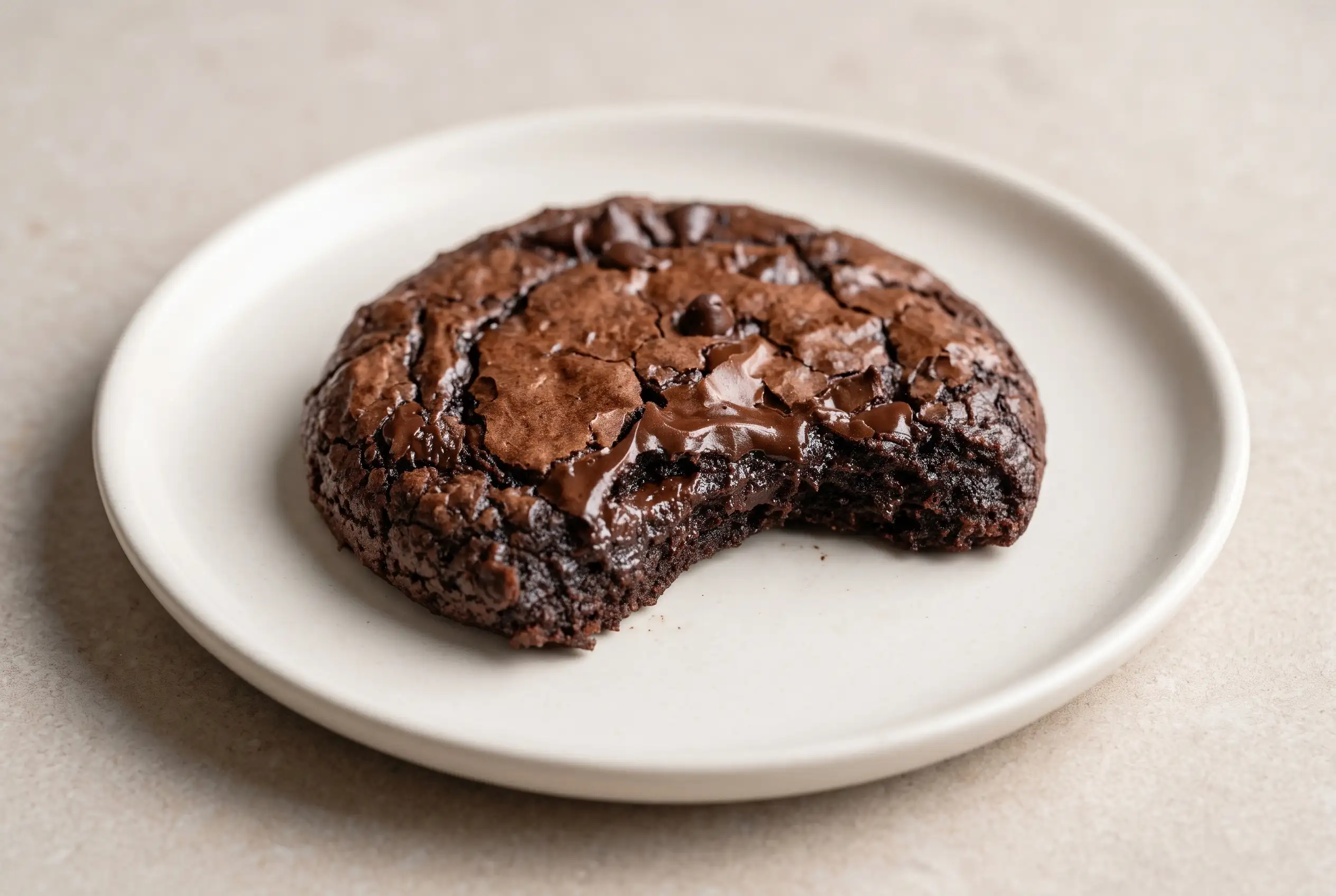
Fudgy Brookies with Dark Chocolate and Chocolate Chips
Ingredients
Method
- Set the oven to 320°F (160°C) if using a fan oven, or 338°F (170°C) for a conventional oven. Cover a baking sheet with parchment paper.
- Add the chopped dark chocolate and butter to a heatproof bowl positioned over a saucepan of gently simmering water. Make sure the bowl does not touch the water. Stir periodically until both ingredients have melted into a uniform mixture. Take the bowl off the heat and mix in the vanilla extract.
- In a separate bowl, combine the room-temperature eggs with the caster sugar and Demerara sugar. Using an electric hand mixer at high speed, whisk for approximately 5 minutes until the mixture becomes light in color, thick, and airy.
- Sift the flour, cocoa powder, baking powder, and salt together into another bowl. Stir in the chocolate chips until evenly distributed.
- Using a spatula, carefully incorporate the melted chocolate mixture into the beaten eggs and sugars in several additions. Fold gently to retain as much of the whipped mixture’s volume as possible.
- Add the prepared dry ingredients and chocolate chips to the batter. Fold just until the flour is fully incorporated, without working the mixture more than necessary.
- Spoon the batter onto the parchment-lined baking sheet in tablespoon-sized mounds, spacing them apart to accommodate spreading during baking.
- Bake for 12–14 minutes. The brookies are ready when the outer edges hold their shape and the surfaces develop delicate cracks. The middles should still feel slightly soft, with a toothpick producing moist crumbs but no uncooked batter.
- Take the baking sheet out of the oven and add a light sprinkling of sea salt if desired. Keep the brookies on the hot baking sheet for approximately 10 minutes so they can become firm enough to handle.
- Move the brookies to a wire cooling rack. Let them reach room temperature completely before serving or placing them in storage.