

Lemon crinkle cookies combine fresh lemon juice, fragrant zest, and a soft, chewy center beneath a delicate powdered sugar coating. As the cookies spread in the oven, their sugary surfaces develop distinctive cracks that reveal the pale yellow dough underneath. The result is a citrus-flavored cookie with lightly golden edges and a contrasting sweet finish.
These cookies require a little planning because the dough needs time in the refrigerator before shaping. That chilling period makes the mixture easier to handle and helps the sugar coating stay in place. With a few careful techniques, you can produce cookies that retain their tender centers while developing the recognizable crinkled appearance.
What Creates the Signature Lemon Crinkle Texture
The characteristic surface comes from coating rounded portions of dough in sugar before baking. As the dough warms and expands, the outer coating separates into irregular cracks. The contrast between the white powdered sugar and the lemon-colored surface makes those cracks especially noticeable.
Underneath the coating, butter, sugar, and egg create a soft cookie dough. Baking soda contributes to the dough’s rise and spread, while the relatively short baking period keeps the centers tender. The cookies continue to firm as they cool, so their texture changes slightly after leaving the oven.
A good batch of soft lemon crinkle cookies should have a visible sugary exterior without becoming dry throughout. The most useful indicators are lightly golden edges, centers that remain somewhat soft, and cookies sturdy enough to transfer after a brief rest on the baking sheet.
Fresh Lemon Juice and Zest Work Together
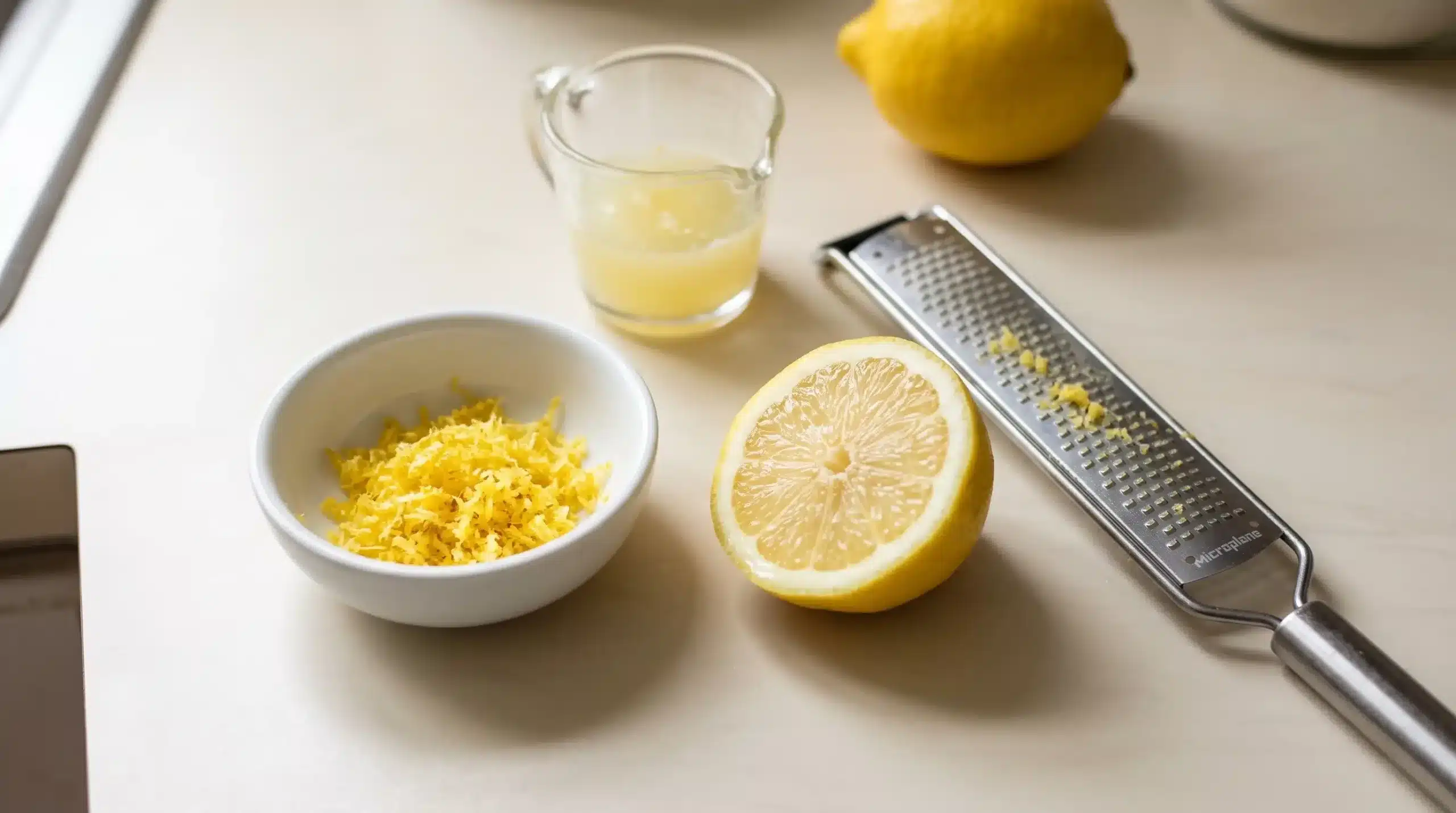
Fresh lemon juice and finely grated zest provide two different aspects of citrus flavor. The juice contributes acidity, while the zest contains aromatic oils that give the dough a more noticeable lemon fragrance. Using both produces a fuller lemon character than relying on juice alone.
For the supplied dough proportions, two tablespoons of lemon juice and one teaspoon of zest establish the starting flavor balance. Additional zest is an option for a more pronounced aroma, particularly when the cookies will be served alongside tea.
When zesting a lemon, remove only the colored outer peel, avoiding the bitter white pith underneath. A fine grater or Microplane produces small pieces of zest that distribute evenly through the dough without leaving noticeable pieces of peel in the finished cookies.
The Double Sugar Coating Makes Crinkles More Visible
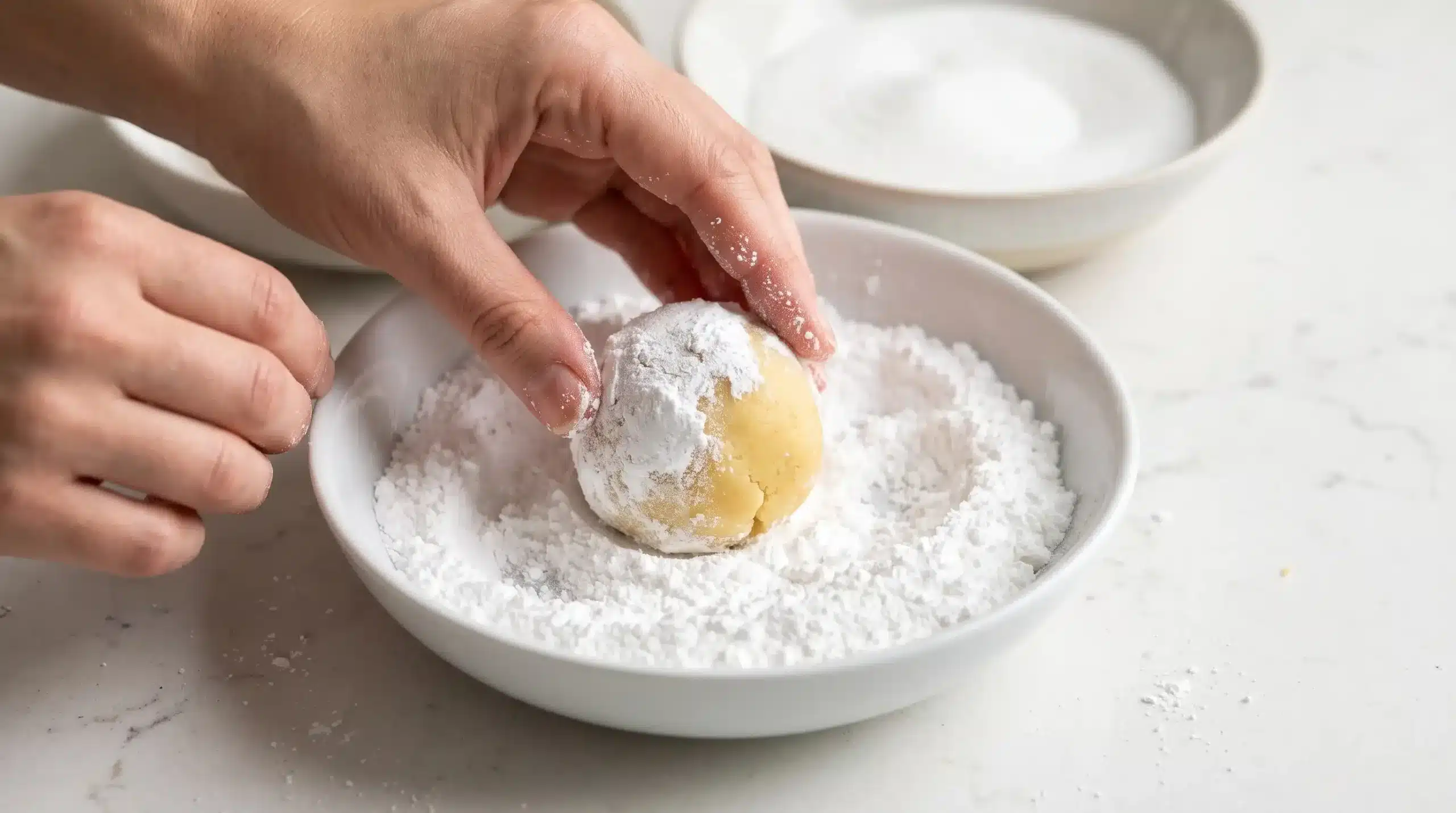
Lemon crinkle cookies with powdered sugar use two separate coatings: ordinary granulated sugar followed by powdered sugar. The first layer creates a sugary barrier around the dough, while the outer layer supplies the familiar white appearance. For a clearly defined cracked finish, coat each dough ball generously; the contrasting white coating is a defining feature of chocolate crinkle cookies as well.
Each dough ball should be covered across its exposed surface, including areas that might otherwise remain bare. A thin or uneven coating can leave larger patches of visible dough before the characteristic cracks have formed.
Keep the two sugars in separate shallow bowls when shaping. This makes the rolling process easier and prevents the powdered sugar from becoming mixed with loose granulated sugar before it reaches the dough.
Cold Dough Is Easier to Shape Without Sticking
The dough requires a two-hour refrigerator rest after mixing. Covering the bowl during this period helps protect it from drying out while the butter firms and the mixture becomes easier to portion.
Sticky dough is difficult to roll into smooth balls and can lose its coating during handling. If the mixture becomes soft while working, returning it to the refrigerator briefly is more useful than repeatedly manipulating it with warm hands.
A small cookie scoop helps keep portions reasonably consistent. Similar-sized balls are more likely to bake evenly, reducing the chance that some cookies become overly firm while others remain underbaked.
Butter Temperature Affects the Lemon Cookie Dough
Softened butter should yield to gentle pressure while still holding its shape. Butter that remains hard is difficult to beat evenly with sugar, while excessively warm butter can leave the mixture loose before the dry ingredients are incorporated.
Beating the softened butter and sugar until fluffy creates a more uniform starting mixture. Once the egg and lemon flavorings are added, mixing until combined is sufficient before introducing the flour mixture.
After the dry ingredients enter the bowl, avoid prolonged mixing. Stop when the flour has been incorporated and no obvious dry patches remain. Excessive mixing can make the finished cookies firmer than intended.
Optional Yellow Coloring Changes Appearance, Not Citrus Flavor
Yellow food coloring is an optional addition, with five to eight drops specified for the dough. It can make the exposed sections of the baked cookies look brighter against the powdered sugar. Without coloring, the cookies retain their lemon flavor and develop a more natural pale appearance.
Oven Control Keeps Lemon Crinkle Cookies Soft
Bake at 350°F (175°C) on parchment-lined baking sheets, leaving approximately two inches between portions. That space allows the dough to spread without neighboring cookies merging together.
The suggested baking window is 10 to 12 minutes. Begin checking near the earlier end of that range, especially when the dough portions are small. The edges should show slight golden coloring while the centers remain soft.
Resist extending the baking time simply because the centers appear tender. The cookies set further during their five-minute rest on the baking sheet. Moving them immediately can cause breakage, while leaving them on a hot sheet for too long may continue firming the bottoms.
Once the initial resting period is complete, transfer the cookies to a cooling rack. Air circulation around the cookies helps them cool without keeping their undersides against a warm baking surface.
Common Lemon Crinkle Cookie Mistakes to Avoid
Most problems with chewy lemon crinkle cookies involve dough consistency, sugar coverage, or baking judgment. The following distinctions can help identify what needs adjusting before the next tray goes into the oven.
- Skipping the chill: Warm dough becomes sticky and difficult to roll. Refrigerate it before portioning, and chill it again if it softens.
- Using butter that is too warm: Overly soft butter can produce a loose mixture. Start with softened butter that still holds its form.
- Mixing too long: Extended beating after adding flour can encourage a firmer texture. Mix only until the dry ingredients disappear.
- Leaving bare dough: Incomplete sugar coverage produces uneven white patches. Roll each ball thoroughly in both coatings.
- Overbaking the centers: Waiting for the entire cookie to feel firm can lead to dryness. Use lightly golden edges as the primary visual cue.
- Transferring too early: Freshly baked cookies are delicate. Allow the brief sheet-pan rest before moving them.
Reading the Surface Before Removing a Tray
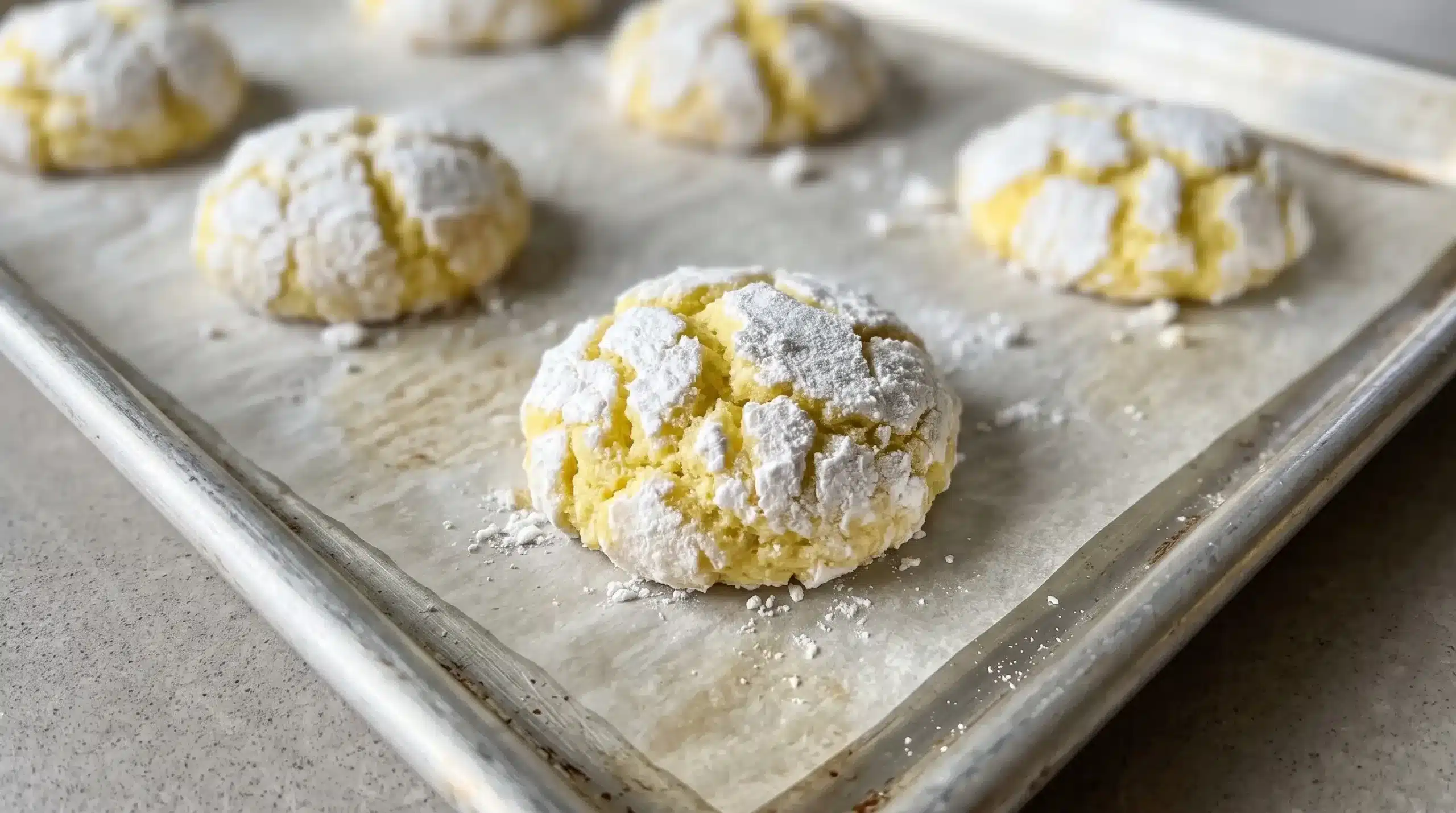
A crinkled top alone does not establish whether a cookie has finished baking. The surface may split while the interior is still very soft, so the edges and overall structure also matter when deciding whether to remove the tray.
Use the following visual guide when checking the cookies during the recommended baking window.
| Visible condition | Likely meaning | Practical response |
|---|---|---|
| Surface beginning to crack, edges still very pale | The dough is spreading and setting | Continue baking briefly and check again |
| Distinct cracks, lightly golden edges, soft center | The intended finishing point | Remove the tray and allow the cookies to rest |
| Firm centers and noticeably browned edges | The cookies may have baked beyond their softest stage | Remove promptly and check the next tray earlier |
| Cookies break when lifted immediately | The structure is still delicate from oven heat | Complete the cooling period on the baking sheet |
Balanced Lemon Flavor Without Excess Liquid
Increasing citrus flavor requires distinguishing between lemon zest and lemon juice. Additional zest supplies more aromatic lemon oils without introducing much extra moisture, making it the more straightforward adjustment for a stronger lemon impression.
Extra juice changes both acidity and liquid content. Since the dough already contains a measured amount of lemon juice, substantial unplanned additions can make it softer and more difficult to scoop and coat.
Vanilla extract is included in a smaller quantity than the citrus ingredients. It provides a subtle background flavor, leaving lemon as the clear focus. Keeping that balance allows the powdered sugar finish to complement the citrus without obscuring it.
Small Variations That Preserve the Crinkle Cookie Idea
The basic dough also accommodates a few flavor changes. Poppy seeds can introduce additional texture, while lime juice and zest can replace the lemon components for a different citrus profile. Chocolate chips offer a sweeter variation with contrasting bites of chocolate.
Each addition changes the eating experience, particularly the balance between the smooth cookie center and its sugar-coated exterior. For a batch intended to showcase the classic lemon flavor, keeping additions restrained preserves the original character.
Serving Lemon Cookies With Tea or Lemonade
Tea provides a straightforward accompaniment for the sweet coating and citrus flavor, while lemonade emphasizes the lemon character. Both choices work for an afternoon snack, shared dessert plate, or a casual gathering.
Serve the cookies at room temperature for easy handling, or enjoy them after they have cooled sufficiently from the oven. A small amount of freshly grated lemon zest can be added at serving time when a stronger citrus aroma is desired.
Room-Temperature Storage and Freezer Protection
After cooling, place the cookies in an airtight container and keep them at room temperature for approximately four to five days. Closing the container while the cookies are still warm can trap condensation, so allow them to cool first.
For longer storage, freeze the cookies for up to three months. Separate layers with parchment paper to limit sticking and reduce damage to their delicate powdered sugar surfaces.
Frozen lemon crinkle cookies can be thawed before serving. Keep them protected while they return to room temperature, and handle the coating gently because moisture can alter its original powdery appearance.
Planning a Batch for Sharing
The yield is approximately 24 cookies, making the batch suitable for dividing among several people or arranging on a shared dessert plate. Using a small scoop helps maintain a consistent size and gives each portion a similar balance of soft center and sweet exterior.
When preparing cookies for an event, account for the dough’s refrigerator rest before choosing when to bake. Chilling is part of the handling process, not an optional finishing detail, so making the dough in advance can simplify the baking schedule.
A Chilled Dough and Gentle Bake Define Lemon Crinkle Cookies
Cold, evenly portioned dough gives the sugar coating a better surface to cling to, while controlled baking allows the centers to remain tender beneath their cracked tops. The combination of fresh lemon zest, juice, and two sugar layers is what establishes the recognizable contrast in flavor and appearance.
For lemon crinkle cookies that remain soft after cooling, the most important judgment is to remove them when the edges are lightly golden without waiting for the centers to become fully firm in the oven.
Lemon Crinkle Cookie Questions About Texture, Substitutions, and Storage
Can I substitute whole wheat flour for all-purpose flour?
Whole wheat flour can be tried, but it may change the texture because it absorbs moisture differently and contains more bran. A partial substitution is a cautious starting point if you want to experiment while keeping the cookies relatively tender.
Why does the powdered sugar sometimes seem to disappear?
Powdered sugar can absorb moisture from the dough during handling and baking. A generous, even outer coating helps preserve more visible white sugar, although some absorption and changes in appearance are normal.
Can I make the dough without a stand mixer?
A hand mixer can be used to beat the softened butter and sugar, and a sturdy spoon can help incorporate the remaining ingredients. The important point is achieving a fluffy butter mixture and then combining the flour without excessive mixing.
Will larger cookie dough balls need more time in the oven?
Larger portions can require a longer baking period than smaller ones. Keep the portions consistent and judge their readiness by the condition of the edges and centers, using the stated baking range as a guide instead of assuming every size finishes identically.
Can I bake both cookie sheets at the same time?
Both parchment-lined sheets may be used together if the oven has enough space for air to circulate. Because oven positions can heat differently, monitor the trays carefully and rotate their positions if necessary for more even baking.
How can I prevent frozen cookies from sticking together?
Arrange completely cooled cookies in layers separated by parchment paper inside a freezer-safe container. This keeps individual cookies easier to remove and reduces the risk of pulling apart or damaging their surfaces when taking out a portion.
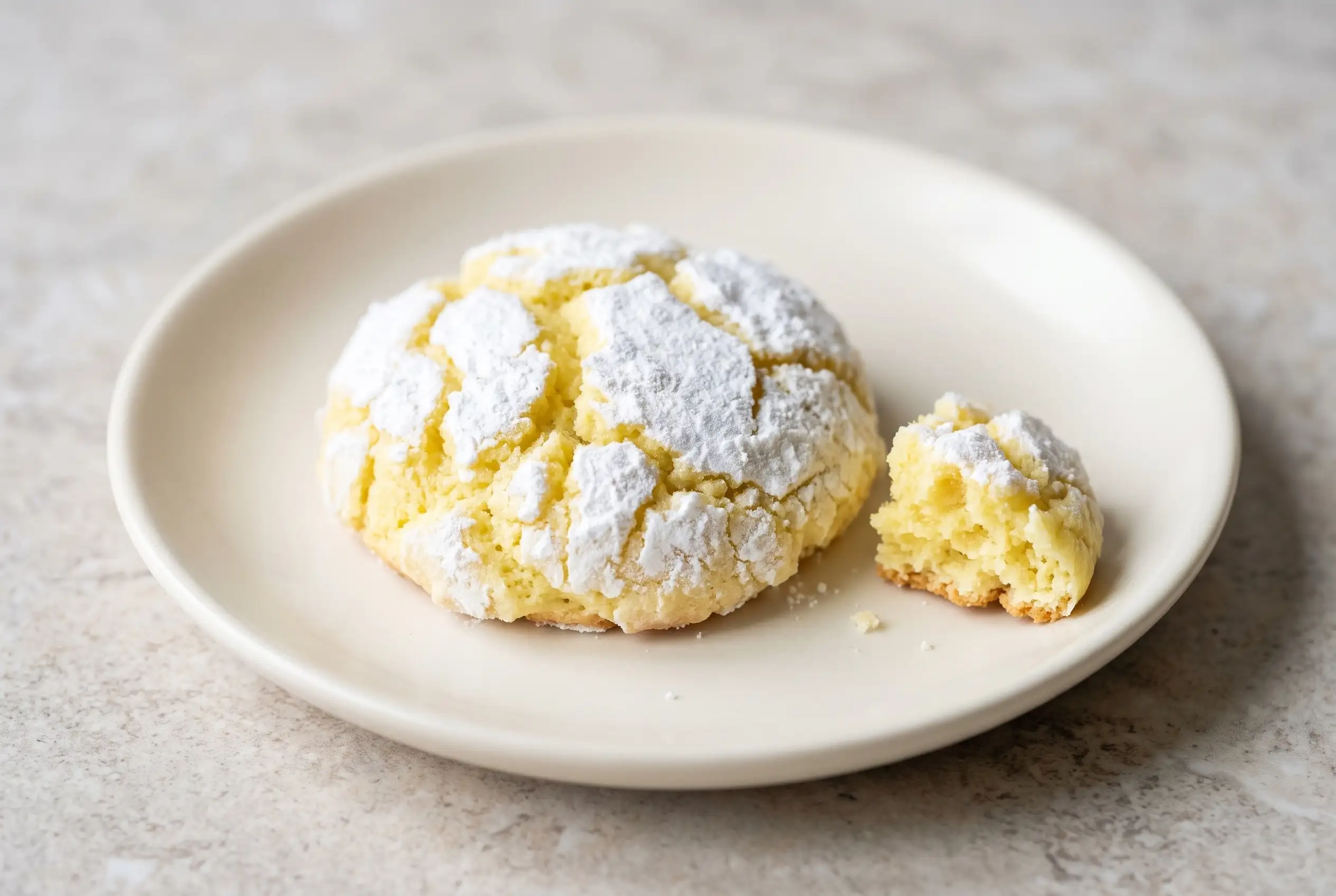
Lemon Crinkle Cookies with Fresh Lemon Juice and Zest
Ingredients
Method
- In a medium bowl, combine the flour, baking soda, and salt with a whisk until the dry ingredients are evenly distributed.
- Using a large mixing bowl, cream the softened butter with 1 cup granulated sugar for about 2 minutes, beating until the mixture becomes pale and airy.
- Beat in the egg, fresh lemon juice, lemon zest, vanilla extract, and yellow food coloring, if using, until fully incorporated.
- Add the dry ingredients gradually while mixing at low speed. Stop mixing once the ingredients come together into a soft, consistent dough.
- Cover the dough and place it in the refrigerator for 2 hours, allowing it to become firm enough to shape.
- Set the oven to 350°F (175°C). Prepare two baking sheets by covering them with parchment paper.
- Divide the cold dough into portions of approximately 1 tablespoon each, shaping every portion into a round ball. If the dough becomes difficult to handle because of stickiness, return it briefly to the refrigerator.
- Pour the remaining 1/4 cup granulated sugar into one shallow bowl and the 3/4 cup powdered sugar into another. Coat each dough ball in granulated sugar before rolling it thoroughly in powdered sugar.
- Transfer the sugar-coated dough balls to the lined baking sheets, spacing them about 2 inches apart so they have room to expand.
- Bake for 10–12 minutes. The cookies are ready when their tops have formed distinct cracks, their edges show a light golden color, and their centers are soft but no longer unset.
- Allow the cookies to remain on the baking sheets for 5 minutes after baking. Carefully move them onto a wire cooling rack and leave them until completely cool.

2 Comments