

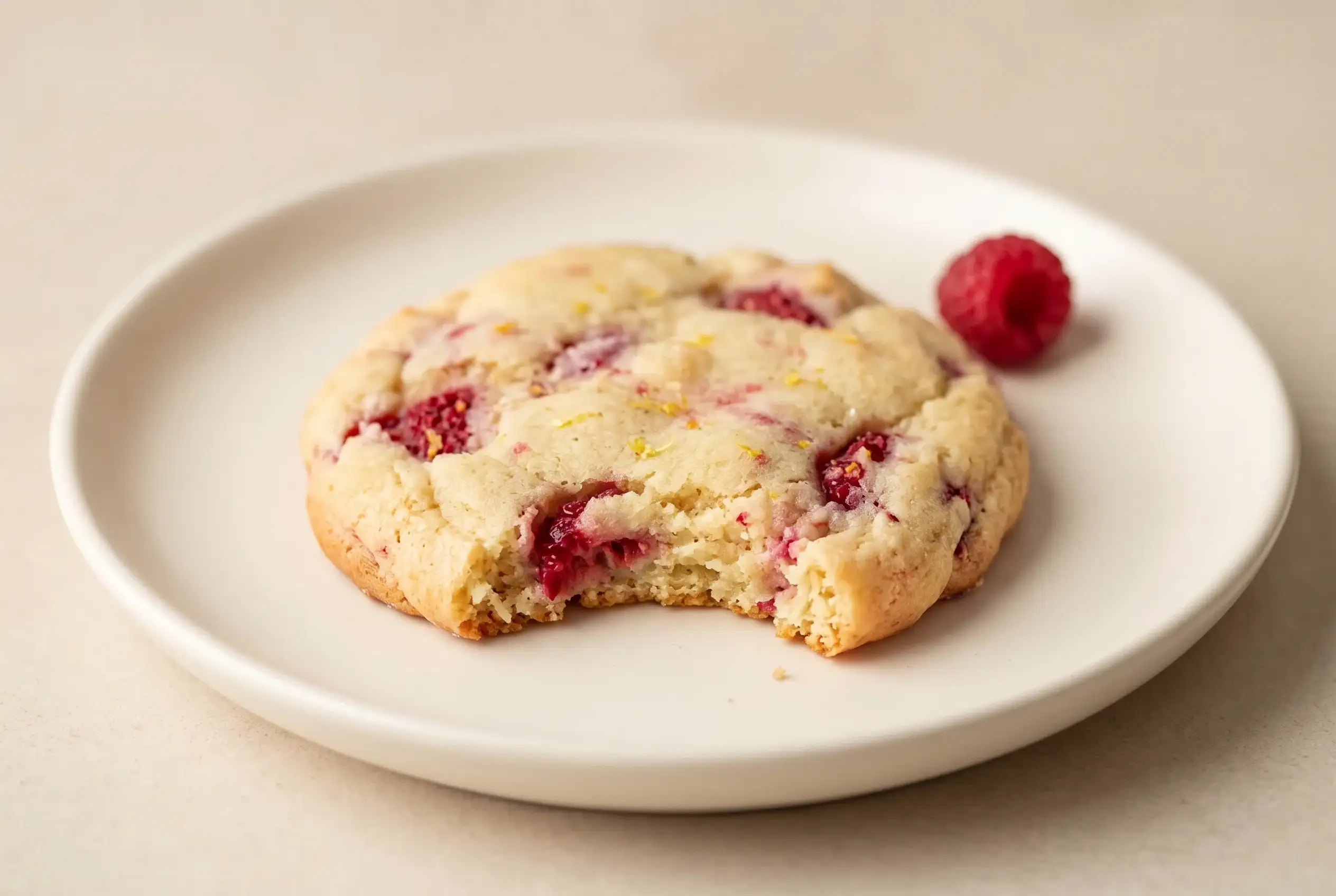
Lemon raspberry cookies bring together bright citrus flavor, sweet-tart raspberries, and a soft, buttery cookie texture. Fresh lemon zest and juice flavor the dough, while small pieces of frozen raspberries create fruity pockets throughout each cookie. Lightly golden edges, tender centers, and a little flaked salt complete the combination.
These easy lemon raspberry cookies use familiar baking ingredients and a straightforward mixing process. The details that matter most are developing the lemon aroma, handling the frozen fruit gently, and recognizing when the cookies are ready to leave the oven. With a few careful decisions, the dough can hold its shape without losing the soft texture that makes these cookies appealing.
Lemon Zest Creates a More Fragrant Cookie Dough
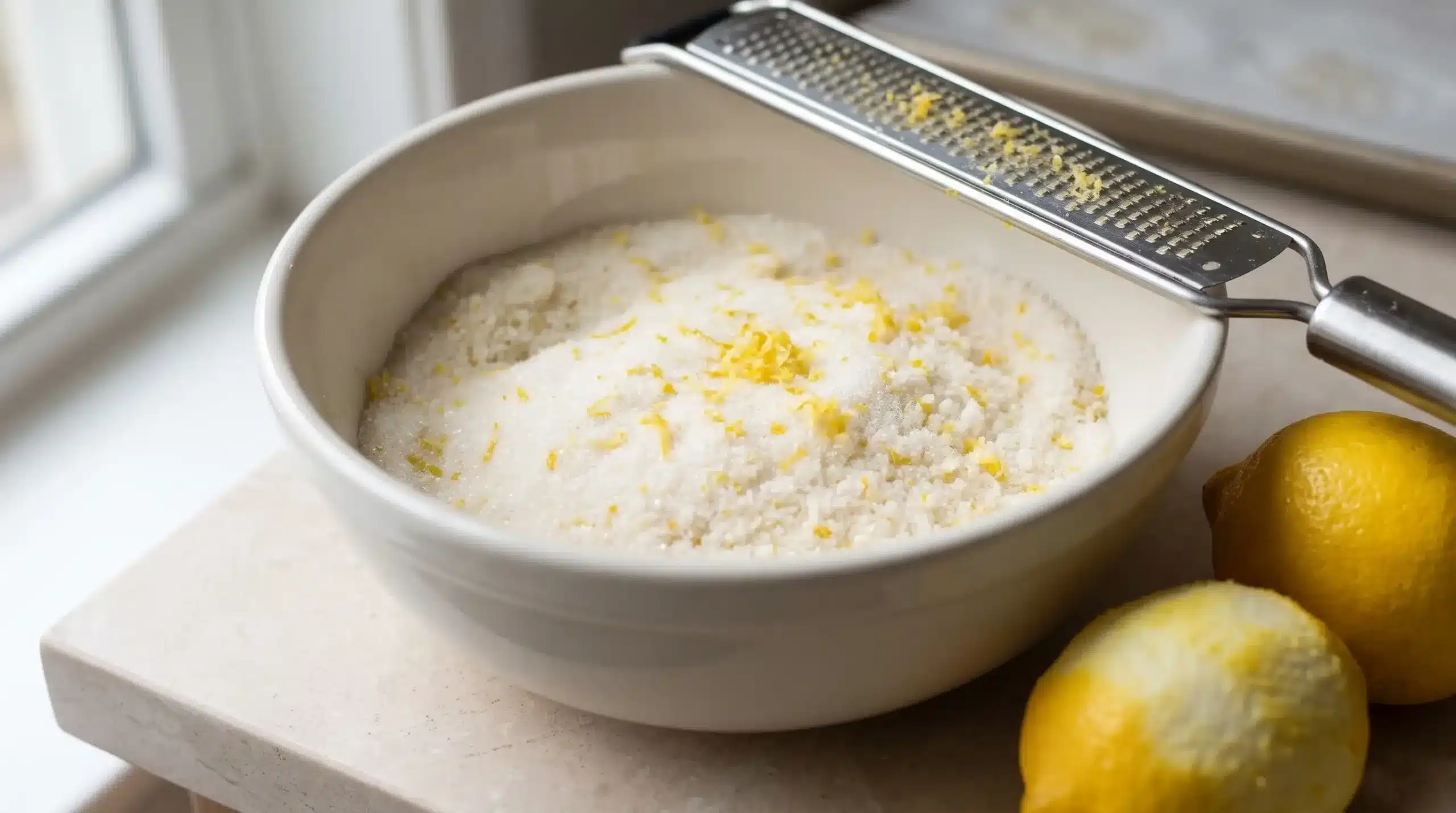
The lemon flavor begins before the butter or flour enters the mixing bowl. Rubbing finely grated lemon zest into granulated sugar helps distribute the fragrant oils from the peel through the sugar. The mixture becomes noticeably aromatic, creating a citrus foundation that carries throughout the dough.
Use the yellow outer peel of the lemon when zesting. The white layer beneath it can taste bitter, so light pressure is preferable to digging deeply into the fruit. Finely grated zest also disperses more evenly, preventing large pieces of peel from appearing in the finished cookies.
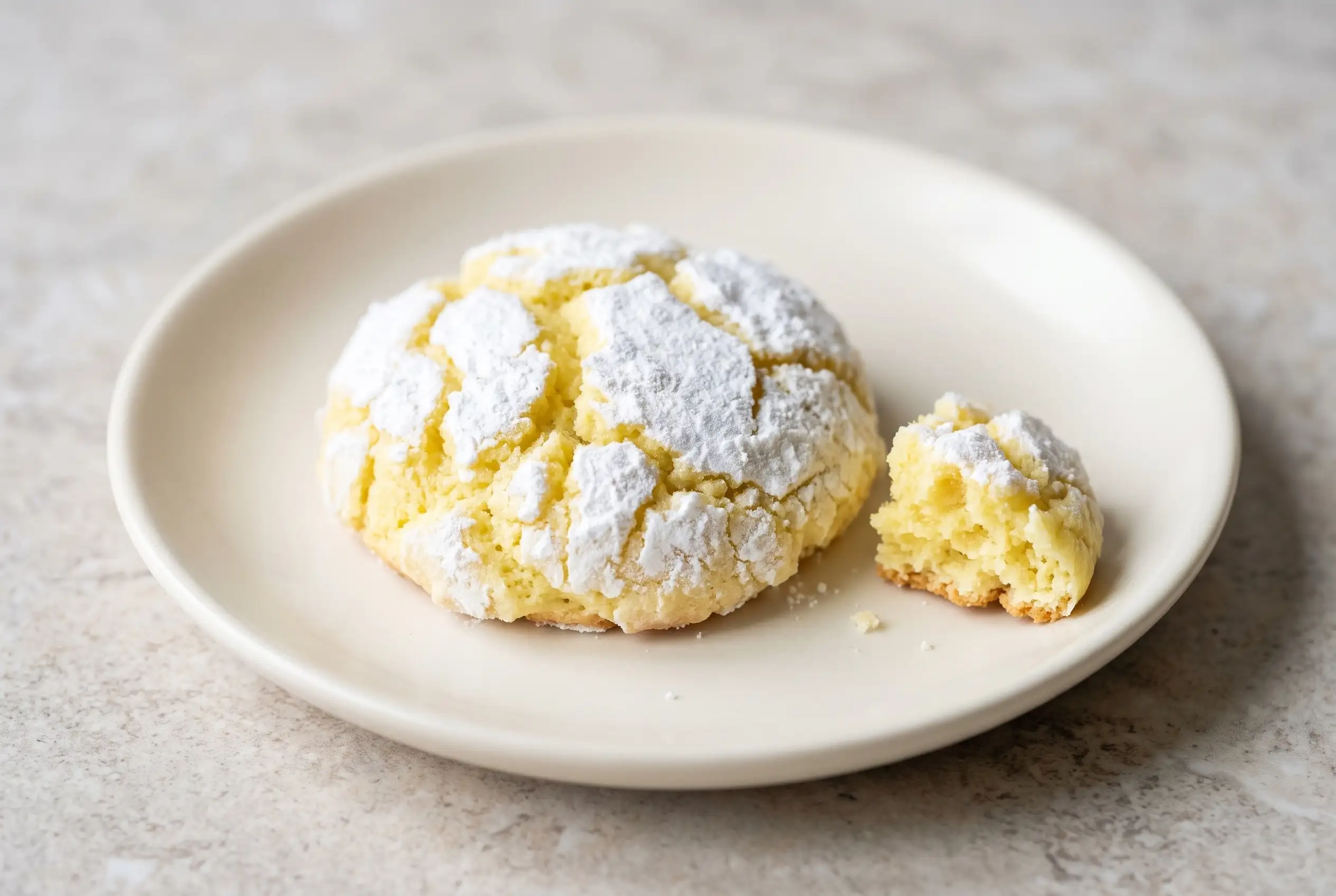
Lemon juice provides another dimension of citrus flavor, but it performs a different job. The zest contributes much of the recognizable lemon fragrance, while the juice introduces acidity. Both are included because the cookies benefit from a clear citrus character alongside the sweetness of the raspberries and sugars. For a brighter citrus finish, keep the measured lemon juice in the dough rather than increasing it, since extra liquid could affect spreading and texture. A lemon-forward cookie without the added moisture of raspberries, such as lemon crinkle cookies, lets the citrus flavor take center stage.
For lemon raspberry cookies, this early flavor preparation is particularly useful because the dough also contains butter, brown sugar, and vanilla. Distributing the zest thoroughly prevents the lemon flavor from becoming concentrated in only a few bites.
Frozen Raspberries Keep the Fruit Easier to Handle
Frozen raspberries are especially useful in a soft cookie dough because they can be chopped into smaller pieces before being folded into the mixture. Small pieces distribute the fruit across more cookies while limiting the need for extensive mixing.
Keep the berries frozen until they are needed. As raspberries warm, they soften and release juice, making them more likely to break apart during folding. Excessive crushing can color the entire dough pink and make some portions noticeably wetter than others.
A little red or pink streaking is normal and gives lemon raspberry cookies a recognizable appearance. However, distinct berry pieces are preferable to a fully mashed fruit mixture when the aim is to preserve separate pockets of raspberry flavor.
Fresh raspberries are also possible, although their softer texture may require particularly delicate handling. Because they can release more juice during mixing, the dough and finished cookies may look or feel slightly different from a batch made with frozen fruit.
Room-Temperature Butter Supports a Soft Texture
Butter should be softened to room temperature before mixing with the lemon sugar and brown sugar. Properly softened butter blends smoothly and can become light and fluffy during the specified creaming period. Butter that is still very firm is harder to incorporate evenly, while butter that has melted will not behave the same way during creaming. The intended consistency is soft enough to mix easily while still holding its shape.
Flour Mixing Determines How Tender the Cookies Stay
Once the wet ingredients are combined, the dough becomes more sensitive to extended mixing. Flour contains proteins that form gluten when hydrated and worked. Excessive mixing can develop more gluten than is desirable for soft lemon raspberry cookies, producing a firmer texture.
Stop the main mixing stage while a small amount of flour remains visible. The remaining flour can finish incorporating as the frozen berries are folded through the dough. This approach reduces unnecessary mixing without leaving dry flour pockets in the finished mixture.
The egg yolk, sugars, and butter help create the cookie’s tender structure. Because the formula uses an egg yolk instead of a whole egg, the wet ingredients should be incorporated thoroughly before the flour is introduced. That allows the final mixing stage to stay brief.
Pay attention to dough consistency instead of relying only on how long the mixer runs. The mixture should come together sufficiently to scoop into portions. Continuing to beat it simply to achieve an especially smooth appearance is unnecessary, particularly when the fruit has not yet been added.
Lemon Juice and Berry Moisture Need Different Handling
Moisture enters the dough from both the measured lemon juice and the raspberries, but those ingredients are handled differently. Lemon juice is mixed into the wet ingredients so its acidity and flavor can disperse throughout the dough. Raspberry pieces are added later to preserve their shape.
If the berries release liquid during preparation, avoid deliberately pouring additional raspberry juice into the dough. The intended fruit component is chopped berries, not a raspberry puree. Keeping the fruit recognizable helps maintain the balance between buttery dough and fruity portions.
Gentle Folding Preserves the Raspberry Pattern
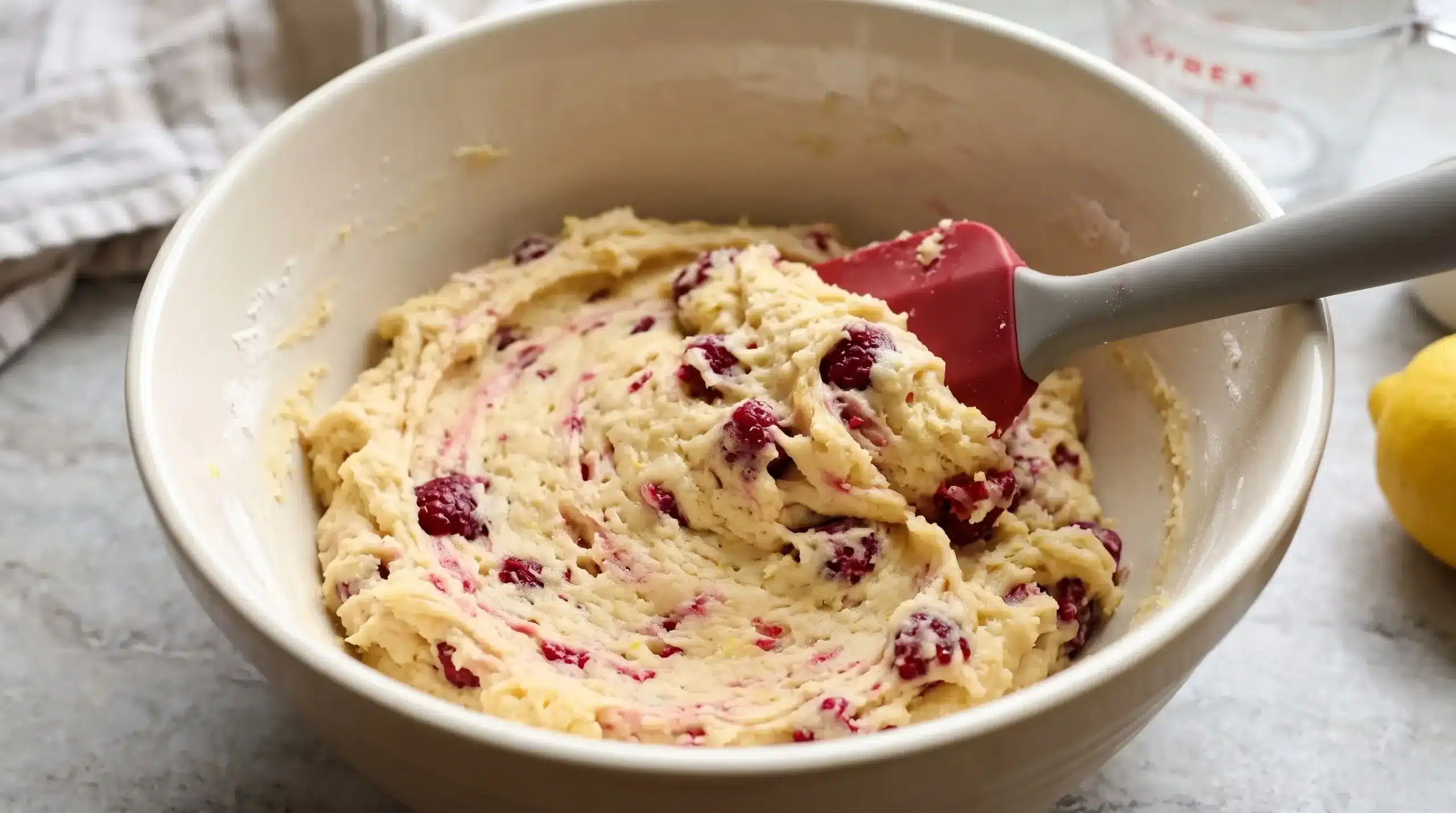
After the flour has been incorporated almost completely, add the chopped frozen raspberries using gentle folding motions. A spatula provides more control than vigorous beating at this stage. Turn the dough just enough to distribute the fruit, accepting a few natural pink streaks instead of trying to make the color uniform. This handling also prevents the delicate berry pieces from being crushed unnecessarily.
Large Dough Portions Need Space to Spread
The original portioning approach uses a large cookie scoop holding approximately three tablespoons of dough. That size creates substantial cookies with room for a soft middle and lightly browned outer edges. Keeping the portions similar in size is important because dramatically different scoops may finish baking at different times.
Arrange only five dough balls on each lined baking sheet. Leaving open space between the portions allows the cookies to spread without running into one another. Crowded placement can make the finished cookies difficult to separate cleanly.
Two parchment-lined baking sheets make portioning and handling easier. Parchment also provides a convenient surface for allowing the baked cookies to cool in place before they are moved.
When preparing lemon raspberry cookies with frozen raspberries, work efficiently once the fruit has been added. Keeping the dough portions from sitting unnecessarily in a warm kitchen can help limit berry softening before baking.
Lightly Golden Edges Control the Baking Finish
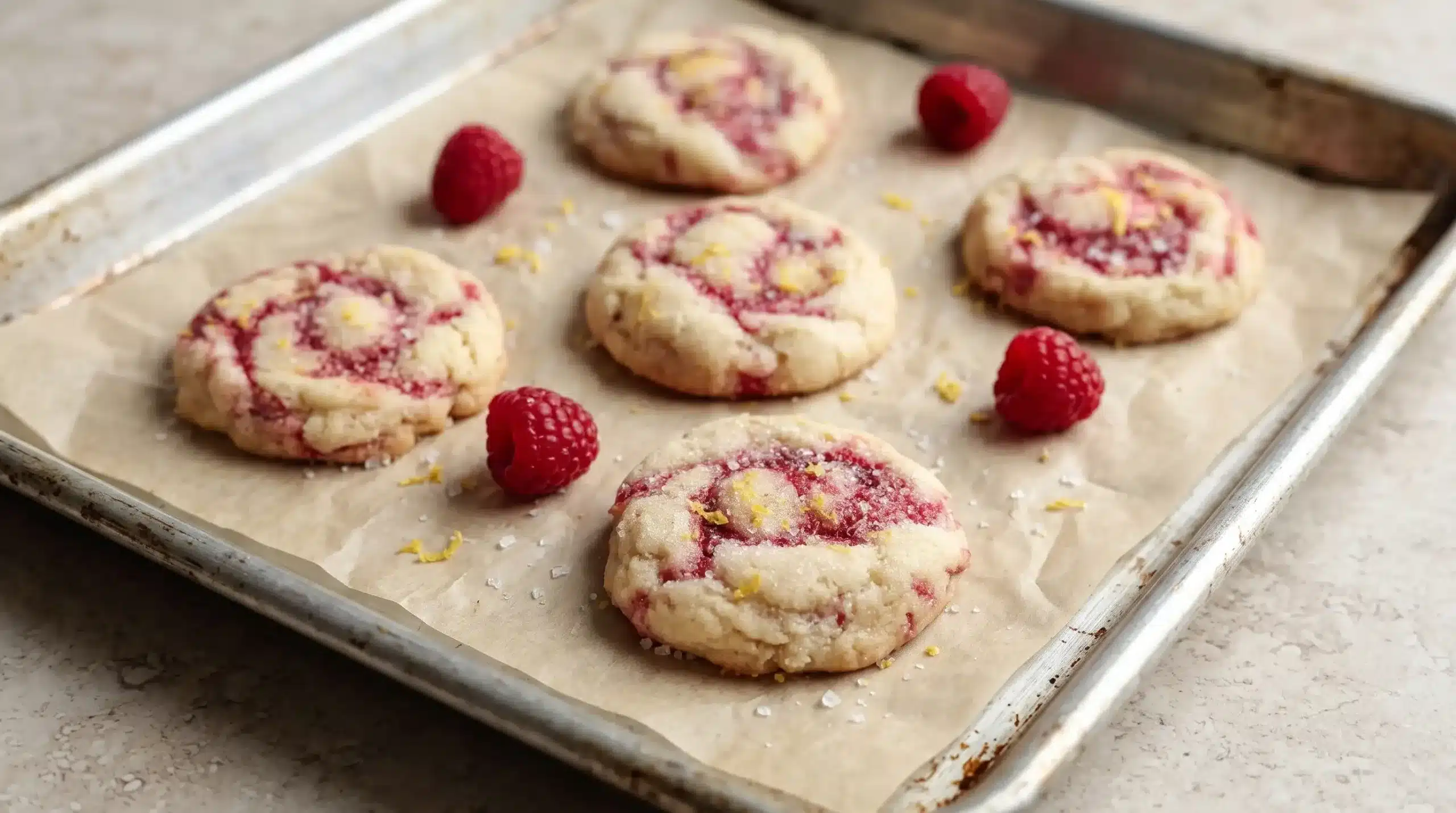
The most useful baking indicator is the color around the outer edge of each cookie. Bake at 350°F (175°C) and look for a light golden-brown border. The middle may still appear softer than the edge when the cookies are ready to come out.
Soft lemon raspberry cookies depend on avoiding unnecessary additional oven time. Waiting until every part looks deeply browned can produce a drier result, especially because the cookies continue setting as they cool on the hot baking sheet.
Check the cookies during the stated 12–15 minute baking window, using their appearance to guide the decision. Oven behavior, portion size, and baking-sheet characteristics can affect how quickly the edges develop color.
Look at several cookies across the sheet instead of judging the entire batch from one piece. Consistent portioning helps, but slight differences in placement and fruit distribution can still affect appearance.
Pan Cooling Helps the Centers Finish Setting
Freshly baked cookies are delicate, particularly when the centers contain softened raspberry pieces. Leaving them on the baking sheet allows their structure to firm as the residual heat finishes setting the middle. Moving them immediately can cause a soft cookie to break or bend. Once they are stable enough to handle, they can be transferred for further cooling or served while still slightly warm.
Lemon Raspberry Cookies Mistakes Worth Avoiding
Most difficulties with these cookies occur during mixing, fruit handling, or the final minutes of baking. The following problems are especially relevant to their buttery dough and delicate raspberry pieces.
- Cold butter: Butter that has not softened sufficiently can be difficult to cream into a light mixture. Allow it to reach room temperature before mixing.
- Overworked dough: Continuing to beat after adding flour may produce firmer cookies. Stop the main mixing stage while a little flour remains visible.
- Crushed raspberries: Vigorous stirring can break down the fruit and spread its juices throughout the dough. Use small frozen pieces and fold gently.
- Uneven portions: Inconsistent dough balls can bake at different rates. Use the same scoop or approximate size for each portion.
- Crowded baking sheets: Placing too many cookies together leaves insufficient spreading room. Follow the spacious sheet arrangement.
- Excessive browning: Leaving the cookies in the oven until their centers look completely firm may reduce softness. Use lightly golden edges as the main indicator.
When a batch looks more pink than expected, the fruit was probably broken down during mixing. Although the appearance changes, that alone does not mean the cookies have failed. The more useful questions are whether they have baked properly and whether the centers have set during cooling.
Similarly, a cookie that seems fragile immediately after baking may simply need additional time on its sheet. Avoid treating every soft center as a reason to return the batch to the oven; first consider the edge color and normal carryover setting.
Warm and Room-Temperature Cookies Offer Different Serving Options
Serving temperature changes how the butter, fruit, and overall texture are experienced. Slightly warm cookies have a softer feel, while cooled cookies are easier to handle and may show their raspberry pieces more clearly.
| Serving Style | Preparation | Texture and Flavor | Suitable Pairing |
|---|---|---|---|
| Slightly warm | Allow the baked cookies to set before serving | Soft centers with warm raspberry pieces | Tea or coffee |
| Room temperature | Cool completely before arranging on a plate | More settled structure with distinct fruit pockets | Tea or an afternoon snack |
| With ice cream | Place a cooled or slightly warm cookie beside a serving of ice cream | Soft cookie texture contrasted with cold ice cream | A plated dessert |
A simple serving presentation works well because the cookies already contain lemon, raspberry, and vanilla flavors. Additional sauces or decorative toppings are not necessary for enjoying the original combination.
Airtight Storage Protects the Cookies Between Servings
After the cookies have cooled, place them in an airtight container at room temperature. They can be kept for approximately three to four days under the storage guidance supplied for the original preparation. Keeping the container closed helps protect the texture between servings.
For longer storage, freezing is an option for up to two months. Allow the baked cookies to cool completely before packing them in a freezer-safe, airtight container. Separate layers when needed to reduce sticking or breakage.
When ready to serve frozen lemon raspberry cookies, thaw them on the counter. Leave them protected while thawing so they are less exposed to drying air, and handle them gently once the fruit pockets soften.
Because raspberries contain moisture, pay attention to any unusual wetness, off odors, or signs of spoilage during storage. Storage guidance assumes the cookies were handled properly and kept under suitable conditions.
Blueberries, Strawberries, and Chocolate Change the Fruit Balance
The lemon-flavored dough can accommodate variations when the raspberry component is changed thoughtfully. Other berries offer a different balance of sweetness, acidity, moisture, and texture. Chocolate chips introduce a contrasting flavor without serving the same function as fruit.
- Blueberries: Replace the raspberries for a different berry flavor that still pairs naturally with lemon.
- Strawberries: Use small pieces and handle them carefully because cut strawberries can release moisture.
- Chocolate chips: Add a chocolate element for a sweeter variation, keeping the dough manageable and avoiding excessive additions.
- Chopped nuts: Introduce a crunchy contrast to the soft cookie texture.
- No berries: Omit the fruit for a more straightforward lemon-flavored cookie, recognizing that the moisture and finished texture may differ.
These changes are alternatives, not exact texture equivalents. Smaller fruit pieces are generally easier to distribute through the dough, while large or particularly juicy additions may alter how the cookies spread and set.
For the clearest lemon-and-raspberry combination, the original frozen-fruit approach remains the most directly supported preparation. When trying another variation, change one main addition at a time so any difference in texture is easier to understand.
Flaked Salt Gives the Sweet Fruit a Subtle Contrast
A small sprinkling of flaked salt before baking provides a different kind of seasoning from the fine salt already mixed into the dough. The fine salt is distributed throughout the batter, while the finishing flakes remain closer to the surface.
The contrast is especially noticeable in lemon raspberry cookies because the finished flavor includes granulated sugar, brown sugar, acidic lemon juice, and tart fruit. Occasional grains of salt can temper the perception of sweetness without requiring a change to the measured sugars.
Keep the application light. The salt should be an accent, not the dominant taste of the finished cookie. Its larger flakes are particularly suitable for a surface finish because they are not intended to disappear completely into the dough.
Plant-Based Substitutions Require Texture Adjustments
A plant-based variation can be explored by replacing the egg yolk with a flaxseed-based substitute and the butter with coconut oil, as suggested in the original variation. However, these replacements do not behave identically to egg yolk and creamed butter. Coconut oil changes how the fat mixes with sugar, while a flaxseed substitute can affect binding and moisture. Expect possible differences in spreading, tenderness, and color, and treat the modified version as an adaptation that may need adjustment, not a guaranteed identical result.
Soft Centers and Distinct Raspberry Pieces Define the Finished Cookies
Lightly golden edges and centers that finish setting on the baking sheet are the most useful signs of properly baked lemon raspberry cookies. The dough needs enough structure to hold the fruit, but excessive mixing or baking can take away the intended softness.
Careful lemon-zest preparation, gently handled frozen raspberries, and attention to the oven finish allow the citrus flavor and fruit pieces to remain recognizable. Those details establish the essential character of the cookies without adding complexity to the preparation.
Common Questions About Frozen Raspberries and Soft Cookie Centers
Should frozen raspberries be thawed before adding them to cookie dough?
Thawing is unnecessary for the intended preparation. Add the chopped berries while frozen so they are easier to handle. Thawed fruit becomes softer and may release additional liquid into the dough.
Can the cookie dough be prepared without an electric mixer?
Hand mixing is possible, although creaming the butter and sugars may require more effort. Use a sturdy spoon or suitable hand whisk for the initial mixture, ensuring the butter is soft enough to incorporate. Switch to a spatula when working with the flour and fruit.
Why do the cookies still look soft in the middle after baking?
The centers are intended to remain tender and continue setting as the cookies cool on the baking sheet. Judge their readiness alongside the outer-edge color. If a cookie remains visibly raw or wet after cooling, it may have been underbaked or unusually large.
Can whole raspberries be folded into the dough?
Small chopped pieces are preferable for the original cookie size. Whole raspberries can create larger wet pockets and may distribute unevenly between portions. Cutting the frozen fruit into smaller pieces gives more consistent distribution.
Does the brown sugar need to be replaced with granulated sugar?
No replacement is necessary. The dough intentionally uses both brown sugar and granulated sugar. Changing the balance can affect sweetness, moisture, spreading, and texture, so keeping the original combination is preferable when making the cookies for the first time.
Can lemon raspberry cookies be served straight from the freezer?
Thawing is the intended serving approach after frozen storage. Allow the cookies to soften on the counter before eating so the centers and raspberry pieces return to a more pleasant texture. Keep them covered during the thawing period.
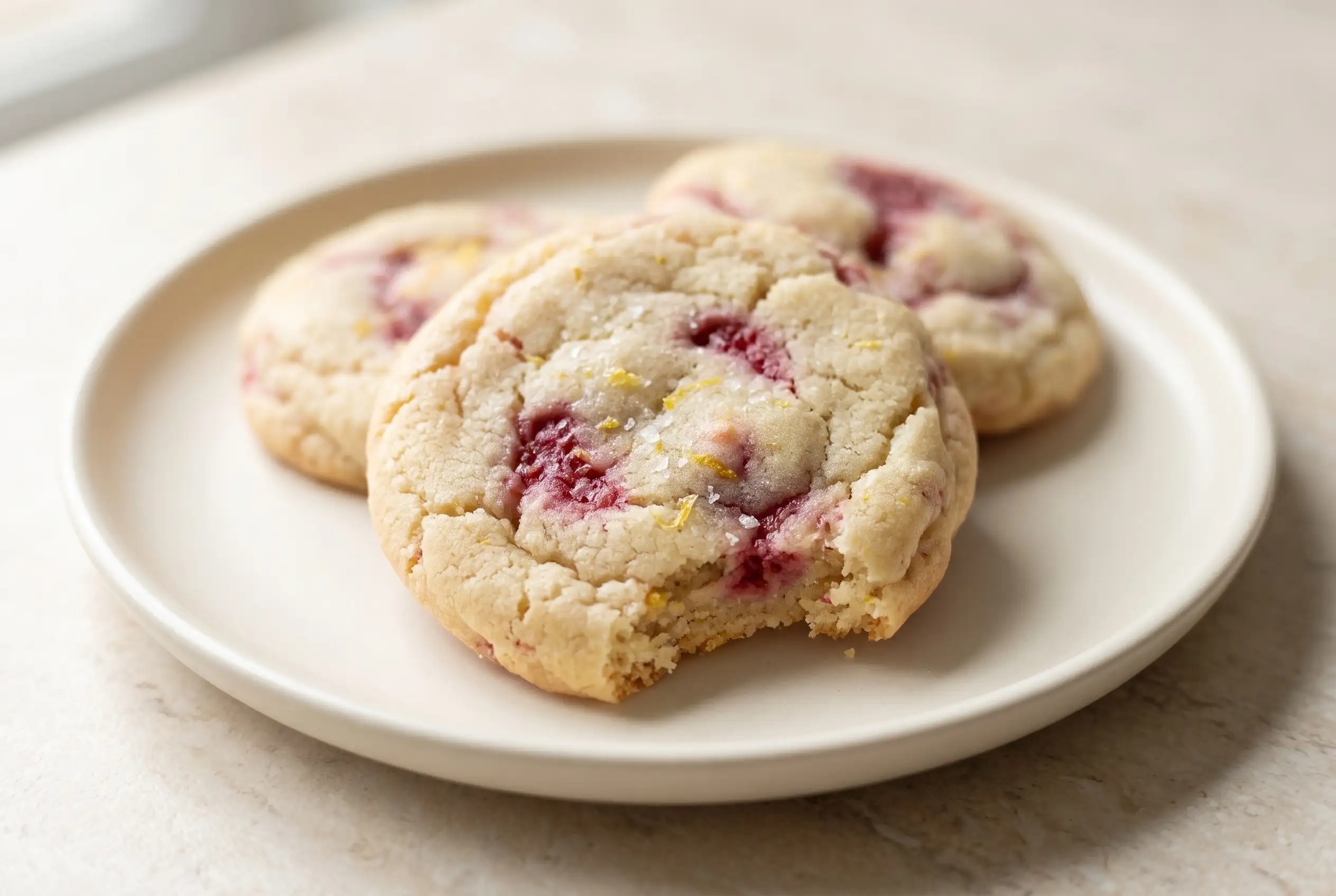
Lemon Raspberry Cookies with Fresh Lemon Zest and Juice
Ingredients
Method
- Set the oven to 350°F (175°C). Cover 2 baking sheets with parchment paper.
- Combine the granulated sugar and lemon zest in a large bowl. Work the zest into the sugar with your fingers to distribute the lemon oils throughout.
- Add the room-temperature butter and brown sugar. Using an electric mixer at medium-high speed, cream the mixture for 3–4 minutes until fluffy and pale.
- Mix in the egg yolk, vanilla extract, and lemon juice until fully blended.
- Add the salt, baking powder, baking soda, and flour gradually. Stir lightly, stopping while a few streaks of flour are still visible.
- Cut the frozen raspberries into small pieces and carefully fold them through the dough. Stop mixing once the raspberries are evenly dispersed and the remaining flour has been incorporated.
- Scoop approximately 3 tablespoons of dough for each cookie and shape into large balls. Place about 5 portions on each lined baking sheet with enough room for spreading, then add a light sprinkle of flaked sea salt.
- Bake the cookies for 12–15 minutes, checking for pale golden edges and centers that have just set. Continue with additional batches if necessary.
- Take the baking sheets out of the oven and allow the cookies to cool directly on them until the centers become firm enough for handling. Transfer or serve once set.

1 Comments