
Cinnamon roll cookies combine the warm, spiced flavor of cinnamon rolls with the soft texture and convenient size of homemade cookies. Each round has a cinnamon-sugar filling rolled into a buttery dough, creating a visible swirl and a sweet, lightly golden finish. They can be served warm with coffee or tea, enjoyed as an afternoon snack, or finished with a simple powdered sugar icing.
Unlike traditional cinnamon rolls, these cookies use a baking powder dough that does not require yeast or a lengthy rise. The main technique is shaping the dough around the cinnamon filling before slicing it into individual rounds. A few details, particularly butter consistency, filling distribution, and careful slicing, make a noticeable difference in how the cookies hold their shape.
What Gives Cinnamon Roll Cookies Their Signature Swirl
The defining feature of cinnamon roll cookies is the spiral of brown sugar and cinnamon inside each cookie. Instead of mixing all the cinnamon into the dough, part of the spice is combined with brown sugar and placed between layers of dough. When the dough is rolled into a log and sliced, the filling becomes a circular pattern.
That spiral also creates differences in flavor throughout the cookie. The dough itself contains ground cinnamon, while the filling provides a more concentrated cinnamon-sugar taste. Depending on where each slice is cut, some bites contain more filling than others.
Because the dough is soft and buttery, the finished cookies have a different texture from crisp, thin sugar cookies. Their centers remain tender when baked carefully, and the exterior develops a lightly golden surface. Keeping the rounds reasonably even helps preserve that texture across the baking sheet.
Butter, Brown Sugar, and Flour in the Cookie Dough
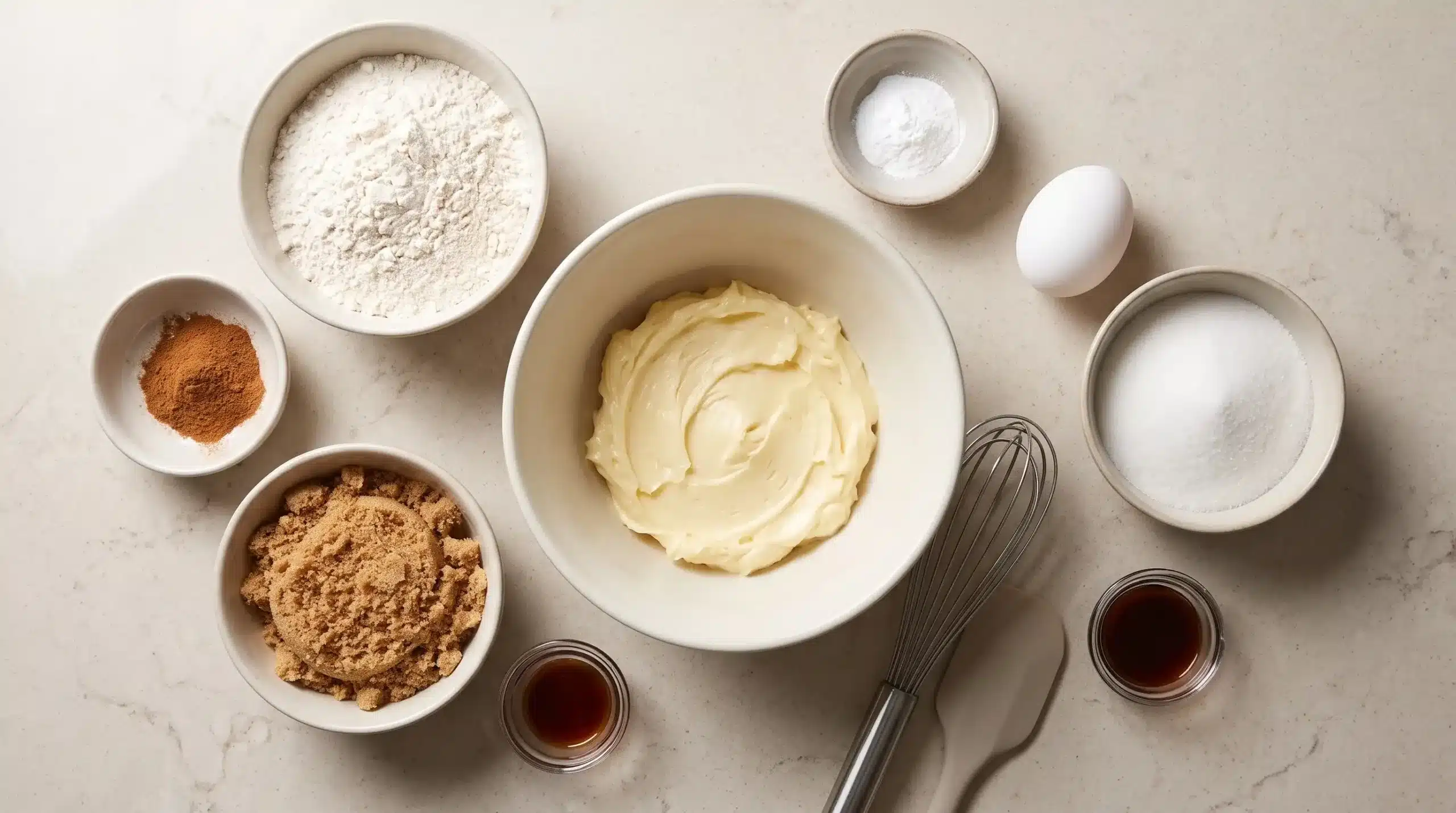
Softened unsalted butter is particularly important for the texture of these cookies. When beaten with granulated and brown sugars, it forms a creamy mixture that incorporates the other ingredients more evenly. Butter that is still firm can be difficult to cream, while excessively warm butter may leave the dough harder to handle during rolling.
The two sugars play different roles in the dough. Granulated sugar provides sweetness, while packed brown sugar contributes a softer texture and a flavor that complements cinnamon. For a balanced cinnamon flavor in brown sugar cinnamon cookies, distributing the spice evenly through the sugar mixture helps prevent overly concentrated bites. In these rolled cookies, brown sugar also appears in the filling, where it creates a distinct sweet layer between the dough sections.
All-purpose flour and baking powder provide the structure needed for sliced cookies that can hold their shape during baking. The egg helps bind the mixture, and vanilla extract rounds out the cinnamon flavor. Once the flour mixture has been incorporated, additional mixing is unnecessary and may make the cookies less tender.
Brown Sugar Filling Without Uneven Cinnamon Pockets
The filling is a straightforward mixture of packed brown sugar and ground cinnamon. Mixing these ingredients thoroughly before spreading them over the dough prevents concentrated patches of cinnamon and distributes sweetness more consistently. An even layer is especially important near the outer edges, where excess filling may escape as the dough is rolled. The mixture should remain loose enough to sprinkle across the surface without creating thick piles that interfere with forming a compact spiral.
Parchment Paper Makes the Cinnamon Spiral Easier to Shape
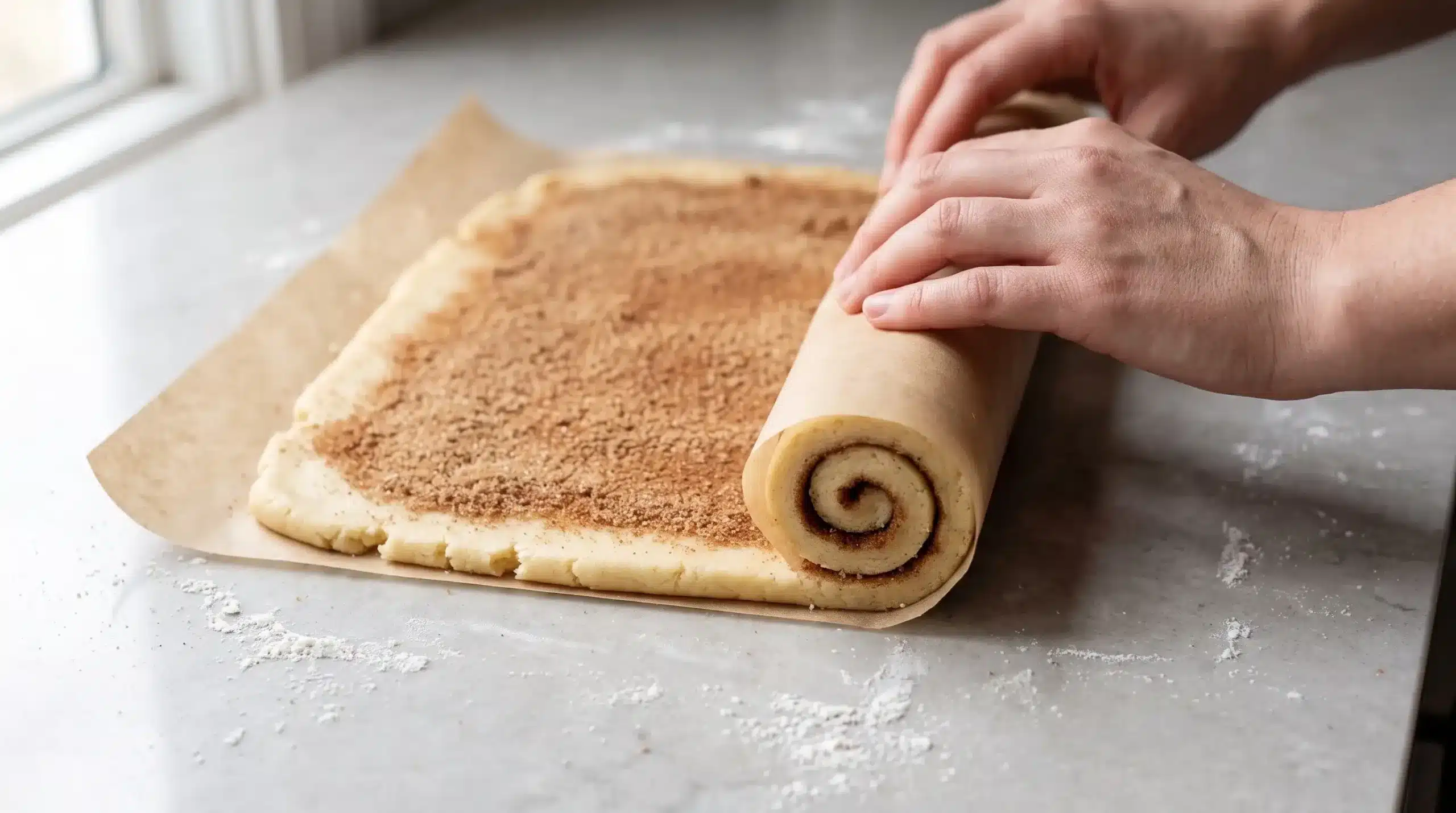
Rolling soft cookie dough directly against a work surface can make lifting and shaping difficult. Parchment paper provides a convenient surface for spreading the dough and helps with moving it into a rolled shape. It also reduces the need to handle the soft dough repeatedly.
A reasonably uniform layer of dough gives the cinnamon filling a more predictable path through the roll. If one area is much thicker than another, the resulting slices may contain noticeably different proportions of cookie dough and filling. Aim for a manageable rectangle or similarly even shape without stretching the dough so thin that it tears.
As the dough is rolled, keep the layers close together without pressing so firmly that the filling is forced out. A loose roll can leave gaps in the center of the cookies, while excessive pressure may distort the spiral. The original preparation uses half the dough for the rolled portion; any remaining dough should be handled consistently so the batch bakes evenly.
Even Slices Help Cinnamon Swirl Cookies Bake Uniformly
A sharp knife is useful when cutting the dough log into rounds. Clean, controlled cuts preserve the circular shape and reduce the chance of flattening the spiral. Try to keep the slices similar in thickness, since noticeably thinner cookies may brown before thicker ones finish baking. If a round becomes slightly misshapen during cutting, gently adjust its edges before placing it on the parchment-lined baking sheet.
Oven Heat and Golden Edges Control Cookie Doneness
The baking temperature for these cookies is 350°F (175°C). Preheating matters because the dough should enter an oven that has already reached the intended temperature. A fully heated oven encourages more consistent baking from the beginning.
If the cookies consistently brown too quickly or bake unevenly despite following the stated temperature and timing, the oven itself may be contributing to the problem. The selected temperature does not always reflect the heat inside the oven, so checking the actual oven temperature with an independent thermometer can reveal discrepancies. This is particularly useful for cinnamon roll cookies because their short baking window leaves little room for unexpected temperature differences.
The stated baking window is 10 to 12 minutes, with a golden-brown appearance serving as the main doneness cue. Begin watching the cookies toward the earlier end of that window, particularly if the rounds have been sliced thinly. The cinnamon filling is naturally darker than the surrounding dough, so evaluate the exposed cookie edges instead of relying on the color of the swirl alone.
Freshly baked cookies can still feel tender when they first come out of the oven. Allowing them to settle before moving them helps protect their shape. Leaving them in the oven substantially longer solely to make the centers feel firm can result in drier cookies after cooling.
Common Cinnamon Roll Cookie Mistakes to Avoid
Most problems with cinnamon roll cookies occur during mixing, rolling, or slicing. Small differences at these stages can affect the shape of the swirl and the texture of the finished cookies. The following issues are worth checking before the tray goes into the oven.
- Butter too firm: Cold butter does not cream as easily with sugar. Let it soften sufficiently for smooth mixing without melting it.
- Overworked dough: Mixing extensively after adding flour can produce a tougher texture. Stop once the dry ingredients are incorporated.
- Uneven filling: Thick piles of cinnamon sugar make the roll harder to shape and can create irregular pockets. Spread the mixture evenly.
- Loose spiral: Gaps between layers may become more noticeable after slicing. Roll the dough firmly enough for the layers to touch.
- Unequal rounds: Slices of different thicknesses can bake at different rates. Use a sharp knife and make consistent cuts.
- Excessive baking: Waiting for the entire cookie to become dark brown can dry out the center. Watch for lightly golden exposed edges.
Careful shaping is particularly useful because the cinnamon filling cannot be redistributed once the cookies have been sliced. If the log feels difficult to control, avoid repeated squeezing or twisting, which can blur the spiral. Gentle adjustments preserve the layered appearance better than heavy handling.
It also helps to evaluate the dough before adding the filling. A smooth, combined dough is easier to spread evenly, while a mixture containing pockets of dry flour may tear during rolling. Correcting these issues early is simpler than trying to reshape individual rounds after cutting.
Visual Signs of a Properly Baked Cinnamon Cookie
Soft cinnamon roll cookies should have a recognizable spiral, a lightly golden exterior, and a center that is tender without appearing wet or raw. The cinnamon-sugar areas can look darker than the plain dough, which is normal. Use the exposed dough and overall structure as the main visual guides. The following comparison separates useful observations from changes that can lead to unnecessary extra baking.
| Stage | What to Look For | Practical Decision |
|---|---|---|
| Before baking | Visible spiral and similarly thick rounds | Gently correct uneven shapes before placing them in the oven |
| Near the end of baking | Lightly golden exposed dough with darker cinnamon lines | Check the cookie edges for doneness without judging only by the filling color |
| Immediately after baking | Tender cookies that retain their circular shape | Let the rounds settle before transferring them |
Warm Cookies with Coffee, Tea, or a Simple Dessert Plate
Serving these cookies slightly warm emphasizes their soft centers and cinnamon aroma. They can be enjoyed without additional toppings, allowing the brown sugar filling to provide most of the sweetness. A small plate of warm cookies also works well alongside coffee or tea.
For breakfast or a casual afternoon snack, the individually sliced format makes portions easy to serve without cutting a larger pastry. Each cookie has its own swirl, so the cinnamon filling is distributed through the individual pieces instead of being concentrated in a single large roll.
When serving a batch that has already cooled, the cookies can still be eaten at room temperature. Their flavor does not depend on being served hot, although the texture may feel slightly different from cookies that have just come out of the oven. If an icing is planned, consider whether a warm or cooled finish will give the appearance you want.
Powdered Sugar Icing for a Cinnamon Roll Finish
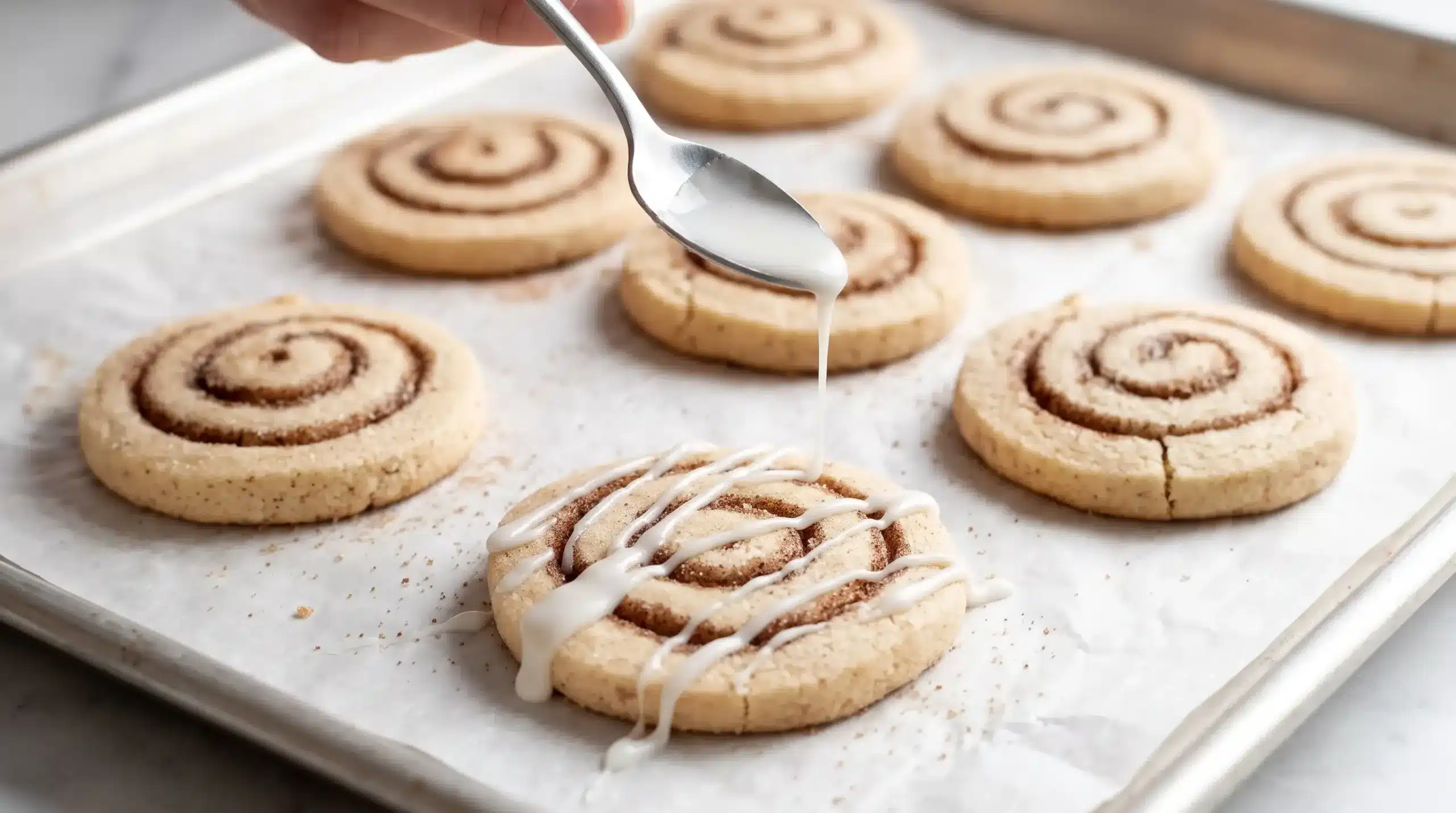
A simple drizzle made from powdered sugar and milk is an optional finishing touch that brings these cookies closer to the appearance of traditional cinnamon rolls. Mix the ingredients until the icing is smooth and thin enough to drizzle, adjusting the consistency gradually. A light coating leaves the spiral visible and avoids overwhelming the brown sugar filling. Drizzling over cooled cookies gives a more defined finish, while icing applied to warm cookies may spread and soften across the surface.
Pecans, Walnuts, and Chocolate Chip Variations
Chopped pecans or walnuts can be added to the cinnamon filling for a nutty variation. Because the original spiral relies on rolling the dough into a compact log, the nuts should be chopped finely enough that they do not create bulky areas between the layers.
Chocolate chips provide another variation, combining cinnamon with small pockets of chocolate. They can be incorporated into the filling, although adding too many may make slicing difficult or cause the rolled layers to separate. A modest amount keeps the cinnamon swirl recognizable.
Nutmeg is another optional spice mentioned for changing the flavor. Its stronger character means it is better used as an accent to the cinnamon instead of replacing the cinnamon entirely. For readers who prefer the original flavor, the brown sugar and cinnamon filling already provides a clearly defined taste without additional ingredients.
Storing Cinnamon Roll Cookies Without Losing Their Softness
Allow the baked cookies to cool completely before transferring them to an airtight container. At room temperature, they can be stored for approximately 3 to 5 days. Keeping the container closed helps protect the cookies from drying out and reduces unnecessary exposure to air.
For longer storage, place fully cooled cookies in a freezer-safe container and freeze them for up to one month. Separating layers with parchment paper can make individual cookies easier to remove without damaging the spiral or decorative icing.
When using frozen cookies, remove the desired portions and let them thaw before serving. If the cookies have not yet been iced, adding the drizzle after thawing can provide a neater presentation. Store any cookies with a milk-based icing according to the storage needs of that icing, especially if it requires refrigeration.
Preparing Cinnamon Cookie Dough a Day Ahead
The dough can be prepared one day in advance and refrigerated until it is needed. Keep it covered during storage so the surface does not dry out. Before rolling, allow the dough to soften slightly if refrigeration has made it too firm to spread comfortably. It should remain manageable and cohesive, not warm enough to become sticky. Preparing the dough ahead is useful when the shaping and baking will take place closer to serving time, but careful rolling and even slicing are still necessary for consistent results.
Sweetness and Portion Choices for Cinnamon Cookies
These cookies contain granulated sugar in the dough as well as brown sugar in both the dough and filling. That combination is responsible for much of their sweetness and characteristic cinnamon-roll flavor. An additional icing increases sweetness further, so leaving the cookies plain is a straightforward option for anyone who prefers less topping.
The original preparation provides an approximate nutritional estimate of 150 calories, 2 grams of protein, and 7 grams of fat per cookie. Actual values can vary with the size of the slices and optional ingredients, including nuts, chocolate chips, or icing. These estimates are most useful as general context, not precise nutritional measurements.
Although cinnamon is often discussed in connection with wellness, a sweet baked cookie should not be treated as a way to manage blood sugar or digestive health. The practical benefit of making the cookies at home is having control over additions and serving portions while keeping the established dough and filling proportions intact.
Soft Cinnamon Roll Cookies Depend on an Even Spiral
A compact dough log, evenly spread cinnamon filling, and consistent slices are the details that most strongly shape the finished cookies. Once the rounds are in the oven, watching the exposed dough turn lightly golden helps protect the soft center without sacrificing the recognizable cinnamon spiral.
With the layers properly formed, cinnamon roll cookies bring the flavor of a cinnamon pastry into a smaller baked format. They can remain plain, receive a light icing drizzle, or include carefully chosen filling variations without losing the basic character of the cookie.
Cinnamon Roll Cookies Questions About Substitutions, Texture, and Freezing
Can whole wheat flour replace all-purpose flour?
Whole wheat flour can be used, but it may produce a denser cookie because it behaves differently from all-purpose flour. A partial substitution is a reasonable starting point if a lighter texture is preferred. Watch the dough consistency during mixing, since whole wheat flour may absorb moisture differently.
How can I make the cookies vegan?
Use a plant-based butter alternative or suitable coconut oil in place of dairy butter, and replace the egg with a flaxseed egg. These changes may affect dough firmness, spreading, and tenderness, so the texture may differ from the original version. A flaxseed egg is commonly made by combining ground flaxseed with water and allowing it to thicken before use.
Why do the cinnamon swirls sometimes separate?
Separation can happen when the dough is rolled too loosely or the filling forms thick layers that prevent the dough from staying in contact. Keeping the filling relatively even and rolling the dough into a compact log helps the slices retain their spiral pattern. Avoid pulling the outer edge away when cutting the rounds.
Can I freeze the dough before baking?
Unbaked dough can generally be frozen when wrapped securely, although the original instructions specifically confirm freezing the finished cookies. For an unbaked batch, a shaped log is easier to protect from distortion than loose pieces of soft dough. Thaw it under refrigeration until it can be sliced without cracking, then bake while watching the normal visual doneness cues.
What should I do if the dough sticks to the parchment paper?
Sticky dough may be too warm to handle easily. Cooling it briefly can help firm the butter and make rolling more manageable. Peel the parchment away gradually, supporting the dough as it releases, and avoid pulling sharply because the thin surface may tear or distort the cinnamon filling.
Can I leave off the powdered sugar icing?
The icing is entirely optional. The dough and filling already contain sugar and cinnamon, so the cookies have a complete flavor without a topping. Leaving them plain also keeps the swirl more visible and makes the cookies less messy to pack or serve.
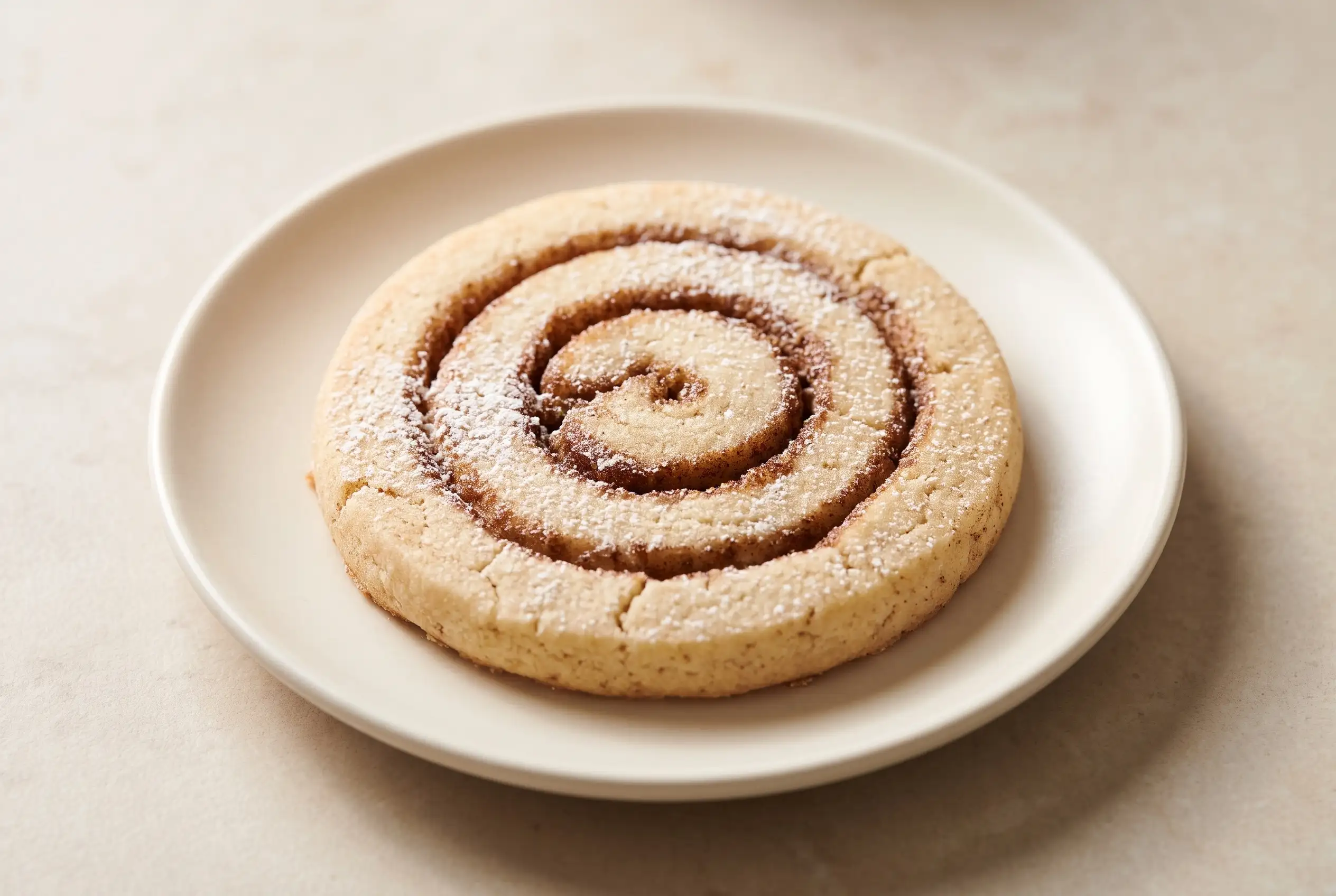
Cinnamon Roll Cookies with Brown Sugar Cinnamon Filling
Ingredients
Method
- Set the oven to 350°F (175°C). Cover a baking sheet with parchment paper.
- In a medium mixing bowl, combine the flour, baking powder, 1 teaspoon ground cinnamon, and salt using a whisk.
- Using a large bowl, cream the softened butter, granulated sugar, and 1/2 cup brown sugar together until the mixture becomes fluffy and pale.
- Add the egg and vanilla extract, beating until fully incorporated and the mixture has a uniform consistency.
- Work the dry ingredients into the butter mixture gradually, mixing only until they form a soft dough. Avoid excessive mixing.
- Mix the remaining 1/2 cup brown sugar with 2 teaspoons ground cinnamon in a small bowl to prepare the filling.
- Transfer half of the prepared cookie dough onto parchment paper and press it into a rectangle of even thickness. Distribute the cinnamon sugar mixture across the dough, then carefully roll it into a firm log.
- Using a sharp knife, slice the filled log into rounds of similar thickness. Place the slices on the parchment-lined baking sheet with a small gap between each cookie.
- Bake for 10–12 minutes, checking for lightly browned edges and centers that have finished setting.
- Let the cookies stand briefly on the baking sheet after removing them from the oven. Move them to a wire cooling rack, then enjoy while warm or allow them to cool fully before storage.