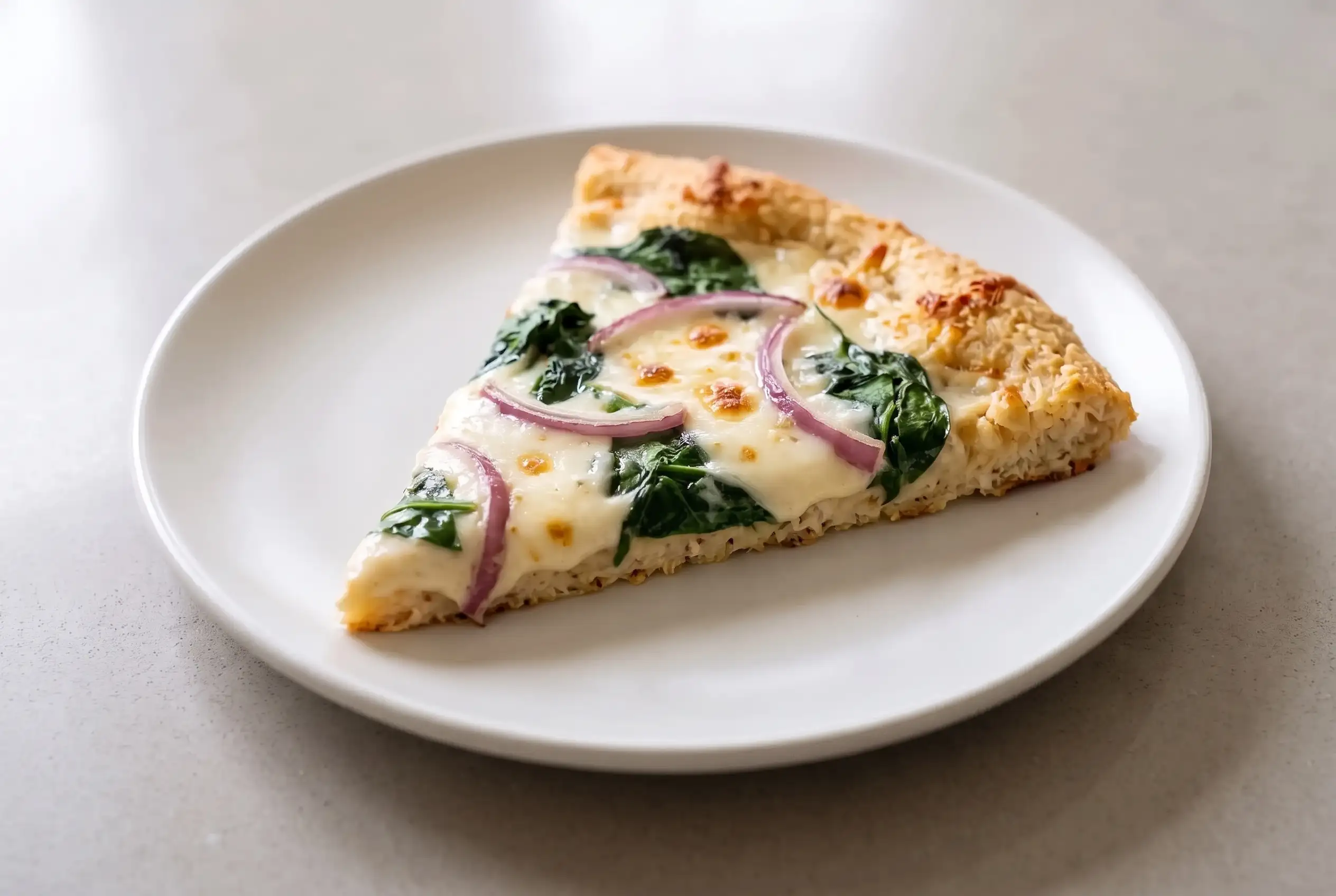

Vegan pizza rolls combine golden-baked pizza dough with a savory filling of caramelized sweet onions, wilted spinach, garlic, and marinara sauce. Each roll has a lightly crisp exterior and a soft vegetable-filled center, making it easy to serve as a handheld snack, appetizer, or light plant-based meal.
Unlike traditional pizza rolls that rely on dairy cheese or meat, these homemade vegan pizza rolls use vegetables and tomato sauce for their flavor. The ingredients are familiar, the preparation is straightforward, and store-bought pizza dough can help simplify the process. A few important details, particularly managing moisture and sealing the dough, make the difference between neatly baked rolls and filling that escapes onto the baking sheet.
Why Vegan Pizza Rolls Work Without Dairy Cheese
Caramelized onions create a naturally sweet, savory filling that works well with the acidity of marinara sauce. Garlic adds a stronger aromatic flavor, while spinach brings color and a tender texture. Together, these ingredients provide enough variety that cheese is optional, not essential.
Pizza dough creates the structure needed to hold the vegetables together. As it bakes, the outer surface browns while the interior stays softer around the filling. Rolling the dough into individual portions also makes the finished food easier to handle than a large filled pizza.
For anyone preparing easy vegan pizza rolls, the basic vegetable combination offers flexibility without requiring specialty ingredients. Vegan cheese or nutritional yeast can be included for a different flavor, but neither is necessary for the original preparation.
Pizza Dough Choices That Keep the Rolls Plant-Based
Both homemade and store-bought pizza dough can work for vegan pizza rolls. The important consideration is choosing dough without animal-derived ingredients, since commercially prepared products can vary. Check the ingredient label when using a packaged option.
Dough that has been chilled may resist stretching or pull back when rolled because its gluten network is tight. If it keeps shrinking, resting pizza dough for 15 minutes allows the gluten to relax, making it easier to shape into rectangles without forcing or tearing it. Keep the dough covered during the rest to prevent drying, and use a lightly floured work surface to help prevent sticking.
Whole-grain pizza dough is another possible choice. It changes the dough’s texture and may increase its fiber content, although the amount depends on the product or flour used. Whatever dough you choose, keeping the pieces reasonably even helps the rolls bake consistently.
The Onion and Spinach Filling Needs Controlled Moisture
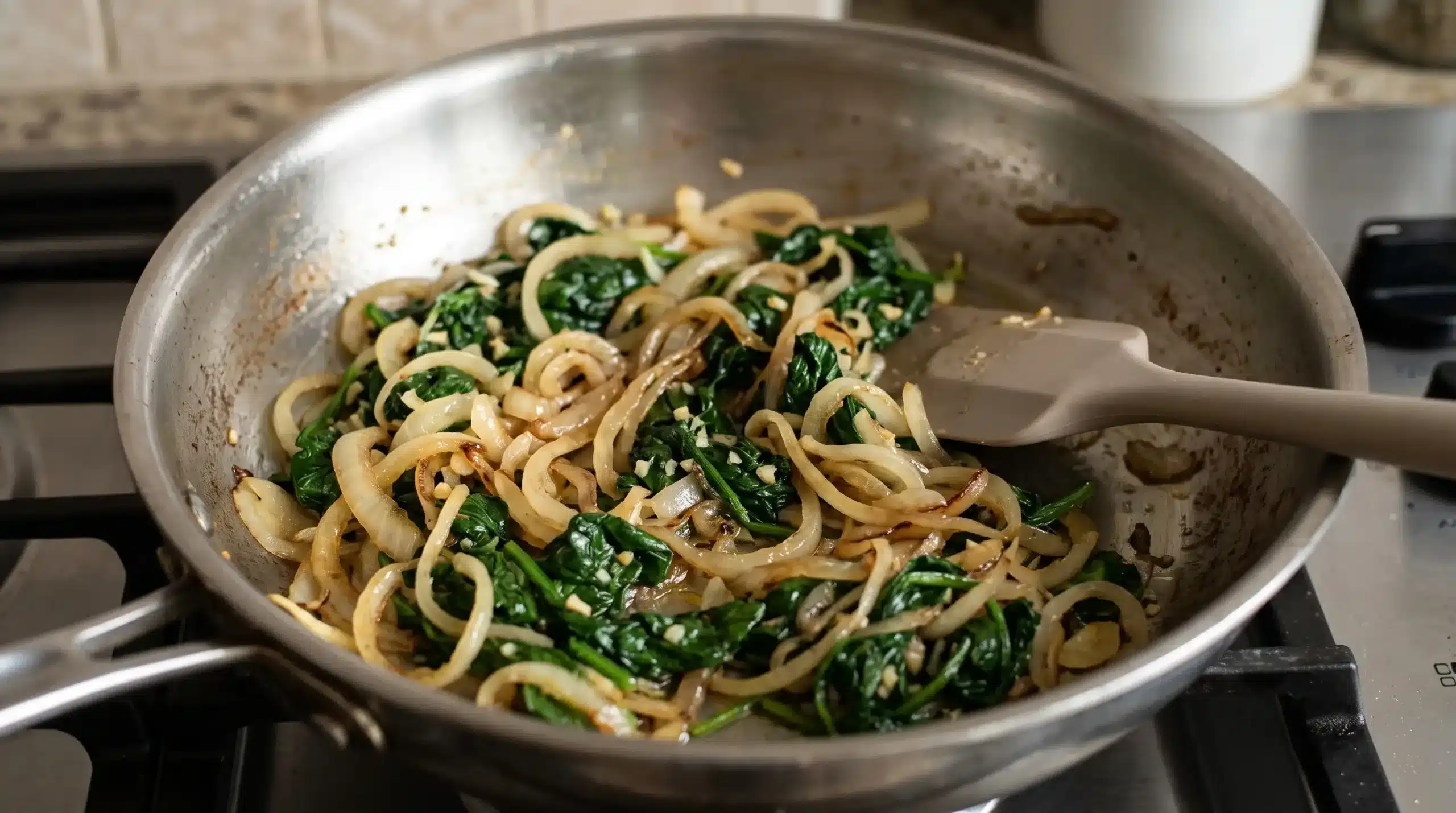
Sweet onions benefit from enough time in the skillet to soften and develop a caramelized flavor. Cooking them over medium heat with olive oil allows their natural sweetness to become more noticeable. The onions should be tender before the garlic and spinach join them.
Fresh spinach loses considerable volume as it wilts and can release moisture into the pan. Letting excess liquid evaporate helps prevent the dough from becoming wet where it touches the filling. Garlic only needs enough cooking to become fragrant and blend with the vegetables.
Marinara sauce introduces additional moisture, so a modest dollop inside each rectangle is more practical than a generous layer. Keeping extra sauce for dipping provides tomato flavor without making the rolls difficult to close.
Golden Edges and Secure Seams During Baking
The oven should be preheated to 375°F (190°C) before the assembled rolls go inside. At this temperature, the dough can develop a golden surface while the cooked vegetable mixture warms through. Baking generally takes 15–20 minutes, with visible browning serving as the useful finishing cue.
Seam placement matters just as much as oven temperature. Arranging each roll seam-side down on the baking sheet helps the dough stay closed as it expands. A securely enclosed filling is less likely to escape during baking.
Check the exposed dough for an even golden appearance before removing the rolls. If the surface still looks pale, continue baking while watching closely. A roll that has browned on the outside should also be checked for cooked dough around the sealed area, especially when the pieces are thicker. For a different cooking method, crispy air fryer pizza rolls require careful spacing so hot air can circulate around each piece and brown the exterior.
Rolling Rectangular Dough Without Losing the Filling
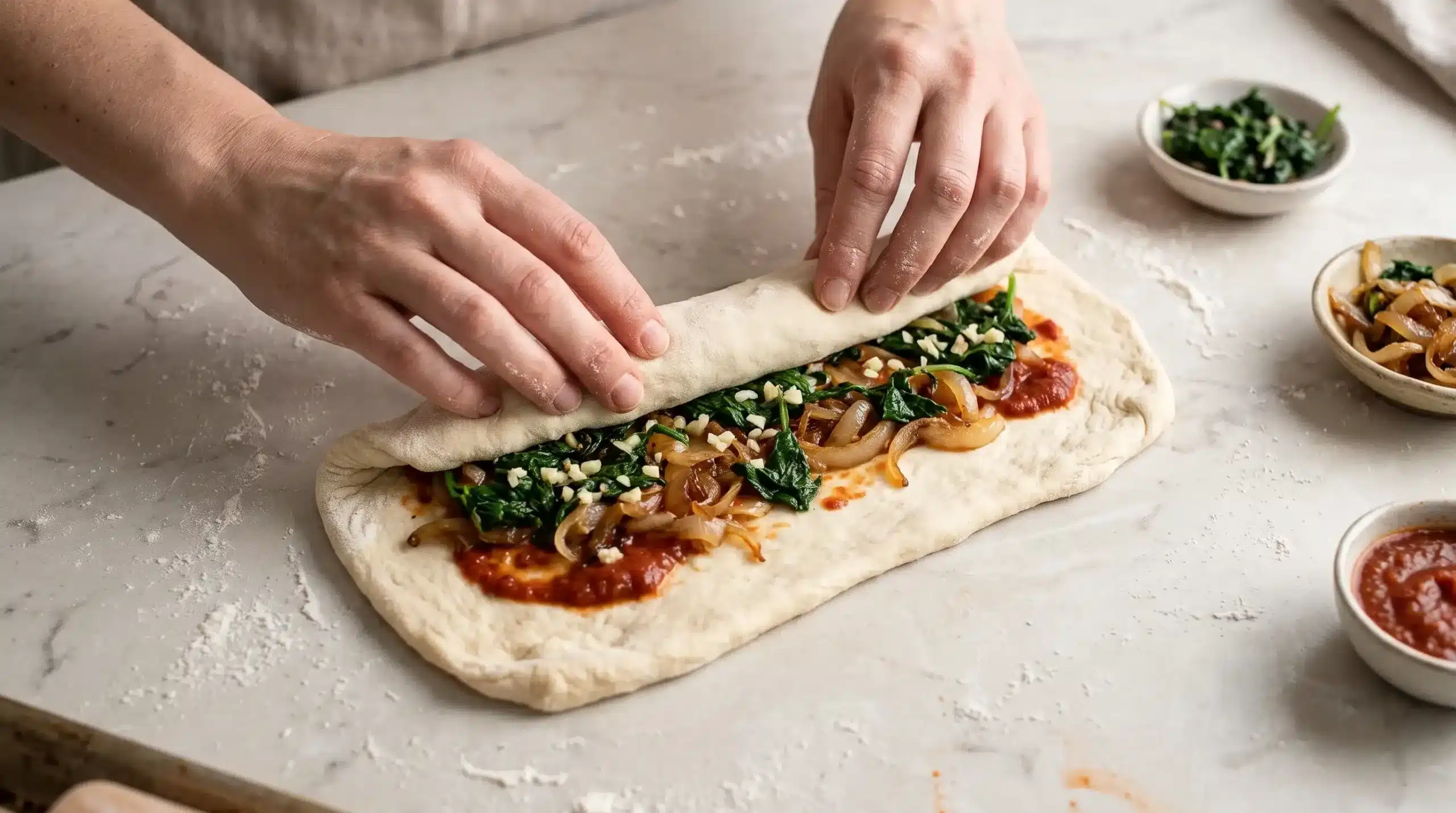
Rectangular pieces give the onion and spinach mixture a defined area to sit before the dough is rolled around it. Similar-sized rectangles are easier to portion and arrange on a baking sheet. Extremely small pieces can be awkward to fill, while oversized portions may be harder to handle as individual snacks.
Leave enough uncovered dough around the filling to create a secure closure. Overfilling can stretch the dough and push marinara toward the edges, making it harder to keep everything inside. A spoonful of vegetables and a small amount of sauce are sufficient starting points.
Handle the shaped rolls gently when transferring them to the baking sheet. If a seam starts to open, press the dough together before baking. Keeping the assembled pieces separate also allows their exposed surfaces to brown without sticking to neighboring rolls.
Common Vegan Pizza Rolls Mistakes to Avoid
Most problems with vegan pizza rolls begin before they enter the oven. Moist vegetables, difficult-to-stretch dough, and poorly closed seams can affect the finished texture even when the oven temperature is correct.
- Wet filling: Spinach releases liquid as it cooks. Allow excess moisture to evaporate before adding the vegetables to the dough.
- Too much marinara: Excess sauce can soften the dough and escape through the seams. Use a small amount inside and reserve more for serving.
- Cold, resistant dough: Dough that repeatedly shrinks back is difficult to shape. Let it rest briefly at room temperature.
- Loose seams: Rolls may open while baking if the dough is not secured. Place the closed seam against the baking sheet.
- Pale dough: Removing the rolls too early can leave a soft exterior. Look for golden browning and properly baked dough before serving.
Correcting these issues during preparation is easier than trying to repair the rolls after baking. In particular, a filling that is cooked and no longer watery makes assembly substantially more manageable.
Vegetable Variations for Homemade Vegan Pizza Rolls
The onion, spinach, and garlic filling provides a useful base for additional vegetables. Bell peppers, mushrooms, or roasted peppers can change the flavor and texture without changing the basic rolled format. Extra vegetables should be cooked or prepared so they do not contribute unnecessary moisture.
Vegan cheese offers another variation for readers who prefer a more familiar pizza-style filling. Nutritional yeast can also introduce a savory, cheese-like note without dairy. Neither addition needs to replace the caramelized onions or marinara.
For a spicy version, crushed red pepper or chili flakes can be mixed into the vegetable filling. Start with a small amount when serving people with different spice preferences. The heat can also be adjusted between batches without changing the dough.
Marinara Sauce Inside Versus Alongside the Rolls
Marinara serves two different purposes in vegan pizza rolls. Inside the dough, it supplies a concentrated tomato flavor that blends with the cooked vegetables. Alongside the finished rolls, it acts as a dipping sauce and allows each person to add more.
Keeping most of the extra sauce outside the dough makes the filling easier to manage. Another preferred sauce can be substituted when a different flavor is desired, provided it works with the vegetables and does not make the dough excessively wet.
Serving Warm Pizza Rolls as Snacks or Light Meals
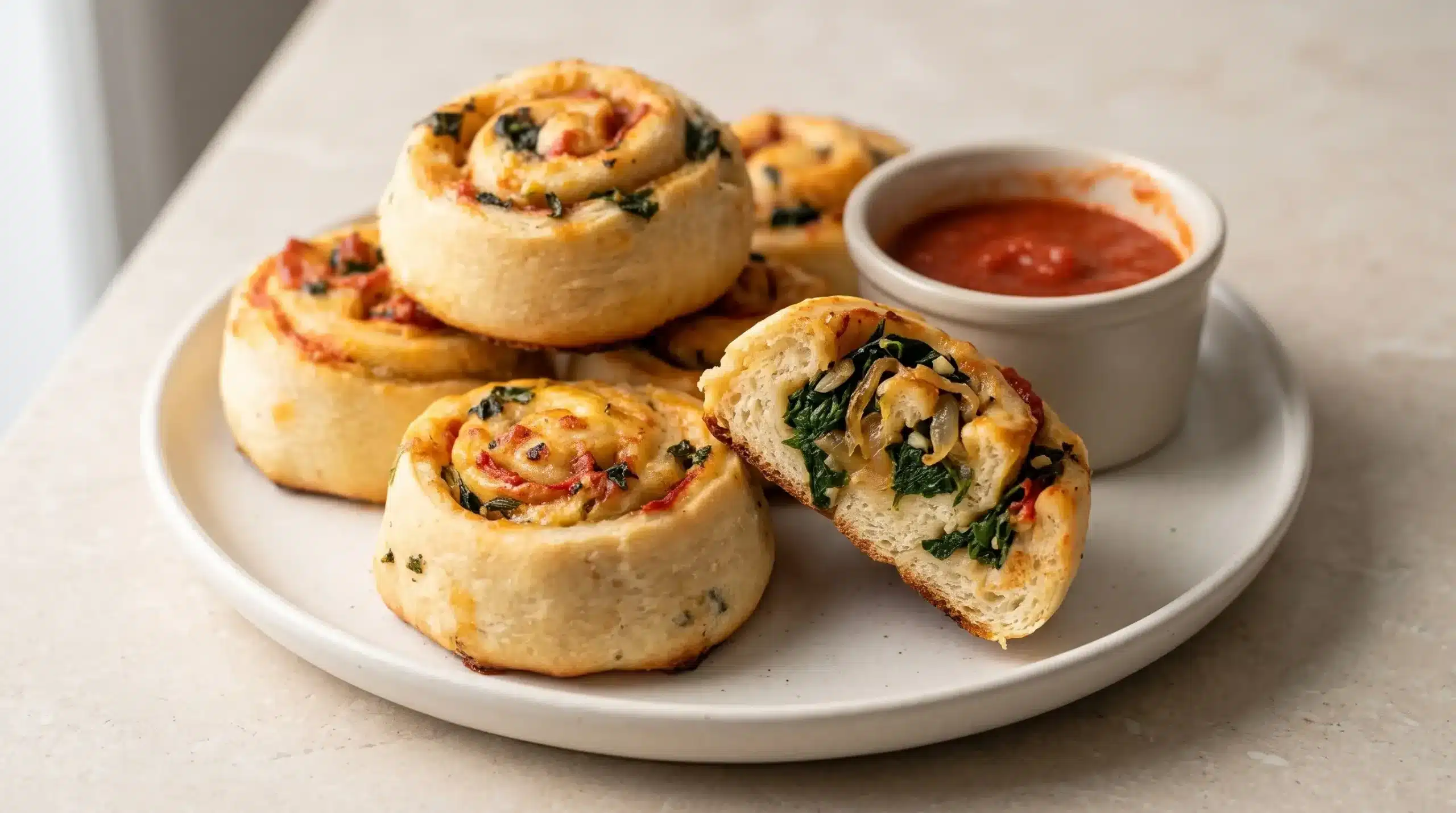
Freshly baked rolls are especially useful for casual serving because they can be arranged on a platter without additional assembly. A small bowl of marinara nearby makes dipping convenient, whether they are offered as appetizers or an afternoon snack.
For a light meal, a side salad adds a fresh contrast to the warm dough and savory filling. The combination also makes it possible to serve the rolls in a more substantial setting without changing their preparation.
At family gatherings or parties, individual portions are easy to distribute. Allow the rolls to cool slightly after baking so the hot filling is easier to eat. Serving them warm preserves the contrast between their browned exterior and tender center.
Matching Pizza Roll Variations to Different Meals
Small ingredient adjustments can help the same basic preparation suit different serving preferences. The following options keep the vegetable-filled format while showing how filling choices affect flavor and handling.
| Variation | Flavor and Texture | Preparation Consideration |
|---|---|---|
| Original spinach and onion | Sweet, savory, and tender | Cook off excess spinach moisture |
| Bell pepper and mushroom | More vegetable texture and earthy flavor | Cook vegetables before filling |
| Roasted pepper filling | Soft texture with a roasted vegetable flavor | Drain any collected liquid |
| Vegan cheese addition | Richer, cheese-style filling | Check that the cheese is dairy-free |
| Chili-flake variation | Spicier vegetable filling | Adjust the amount to taste |
These changes are most practical when the added ingredients remain proportionate to the dough. Adding too many filling components at once makes individual rolls harder to close and can interfere with their shape.
Refrigerating Leftover Vegan Pizza Rolls
Leftover vegan pizza rolls can be refrigerated in an airtight container for about three days. Allow them to cool before storing, but refrigerate promptly instead of leaving them at room temperature for an extended period.
Keeping the rolls enclosed protects them from drying out in the refrigerator. The baked dough may soften during storage because it sits in contact with the vegetable and sauce filling.
For reheating, return the rolls to the oven until thoroughly heated. An oven is useful for warming the center while helping the exterior regain some of its baked texture. Exact reheating time depends on the size of the rolls and how cold they are when placed in the oven.
Freezing Unbaked Rolls for Another Day
Vegan pizza rolls can be assembled and frozen before baking. Wrap them well to protect the dough and filling during storage. For easier handling, initially arranging the individual pieces separately until frozen helps prevent them from sticking together.
When ready to cook, bake the rolls from frozen and monitor them until the dough is fully cooked and golden. Frozen pieces may require additional oven time compared with freshly assembled rolls, so their appearance and internal doneness matter more than following the usual baking interval without adjustment.
Plant-Based Nutrition in the Vegetable Filling
Spinach contributes vitamins, including vitamins A and C, while onions and garlic make the filling flavorful without relying on animal products. Olive oil supplies fat for cooking, and the pizza dough contributes carbohydrates that make the rolls more substantial than vegetables alone.
Nutritional content depends on dough selection, sauce, vegetable quantities, and any optional additions. Choosing whole-grain dough can increase fiber intake, while adding vegan cheese may change the overall fat and calorie content.
Although the vegetable filling is plant-based, the finished rolls should be viewed in the context of the whole meal. Pairing them with a salad is one straightforward way to include more vegetables when they are served as lunch or dinner.
Practical Checks Before the Rolls Enter the Oven
Once the filling and dough are ready, a short visual check helps prevent avoidable problems. The following points focus on the assembled condition of each roll, not on repeating the cooking instructions.
- Filling texture: Vegetables should be tender without visible pools of liquid.
- Dough condition: Rectangles should be flexible enough to roll without tearing.
- Sauce quantity: Marinara should remain contained within the dough.
- Closure: Each seam should be secured and positioned underneath.
- Baking space: Individual rolls should have room for their exposed dough to brown.
These checks are particularly helpful when assembling several portions at once. A consistent shape and similar amount of filling across the batch make the baking results easier to judge.
Well-Sealed Dough Makes Better Vegan Pizza Rolls
A properly cooked vegetable filling and securely closed dough are the two conditions that most strongly influence the finished rolls. Caramelized onions, wilted spinach, garlic, and restrained amounts of marinara create a filling that stays flavorful without overwhelming the pastry.
Golden-baked dough completes vegan pizza rolls by holding those ingredients in a compact, easy-to-serve form. Paying attention to moisture before assembly and browning during baking gives the rolls their characteristic balance of tender filling and lightly crisp exterior.
Vegan Pizza Rolls Questions About Dough, Freezing, and Substitutions
Can I use refrigerated store-bought pizza dough?
Refrigerated store-bought dough is suitable as long as its ingredients meet your vegan requirements. Follow any handling guidance on the package, particularly if the dough needs time outside the refrigerator before shaping.
Can I freeze vegan pizza rolls after baking?
Cooked rolls can generally be frozen once cooled. Pack them in a freezer-safe airtight container, separating layers when necessary. Reheat from thawed or frozen until thoroughly hot, recognizing that the dough may be somewhat softer than when freshly baked.
Can frozen spinach replace fresh spinach?
Frozen spinach is a workable substitute when thawed and thoroughly drained before use. Removing as much excess liquid as practical is especially important because the filling will be enclosed inside dough.
Can I prepare the onion filling ahead of time?
The onions, garlic, and spinach can be cooked in advance and refrigerated promptly in a covered container. Keep the prepared filling chilled until assembly, and avoid placing a hot, steaming mixture directly onto the rolled dough.
Can I use gluten-free pizza dough?
Gluten-free pizza dough may be used if it can be shaped and rolled without breaking. Its handling characteristics can differ from wheat-based dough, so follow the specific product’s preparation guidance and check the rolls carefully during baking.
Can I make the rolls without olive oil?
A small amount of another suitable cooking oil can replace olive oil when sautéing the vegetables. If cooking without added oil, a little water may help prevent sticking, although the onions may brown differently and develop less of the characteristic caramelized flavor.
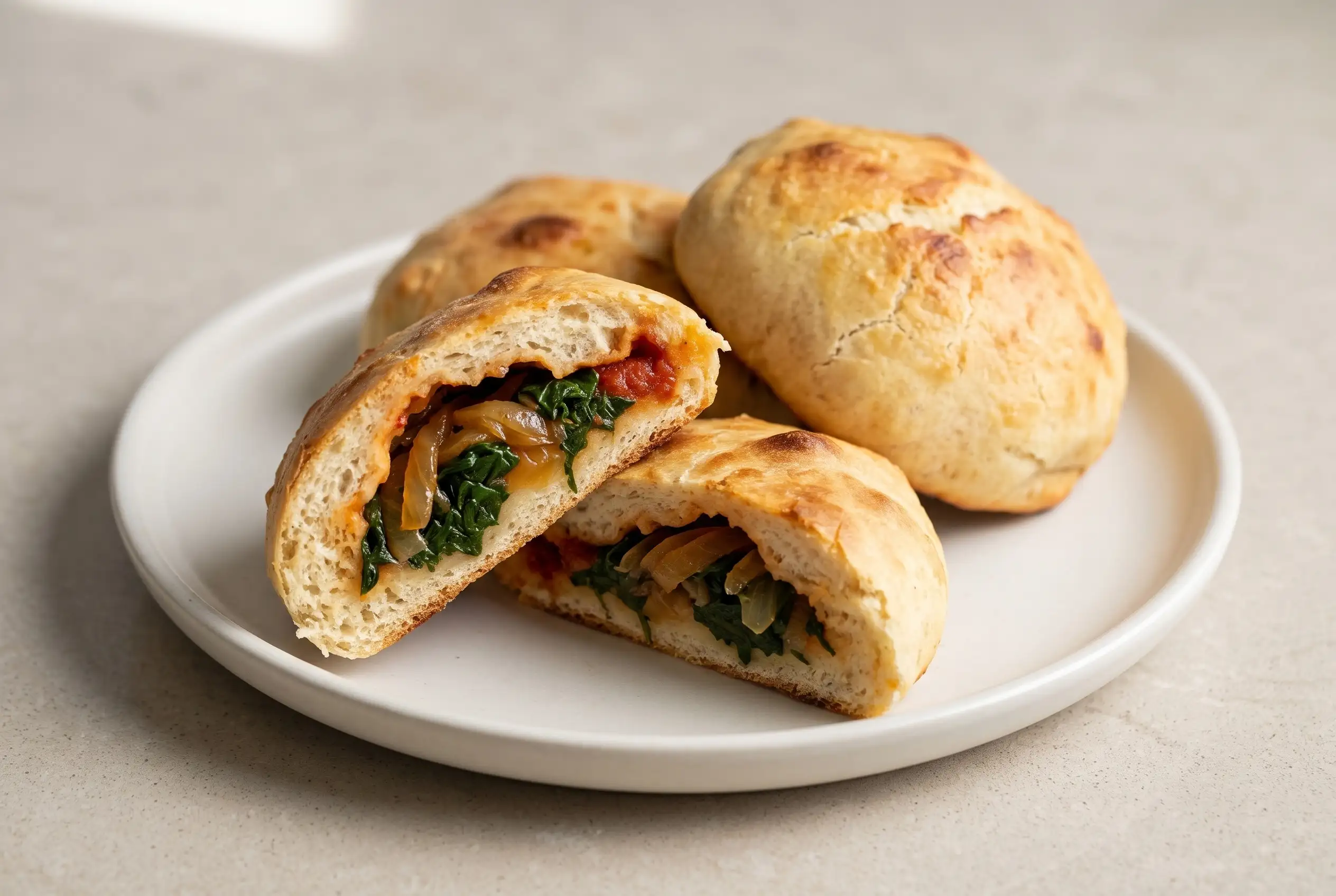
Vegan Pizza Rolls with Spinach and Caramelized Onions
Ingredients
Method
- Set the oven to 375°F (190°C). Cover a baking sheet with parchment paper.
- Warm the olive oil in a large skillet over medium heat. Add the sliced sweet onions and stir occasionally as they cook, allowing them to soften and develop a caramelized color.
- Stir the minced garlic and fresh spinach into the onions. Continue cooking, stirring frequently, until the spinach wilts and the garlic becomes aromatic. Add the salt and black pepper, then take the skillet off the heat.
- Transfer the pizza dough to a work surface dusted lightly with flour. Shape it into a thin rectangle of even thickness, then divide it into 8 smaller rectangles.
- Divide the onion, spinach, and garlic mixture among the dough pieces, placing the filling in the middle of each. Spoon a little marinara sauce over each portion, using the full 1/2 cup across all 8 rolls.
- Wrap each rectangle of dough around its filling, pressing the seams closed. Place the assembled rolls on the parchment-lined baking sheet with the seams underneath, allowing some room between them.
- Transfer the baking sheet to the preheated oven and bake for 15–20 minutes. The rolls are ready when the dough is cooked through and the crusts are golden brown with a lightly crisp exterior.
- Take the baked pizza rolls out of the oven and serve them warm, accompanied by extra marinara sauce for dipping.