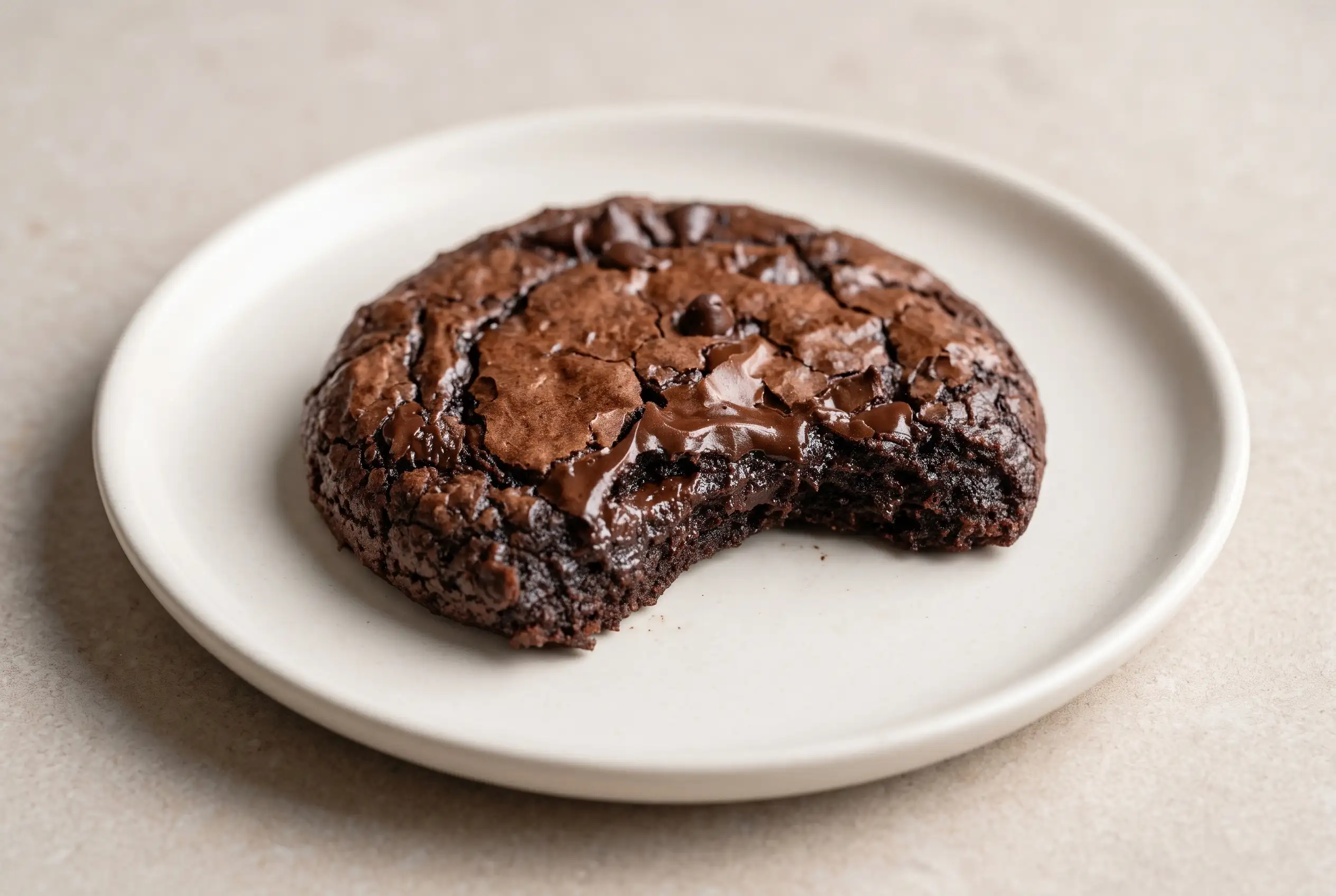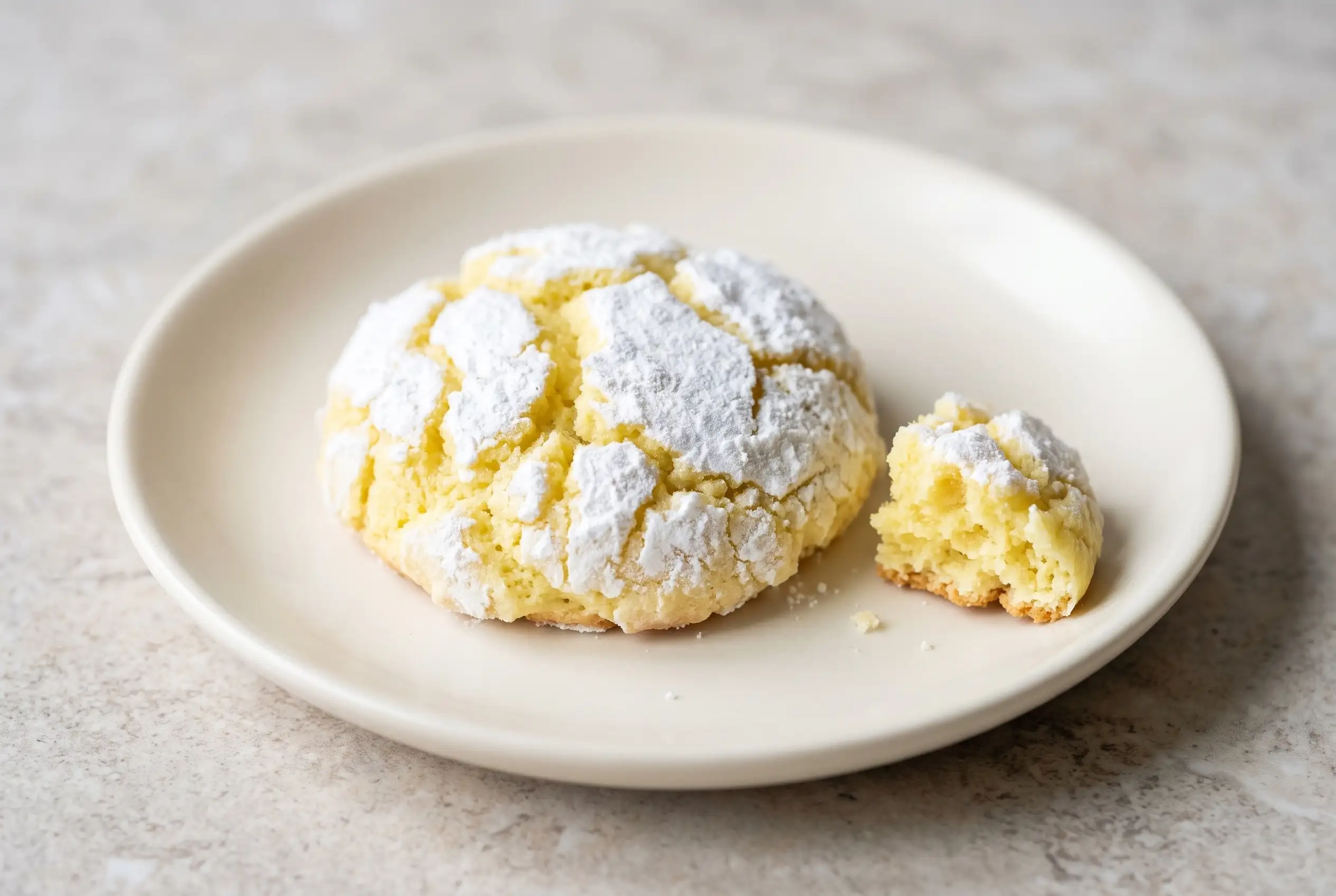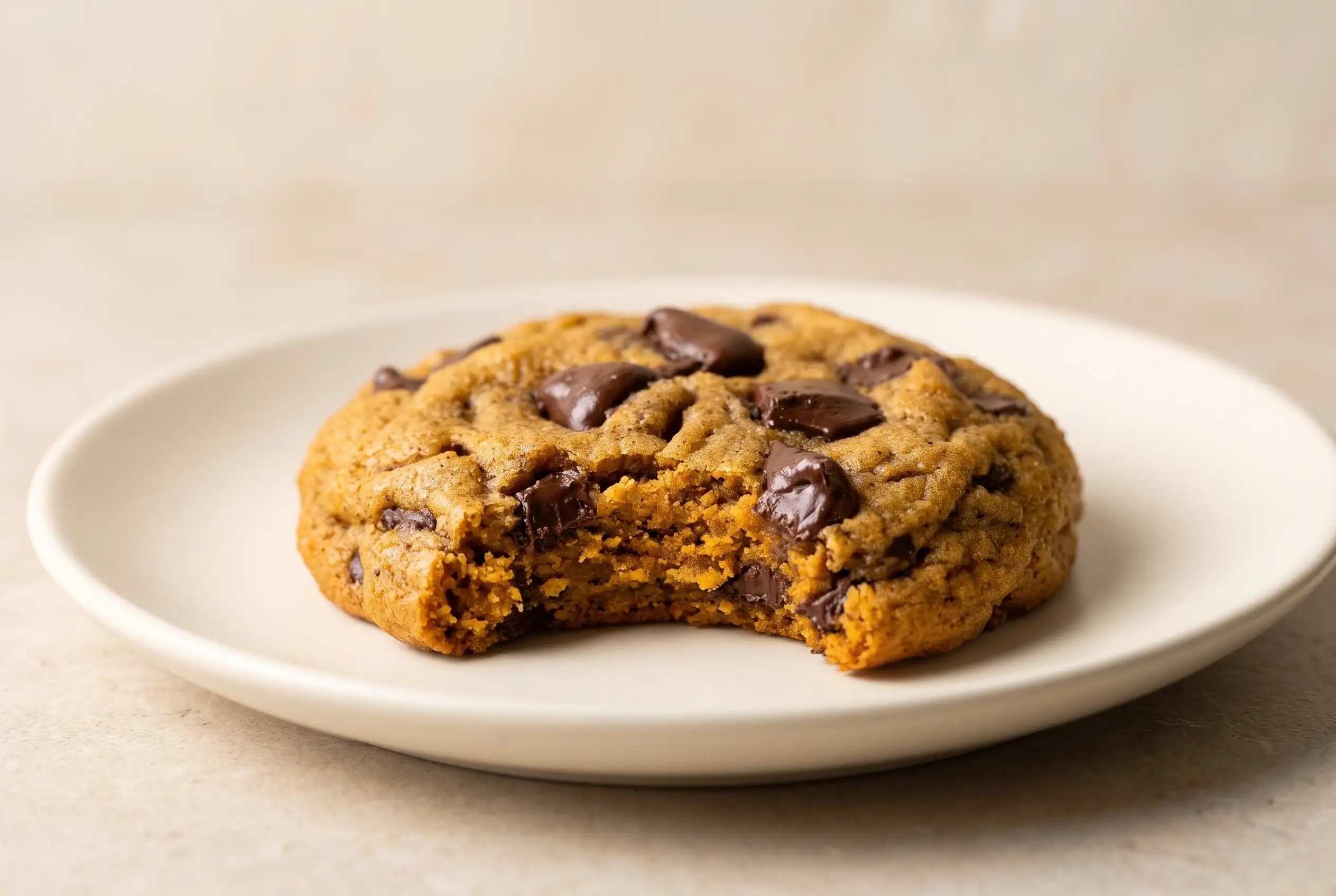

Lemon raspberry cookies combine fresh berry flavor with lemon zest and juice in a soft, lightly golden cookie. The dough uses everyday baking ingredients, while the raspberries add small pockets of fruit and a noticeable contrast to the sweet butter-based mixture. These cookies are especially suited to anyone who enjoys citrus desserts without a heavy frosting or filling.
Successful lemon raspberry cookies depend on handling the fruit carefully and watching the oven closely. Fresh raspberries contain moisture and can break apart when mixed, so gentle folding matters. The cookies should come out when their edges are lightly golden, even if the centers still look soft. A short rest on the baking sheet helps them become easier to transfer without losing their tender texture.
What Gives Lemon Raspberry Cookies Their Distinct Texture
The combination of softened butter, sugar, and egg creates a dough that can be portioned by the spoonful. Creaming the butter with the sugar incorporates air into the mixture, which helps establish a lighter texture before the flour is added. The finished cookies are intended to remain soft through the center, with a little more structure around the edges.
Unlike a plain lemon cookie, the raspberry version contains pieces of fresh fruit distributed through the dough. Those pieces introduce moisture and create a less uniform interior. Some bites contain more berry, while others emphasize the lemon and buttery cookie base.
Because the centers continue setting after the cookies leave the oven, a completely firm appearance is not the right baking target. Lightly golden edges offer a more useful sign of doneness. Allowing the cookies to cool before handling them extensively also helps preserve the shape around the fruit.
Fresh Raspberries and Lemon Need Careful Handling
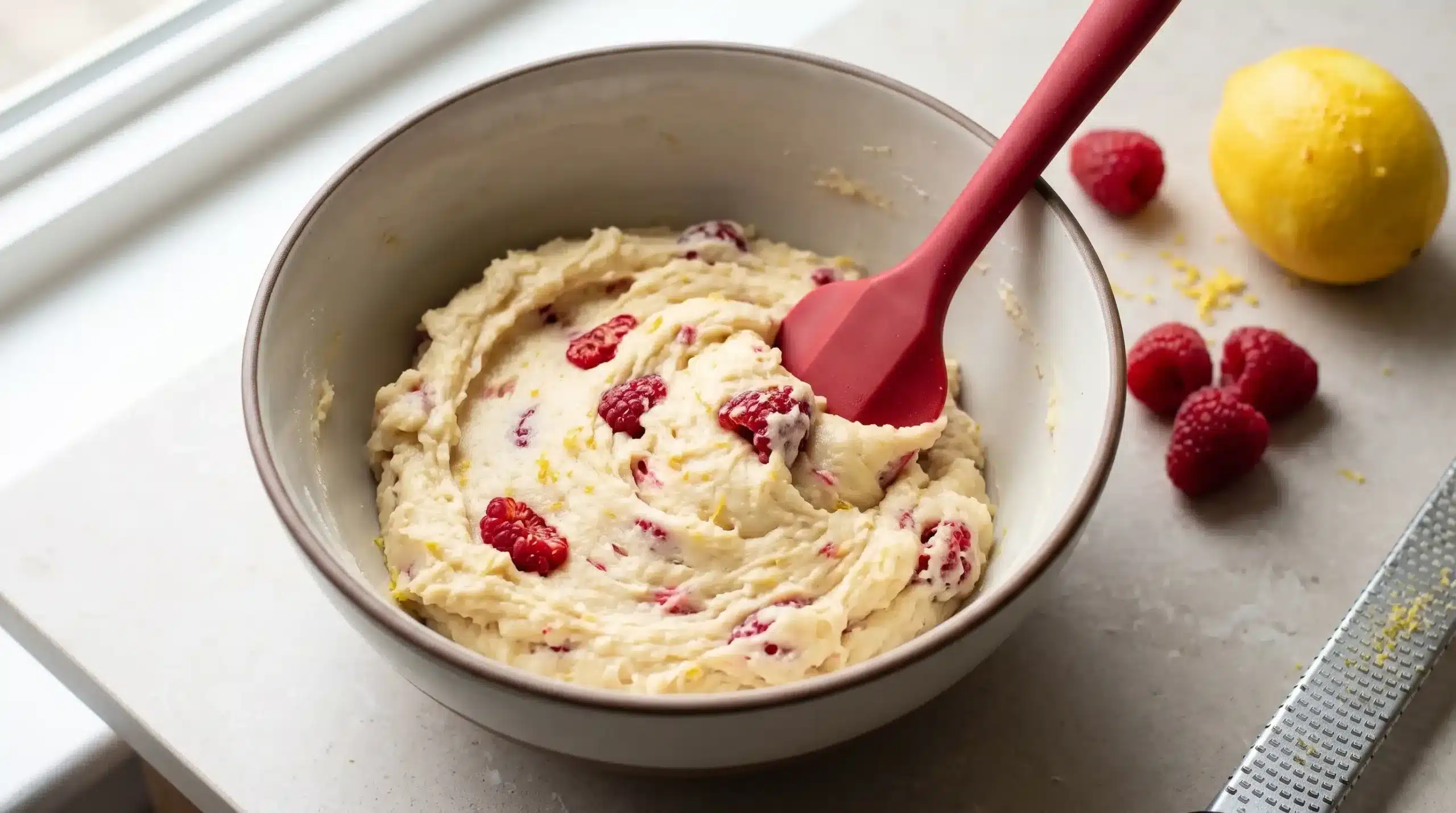
Fresh raspberries are delicate enough to break when pressed against thick cookie dough. Choose fruit that can be handled without immediately collapsing, and fold it in with as little stirring as possible. Keeping recognizable berry pieces gives the finished cookies their characteristic appearance and prevents the dough from becoming uniformly pink.
Lemon zest supplies concentrated citrus aroma without introducing much additional liquid. Lemon juice contributes acidity and a sharper taste, balancing the sweetness already present in the dough. Using both allows the lemon flavor to remain noticeable alongside the raspberries.
For lemon cookies with fresh raspberries, the important ingredient decision is preserving the fruit’s texture while keeping the measured liquid ingredients consistent. Extra juice changes the moisture balance, while aggressively crushed berries can make portions of the dough wetter than others. Neither adjustment is necessary to achieve a clear lemon-and-raspberry flavor.
Softened Butter Makes the Dough Easier to Cream
Butter should be soft enough to mix smoothly with granulated sugar, but it does not need to be melted. In the traditional creaming method, room-temperature butter is easier to cream with sugar, incorporating air that contributes to the cookies’ texture. Beat the softened butter and sugar until the mixture looks pale and fluffy. If the butter remains hard, achieving that consistency becomes more difficult.
The Mixing Point That Protects a Tender Cookie
Once flour enters the butter mixture, the texture of the dough becomes the main consideration. The flour, baking powder, and salt should already be combined so they distribute evenly without requiring prolonged mixing afterward. Gradually incorporating that dry mixture also makes it easier to recognize when the dough has come together.
Stop mixing as soon as the visible dry flour has been incorporated. Continued beating after that point can encourage more gluten development and produce cookies that are firmer than intended. A soft cookie dough does not need the extended mixing associated with bread dough.
Fruit should enter only after the base dough is mixed. Folding requires a gentler motion than beating, and a few careful turns are preferable to repeated stirring. This distinction matters particularly with raspberries because the fruit can release juice into the dough if handled roughly.
Cookie Portions Need Room to Bake Evenly
Tablespoon-sized portions make it easier to keep the cookies reasonably consistent. Leave approximately 2 inches between portions on the parchment-lined baking sheet. The spacing gives each cookie room as it spreads and reduces the chance of neighboring portions baking together.
Golden Edges Are the Key Oven Signal
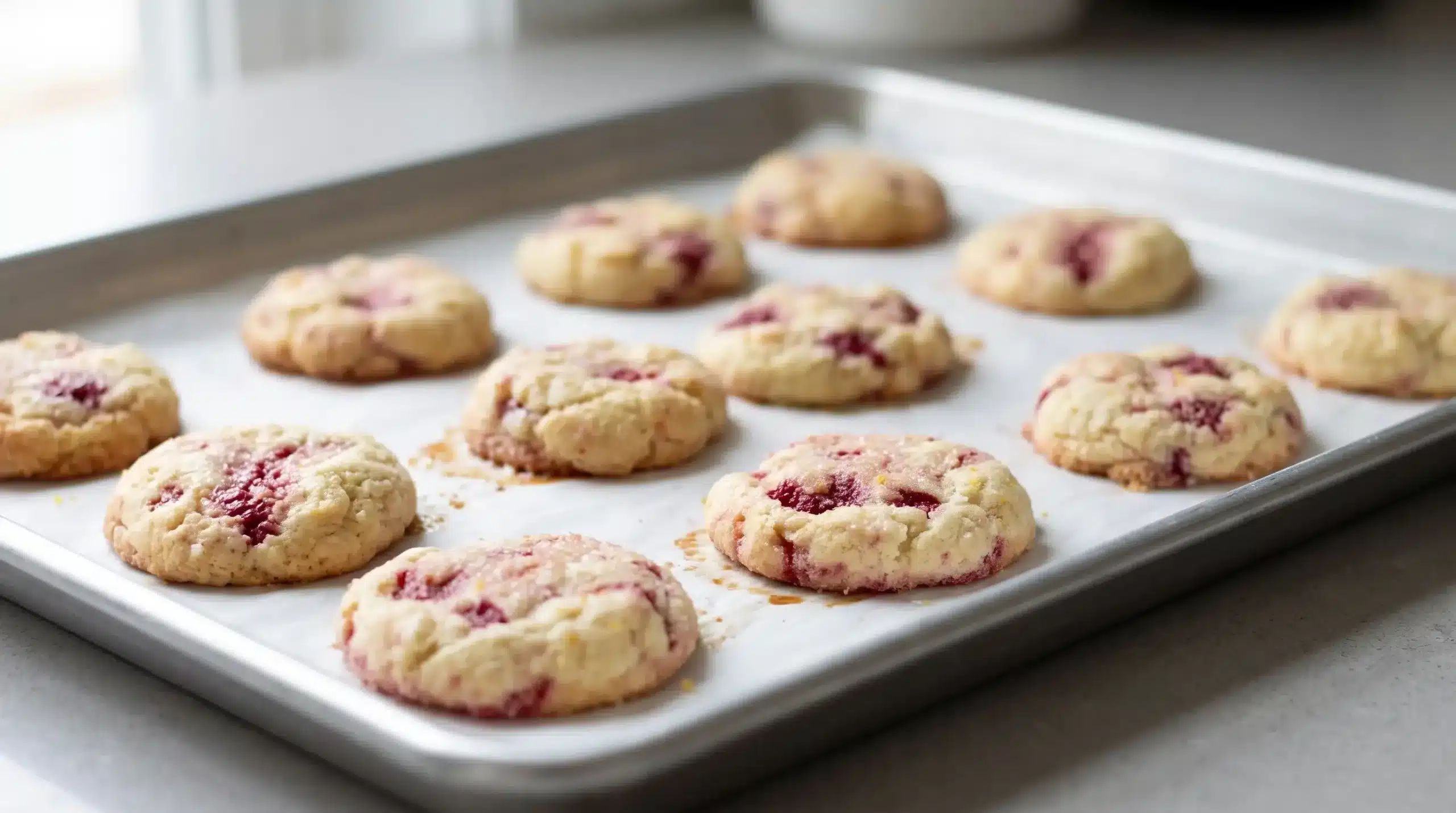
Baking lemon raspberry cookies at 350°F (175°C) gives the dough time to set while the edges develop a light golden color. The stated baking window is 12 to 15 minutes, but the appearance of the cookies matters more than choosing the longest time automatically. Unlike lemon crinkle cookies, which have a distinctive cracked surface, these fruit-filled cookies are best judged by their lightly golden edges rather than their surface pattern.
At the earlier end of the window, examine the edges. They should be lightly golden, while the centers may still appear soft. Waiting until every part looks firm can lead to a drier cookie after cooling. Conversely, removing cookies before the edges show signs of setting may leave them too delicate to transfer.
Ovens and portion sizes can influence how quickly the cookies reach that point. Consistent spoonfuls help minimize differences on the same tray, and parchment paper provides a prepared surface for the dough. Use the visible baking cues together with the stated time range to decide when to remove the tray.
Common Lemon Raspberry Cookie Mistakes to Avoid
Most difficulties with this dough involve excessive moisture, unnecessary mixing, or judging doneness by the center alone. The following distinctions help identify what went wrong and which adjustment belongs at the relevant stage.
- Crushed raspberries: Vigorous stirring breaks the fruit and releases juice. Fold gently after the dough is otherwise combined.
- Overmixed flour: Continued beating after the dough comes together can make the cookies tougher. Stop once the dry ingredients disappear into the mixture.
- Uneven portions: Widely different spoonful sizes can finish baking at different times. Keep the portions reasonably similar.
- Premature transfer: Hot cookies with soft centers may break when lifted immediately. Let them settle briefly on the baking sheet.
- Overbaked centers: Waiting for the middle to become fully firm in the oven can dry out the cookies. Check for lightly golden edges instead.
When troubleshooting a batch, look first at the stage where the problem appeared. Dough that becomes wet during folding calls for gentler fruit handling; cookies that break during transfer need adequate cooling on the tray. Treating these as separate issues makes corrections more useful than changing the entire preparation process.
Frozen Raspberries Change Moisture Management
Frozen raspberries can replace fresh ones when necessary, but they should go into the dough without thawing. Thawed berries release liquid more readily, which can make the dough difficult to handle and cause the fruit to spread through the mixture.
Even when added frozen, the raspberries still need gentle folding. Their condition changes how they are handled, not the basic character of the lemon raspberry cookies recipe.
Sticky Dough Can Be Chilled Before Portioning
If the mixture feels too sticky to portion comfortably, refrigerating it for about 30 minutes can make handling easier. This is a practical adjustment for dough that is difficult to drop neatly onto the baking sheet, not a mandatory stage for every batch.
After chilling, portion the dough by spoonfuls and maintain the intended spacing. Avoid adding large amounts of extra flour merely to make the mixture easier to touch, because that changes the balance of the cookie.
Cooling Keeps the Raspberry Centers Intact
Freshly baked cookies are more delicate while their centers are warm, particularly around the raspberry pieces. Leave them on the baking sheet for a few minutes before moving them to a wire rack. The initial rest allows the cookies to become easier to handle, while the rack provides a place for them to cool completely.
Serving Lemon Raspberry Cookies With Simple Pairings
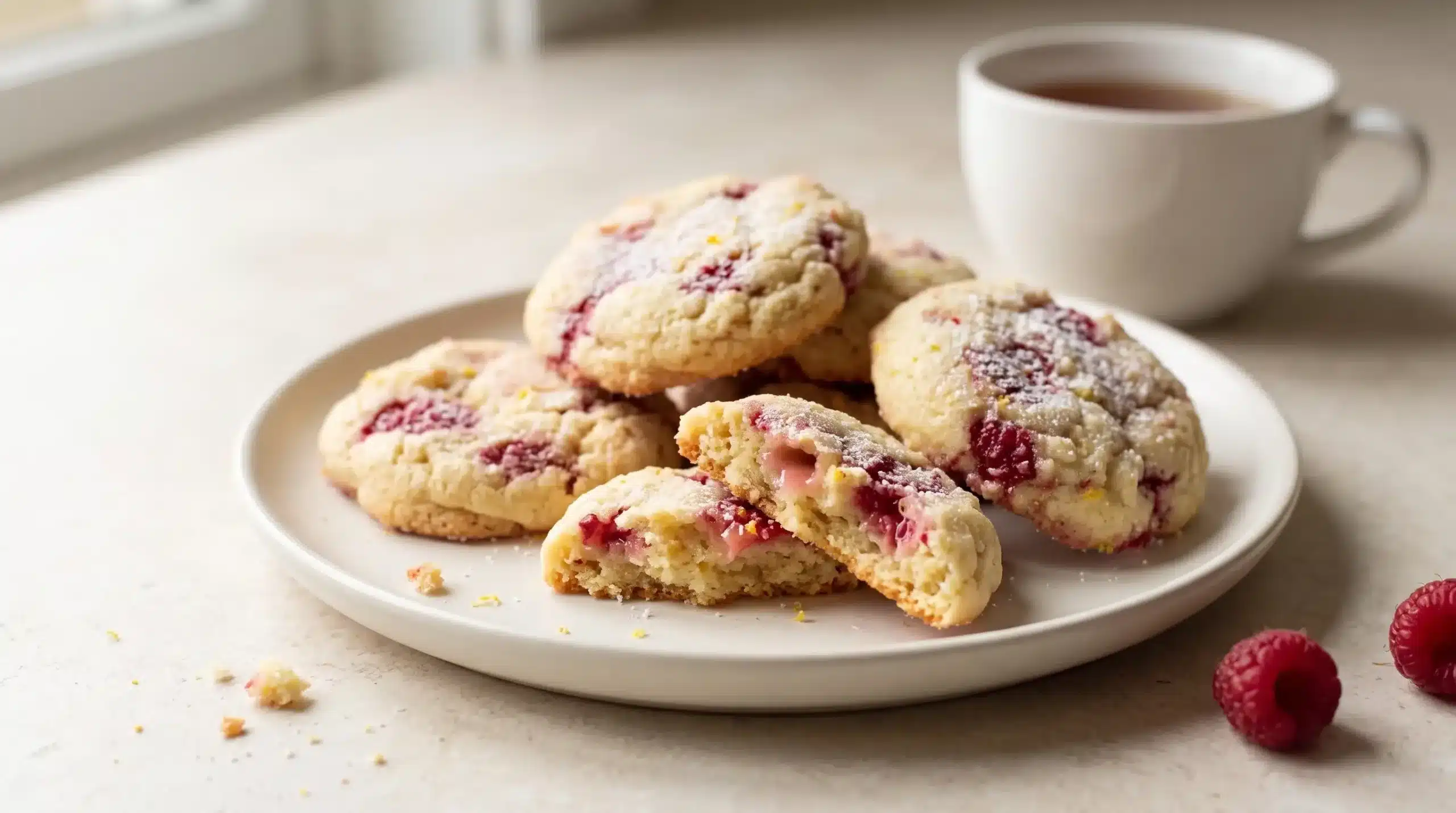
The citrus and berry combination works well served warm or at room temperature. A glass of milk provides a mild accompaniment, while hot tea or coffee offers a contrasting drink alongside the sweet cookies.
For a slightly sweeter presentation, dust the cooled cookies with a little powdered sugar. Wait until they have cooled so the topping remains more visible. Their naturally pink raspberry pieces and lightly golden edges also make an additional decorative topping unnecessary.
When arranging lemon raspberry cookies for sharing, allow the fruit-filled centers to cool sufficiently before stacking or moving them repeatedly. Individual cookies can be served without a filling, glaze, or sandwich layer, making them straightforward to place on a serving plate.
Raspberry and White Chocolate Variations
The original flavor balance can be adjusted with a small number of ingredient substitutions or additions. White chocolate chips introduce additional sweetness, while nuts contribute a contrasting texture. Blueberries and strawberries provide alternative fruit directions, although the resulting cookies will have a different flavor and moisture distribution from the raspberry version.
| Variation | Flavor or texture change | Handling consideration |
|---|---|---|
| White chocolate chips | Extra sweetness against the tart fruit | Fold in without crushing the berries |
| Almonds or walnuts | Additional crunch | Keep the pieces manageable for spoon-sized portions |
| Blueberries | A different berry flavor | Fold carefully to preserve the fruit |
| Strawberries | A sweeter berry variation | Use pieces suited to the size of the cookies and account for fruit moisture |
Each adjustment changes the cookie’s character, so it is sensible to keep the original lemon-and-raspberry combination when that particular flavor is the priority. Additional sweet ingredients can also make the contrast between citrus acidity and fruit less pronounced.
Storage and Freezing Depend on Keeping Moisture Controlled
Airtight storage protects the cookies from drying out, but the fresh fruit also makes moisture management important. The original storage guidance allows room-temperature storage for up to a week. Because these cookies contain fresh raspberries, refrigeration is a more cautious choice for longer storage, especially in warm conditions. Refrigerate promptly once cooled and use within several days.
For longer keeping, freezing is an option for up to three months. Separate the cookies with parchment paper so they do not stick together. Place them in a suitable airtight freezer container, and avoid unnecessary handling of the fruit-filled centers.
Before serving frozen cookies, allow them to thaw while protected from excess condensation. Their texture may be softer than when freshly baked because fruit moisture changes during freezing and thawing.
Flour and Butter Substitutions Require Attention to Texture
A gluten-free flour blend designed as a 1:1 replacement for all-purpose flour is an available alternative. Although the substitution keeps the measurement straightforward, the resulting cookie texture may differ because gluten-free blends vary in their composition.
Margarine can also be substituted for butter, with some change in flavor or texture possible. For easy lemon raspberry cookies, keeping the original softened butter and all-purpose flour is the most direct way to preserve the intended preparation and consistency.
Soft Centers and Intact Berries Define the Finished Cookie
Lightly golden edges, soft centers, and recognizable raspberry pieces provide the clearest indication of well-prepared lemon raspberry cookies. Those characteristics depend on two decisions working together: stopping the mixing once the dough is combined and taking the cookies out before the centers become completely firm.
The lemon remains noticeable through its zest and juice, while the fruit creates variation in both flavor and appearance. With careful folding and adequate cooling, the baked cookies retain that contrast without needing elaborate finishing.
Lemon Raspberry Cookies Questions About Moisture and Doneness
Can I add more lemon juice for a stronger citrus flavor?
Additional juice is possible, but it also adds liquid and can affect how the dough behaves. The measured combination of zest and juice already provides lemon flavor. For a stronger citrus impression without substantially increasing moisture, careful use of the existing zest is preferable to pouring in extra juice without adjusting the other ingredients.
Why are some raspberry cookies pinker than others?
Raspberry pieces are not distributed in perfectly identical amounts between every spoonful. Some portions contain more visible fruit or released berry juice, producing a stronger pink color. A little variation is normal and does not necessarily indicate uneven baking.
Can the cookie dough be prepared ahead of baking?
Short refrigeration is suitable when the dough needs firming before portioning. For extended advance preparation, the supplied method does not establish a tested storage duration for unbaked dough containing fresh raspberries. Preparing and baking the dough promptly is the more predictable approach.
Why do my cookies feel softer around the raspberries?
Raspberries hold water, so the dough immediately surrounding a berry can stay moister than areas containing only the butter-and-flour mixture. A softer patch near fruit is not automatically a problem. Judge the baked cookies by their overall structure and properly set edges, while allowing them to cool before evaluating the texture.
Can I make the cookies without adding powdered sugar?
Yes. Powdered sugar is an optional finishing touch, not an ingredient required to form the dough. Without it, the cookies retain the sweetness of the granulated sugar and the existing balance of lemon and raspberry flavors.
How can I keep the cookies from sticking together after baking?
Let the cookies cool completely before placing them into a container. If stacking is necessary, use sheets of parchment paper between layers, especially when the raspberry pieces are exposed on the surface. This limits direct contact between the softer fruit-filled areas of neighboring cookies.
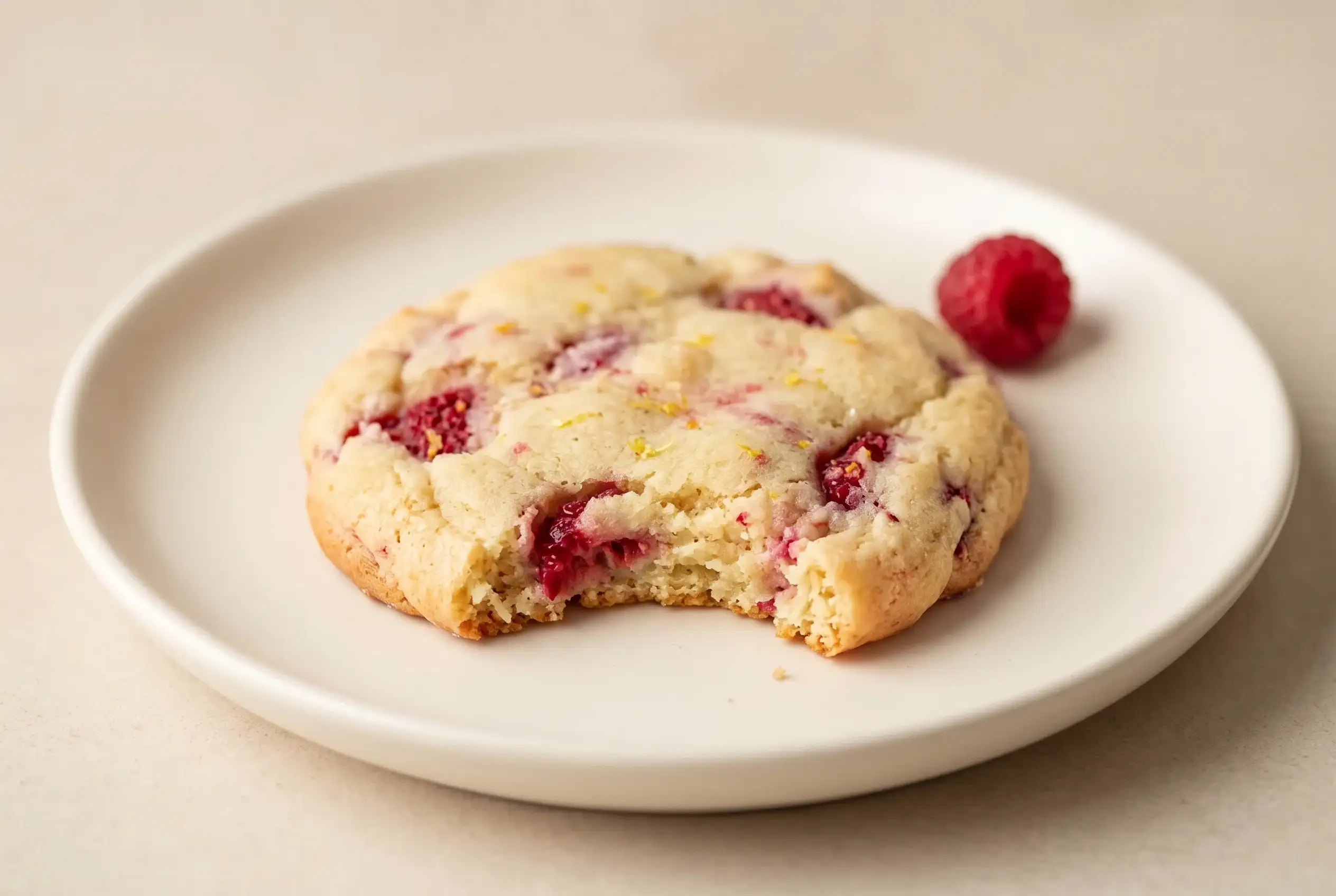
Lemon Raspberry Cookies with Fresh Raspberries and Zest
Ingredients
Method
- Set the oven to 350°F (175°C). Cover a baking sheet with parchment paper.
- Using a mixer, cream the softened butter with the granulated sugar in a large mixing bowl until the mixture becomes airy and pale.
- Beat in the egg, lemon zest, and lemon juice until combined throughout the butter mixture.
- In another bowl, combine the flour, baking powder, and salt with a whisk.
- Add the dry ingredients to the butter mixture in portions, mixing lightly after each addition. Once a soft dough forms and no dry flour remains, stop mixing.
- Use a spatula to gently incorporate the fresh raspberries into the dough, keeping the berries as intact as possible.
- Portion the dough by the tablespoon onto the lined baking sheet, spacing each mound approximately 2 inches apart.
- Bake for 12–15 minutes, checking for lightly browned edges and centers that have set while remaining soft.
- Allow the baked cookies to firm up on the baking sheet for several minutes. Move them to a wire cooling rack and leave them until completely cool.