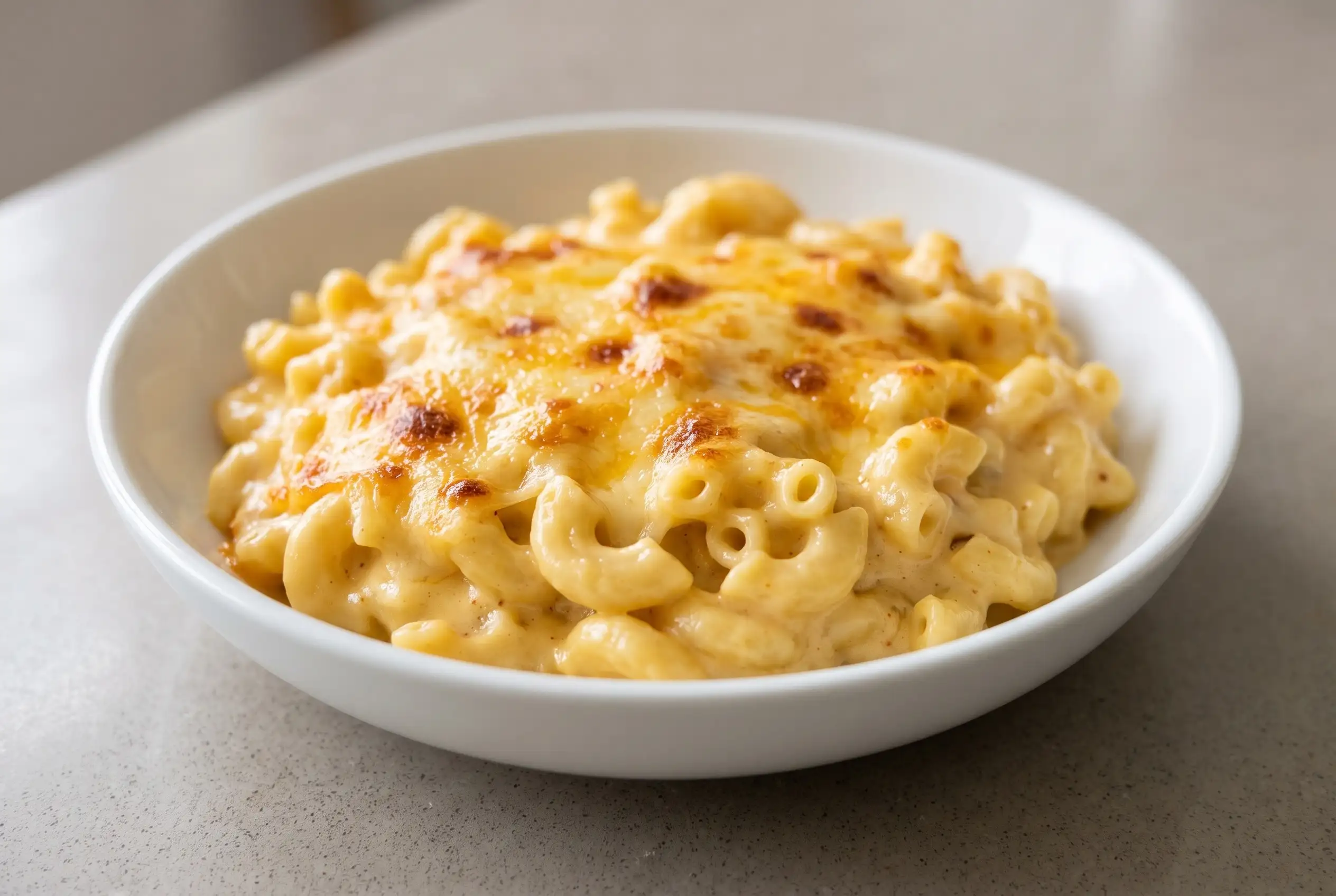

Buffalo chicken mac and cheese combines tender rotini pasta, diced chicken, creamy cheddar sauce, and the tangy heat of buffalo sauce beneath a golden panko topping. Baked until bubbling, it brings together the familiar texture of macaroni and cheese with the bold flavor of buffalo chicken.
Unlike a basic stovetop macaroni and cheese, this version finishes in the oven, where the breadcrumb topping becomes crisp while the pasta stays coated in sauce. The combination works well for a casual dinner, a weekend gathering, or a meal that can be prepared ahead and baked when needed.
Why Buffalo Chicken Mac and Cheese Works So Well
The contrast between creamy pasta and spicy buffalo sauce is the main reason these ingredients work together. Cheddar and cream cheese create a rich base, while the buffalo sauce adds acidity and heat that keep the finished dish from tasting like plain cheese pasta.
Rotini is especially useful because its spiral shape catches the thick sauce. Small pieces of chicken distribute throughout the pasta, making it easier to get chicken, cheese, and buffalo flavor in the same serving.
A layer of panko breadcrumbs provides a different texture from the soft pasta underneath. Once baked, the surface becomes lightly golden, adding crunch without requiring a separate topping sauce or complicated preparation.
Rotini and the Cheese Blend Make a Difference
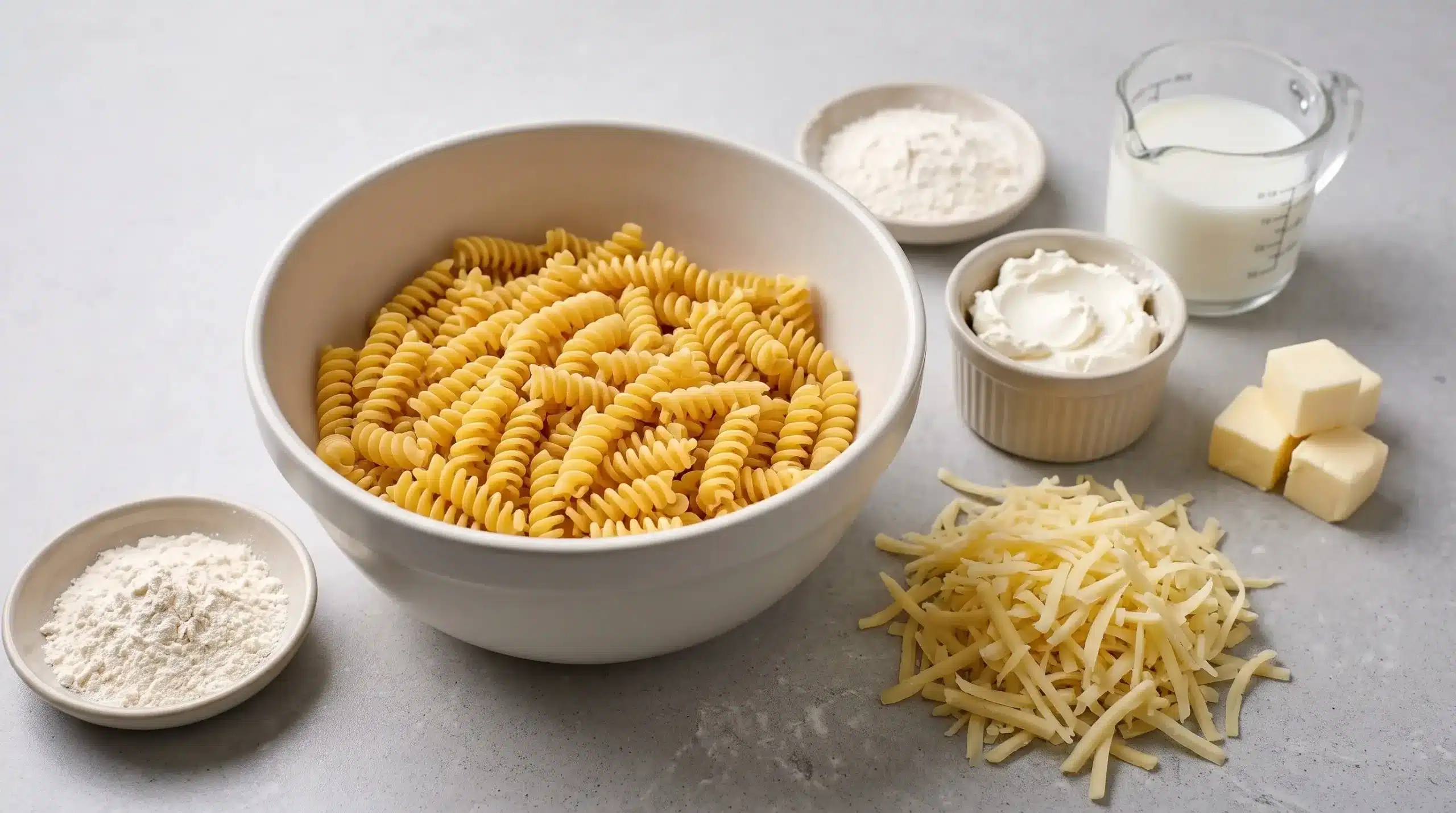
The pasta and cheese selections have a direct effect on the texture of buffalo chicken mac and cheese. Rotini has grooves that hold the sauce, making it a practical choice for a baked pasta dish. Elbow macaroni can also work, although the finished texture will be slightly different.
Sharp cheddar gives the sauce its distinct cheese flavor. Cream cheese helps create a smooth, creamy consistency that coats the pasta evenly. Using both produces the rich texture associated with creamy mac and cheese, while keeping the sauce thick enough to cling to the rotini during baking.
Milk, butter, and all-purpose flour form the foundation of the sauce. When the flour is cooked with melted butter and the milk is gradually incorporated, the mixture thickens enough to support the cheese. That structure is particularly important because the pasta will spend additional time in the oven.
For a smoother result, shred cheddar from a block when convenient. Packaged shredded cheese is a useful shortcut, but its anti-caking ingredients can affect melting and mouthfeel, making freshly shredded cheddar a reliable choice for this creamy sauce. Keep the heat moderate once the cheese enters the saucepan to help the sauce stay smooth.
The Buffalo Sauce Controls the Heat
Buffalo sauce provides the spicy character of baked buffalo chicken mac and cheese, but its intensity depends on the brand and amount used. The original combination uses half a cup, creating a noticeable buffalo flavor without making the dish entirely dependent on heat.
For a milder serving, begin with less sauce and adjust according to taste before the pasta goes into the oven. Those who prefer stronger heat can increase the amount gradually, keeping in mind that additional sauce may also loosen the cheese mixture.
Cooked Chicken Keeps the Pasta Bake Convenient
Cooked, diced boneless skinless chicken breast is the protein used in this buffalo chicken mac and cheese recipe. Because the chicken is already cooked when incorporated into the pasta, the baking stage primarily heats the combined ingredients and browns the topping.
Chicken prepared in a skillet can develop a lightly golden exterior, bringing additional savory flavor to the casserole. Dice it into reasonably uniform pieces so it distributes throughout the rotini without creating oversized chunks.
Leftover cooked chicken is another practical option. It should be properly stored, fully cooked, and cut into small pieces before mixing with the sauce. Since it will be heated again, avoid cooking it unnecessarily for too long beforehand, which can leave the meat dry.
Control the Roux and Cheese Sauce Before Baking
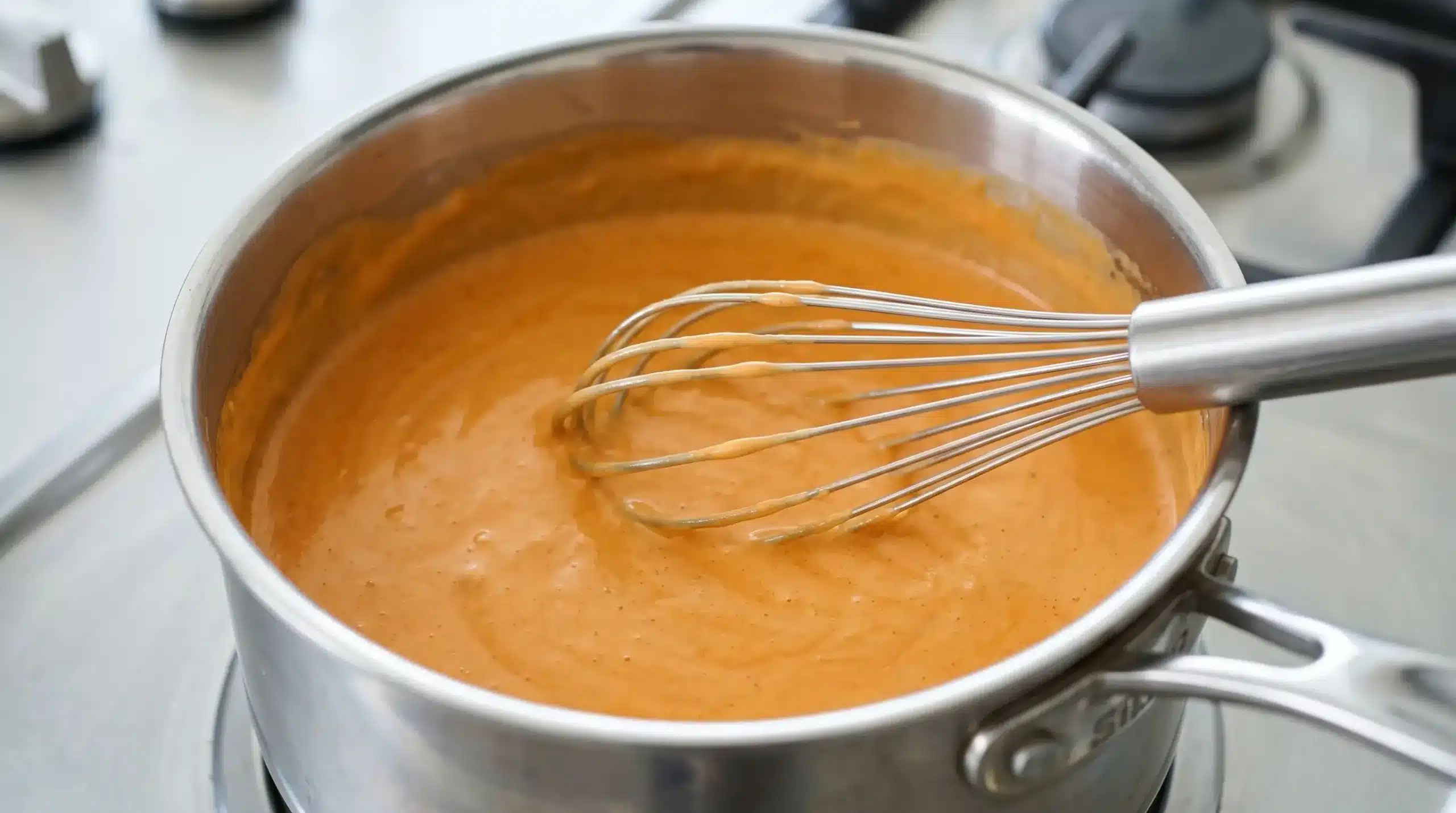
The most important cooking control for creamy buffalo chicken mac and cheese is the consistency of the sauce before it meets the pasta. Butter and flour create a roux, which thickens the milk as the flour’s starch absorbs liquid during heating, helping the finished cheese sauce cling to the rotini.
When adding milk, whisk continuously to incorporate it into the butter-and-flour mixture. Adding it gradually makes lumps easier to prevent. If the sauce appears uneven, continue whisking over moderate heat until the mixture becomes smooth before adding the cheese.
Cream cheese should be allowed to soften and melt into the base. Follow with the shredded cheddar, stirring gently so it incorporates without becoming grainy. Buffalo sauce can then be mixed through until the color and consistency are even.
A properly prepared sauce should be thick enough to coat a spoon but still flow easily around the pasta. An excessively thick mixture may leave the baked rotini dry, while a very thin mixture can collect at the bottom of the baking dish. Judge its consistency before combining everything, when adjustments are easiest.
Al Dente Pasta Holds Up in the Oven
Rotini continues absorbing moisture after it is mixed with the cheese sauce. Cooking it only until al dente helps maintain its shape through the oven stage. Pasta that is already very soft before baking may become overly tender by the time the topping is golden.
Drain the pasta thoroughly, but avoid leaving it sitting uncovered for an extended period. Combining it with the prepared sauce while it is still reasonably warm makes the mixture easier to distribute evenly in the baking dish.
A Golden Panko Crust Without Dry Pasta
The breadcrumb topping is what distinguishes this baked version from a stovetop preparation. Panko has a coarse, airy texture that can become crisp in the oven while leaving the cheese-coated pasta underneath relatively soft.
Spread the pasta mixture evenly in a greased baking dish before scattering the breadcrumbs across the surface. An even layer helps prevent some portions from receiving excessive topping while other areas remain uncovered.
At 350°F (175°C), the casserole should bake for approximately 20–25 minutes, until the sauce is bubbling and the top looks golden. Watch the surface toward the end of baking because oven performance and the depth of the casserole can affect how quickly the breadcrumbs brown.
Allowing the casserole to settle briefly after removing it from the oven makes serving easier. The sauce will still be warm and creamy, but the pasta is less likely to spread immediately when lifted from the dish.
Buffalo Chicken Mac and Cheese Mistakes to Avoid
Several small preparation errors can affect the texture of buffalo chicken mac and cheese. Most problems involve pasta doneness, sauce consistency, or the balance between the creamy filling and crisp topping.
| Common mistake | What happens | Practical correction |
|---|---|---|
| Overcooking the rotini | Pasta becomes too soft during baking. | Stop cooking at al dente before combining with sauce. |
| Adding milk too quickly | Flour lumps remain in the sauce. | Incorporate milk gradually while whisking. |
| Heating the cheese too aggressively | The sauce may turn grainy or separate. | Use moderate heat and stir gently as the cheese melts. |
| Using an overly thick sauce | Pasta can seem dry after baking. | Keep the sauce creamy and spoonable before mixing. |
| Leaving breadcrumbs uneven | Some portions develop a heavy crust while others lack crunch. | Distribute panko evenly over the casserole. |
| Baking beyond the golden stage | The topping can become too dark while the pasta loses moisture. | Check for a bubbling filling and golden surface near the end of baking. |
Adjusting the Creaminess and Spice
Personalizing creamy buffalo chicken mac and cheese does not require changing the basic cooking method. The most useful adjustments involve the cheese ratio, buffalo sauce, and pasta shape.
- Extra creamy: Add a little more cream cheese or cheddar to create a richer sauce, checking that it remains loose enough to coat the pasta.
- Milder heat: Reduce the buffalo sauce slightly while keeping the original cheese base.
- Stronger buffalo flavor: Increase the sauce gradually and taste before transferring the mixture to the baking dish.
- Different pasta: Substitute elbow macaroni for rotini, maintaining an al dente texture.
Adjustments are easiest while the sauce and pasta are still separate. Once everything has been mixed and topped with breadcrumbs, making major changes becomes less convenient and can disturb the coating.
Spinach, Broccoli, and Alternative Cheeses
Vegetables can make the casserole more varied without changing its main character. Spinach and broccoli are both suggested additions, although they should be prepared with moisture in mind. Excess water released into the cheese sauce can weaken its consistency.
Cooked, well-drained broccoli provides firmer pieces among the soft pasta, while wilted spinach can be distributed more evenly. For a broccoli mac and cheese variation, cut the florets into bite-sized pieces and drain them thoroughly before folding them into the chicken and rotini mixture so excess moisture does not thin the buffalo cheese sauce.
For a different cheese profile, mozzarella offers a milder, stretchy texture, while pepper jack contributes additional heat. Either can replace part of the cheddar, although retaining some sharp cheddar helps preserve the familiar macaroni-and-cheese flavor. These variations are optional; the original cheddar-and-cream-cheese combination already supplies a complete sauce.
Serving the Baked Pasta While the Topping Is Crisp
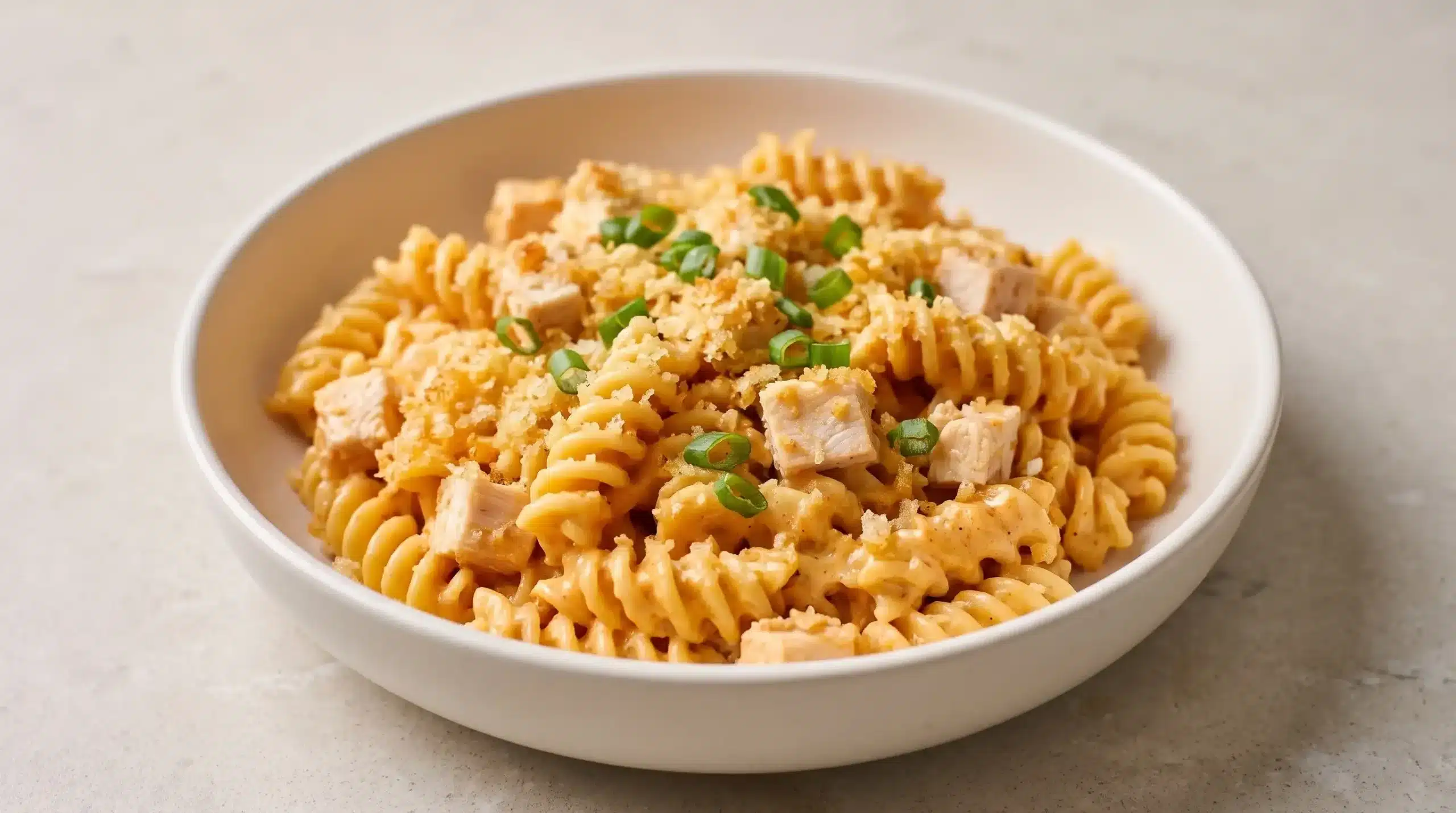
Serve the casserole hot, after a short rest outside the oven. Sliced green onions make a useful finishing garnish, adding fresh onion flavor and a little color to the golden breadcrumb surface.
A side salad or crisp vegetables can provide contrast to the rich cheese sauce. Keeping the accompanying food simple allows the buffalo flavor to remain prominent without making the meal unnecessarily heavy.
For gatherings, portion the casserole directly from the baking dish. A serving spoon that reaches through the panko crust into the chicken and pasta underneath helps distribute the different textures. The topping will be crispest shortly after baking, so finish with the green onions just before serving.
Refrigerating Buffalo Chicken Mac and Cheese Leftovers
Leftover buffalo chicken mac and cheese can be stored in an airtight container in the refrigerator for approximately 3–4 days. Refrigerate promptly, ideally within two hours of cooking, and avoid leaving the casserole at room temperature throughout a gathering.
Keeping the pasta covered limits moisture loss and protects it from absorbing other refrigerator odors. Smaller portions are convenient when only one serving needs reheating.
The breadcrumb topping will soften as it sits against the creamy pasta. That texture change is normal for a refrigerated casserole and does not necessarily mean the filling has lost its flavor. Refrigerated leftovers should be reheated thoroughly before eating.
Reheating and Freezing the Creamy Casserole
Both the microwave and oven can be used to reheat the pasta, although they produce slightly different textures. Frozen portions are convenient for longer storage, especially when the dish has been divided into manageable amounts.
| Storage or reheating method | Best approach | Texture consideration |
|---|---|---|
| Microwave reheating | Warm an individual portion in a microwave-safe dish, stirring where practical, until heated thoroughly. | The topping will generally remain soft. |
| Oven reheating | Heat in an oven-safe dish at a low temperature until the center is thoroughly warmed. | The surface may regain some dryness and texture. |
| Freezing before baking | Use a suitable freezer-safe container and seal securely. | Fresh breadcrumbs added before baking can provide a crisper finish. |
| Freezing after baking | Cool appropriately, portion, and package in airtight freezer-safe containers. | The cheese sauce and pasta may be softer after thawing. |
Frozen buffalo chicken mac and cheese is best used within approximately 2–3 months for the intended quality. Thawing overnight in the refrigerator allows more even reheating. Heat leftovers thoroughly to 165°F (74°C), especially when they contain cooked chicken.
Preparing the Pasta Bake Ahead of Dinner
Advance preparation can make baked buffalo chicken mac and cheese easier to serve when dinner needs to fit around other activities. The chicken may be cooked and diced ahead, while the cheese sauce and rotini can be prepared closer to assembly.
If assembling the casserole before baking, keep it covered and refrigerated. The pasta may continue absorbing sauce during storage, which can affect the consistency when heated later. Consider adding the panko topping shortly before baking to help preserve its dry texture.
Because a refrigerated casserole starts colder than a freshly assembled one, its heating needs may differ. Check that the center is thoroughly hot and the chicken reaches a safe reheating temperature instead of relying only on the appearance of the breadcrumbs.
Creamy Sauce and Golden Crumbs Define the Finished Bake
A bubbling cheese sauce beneath evenly golden panko is the clearest sign that the casserole is approaching its intended finish. The combination depends on al dente rotini, fully cooked chicken, and a sauce that remains fluid enough to coat the pasta through baking.
Balancing those details allows buffalo chicken mac and cheese to retain its creamy center and spicy cheddar flavor without losing the crisp contrast that makes the oven-baked version distinct.
Buffalo Chicken Mac and Cheese Questions About Chicken, Freezing, and Texture
Can rotisserie chicken be used instead of cooked chicken breast?
Plain cooked rotisserie chicken can be substituted if the meat is removed from the bones and diced or shredded. Since seasoning and salt levels can vary, taste the cheese-and-buffalo mixture before adding extra seasoning.
Can the casserole be baked without breadcrumbs?
Yes. Omitting the panko leaves a softer cheese-covered surface, with the same pasta, chicken, and buffalo sauce filling underneath. The topping contributes texture but is not necessary for holding the casserole together.
Why does the cheese sauce thicken as the pasta sits?
Cooked rotini continues to absorb liquid, and the cheese sauce also becomes firmer as it cools. When reheating a portion that seems unusually thick, stirring in a small splash of milk can help restore a creamier consistency.
Can the sauce be prepared without cream cheese?
It is possible to make a cheddar-based sauce using the butter, flour, and milk mixture alone. However, removing the cream cheese changes the richness and texture of the original version, so the sauce may need closer attention as the cheddar melts.
What if the buffalo sauce tastes too strong after mixing?
Before baking, a little additional plain cheese sauce can soften the intensity if extra ingredients are available. Avoid simply adding a large amount of milk, which may thin the mixture excessively. For future batches, begin with a smaller amount of buffalo sauce and increase it in stages.
Can frozen portions go directly into the microwave?
Thawing in the refrigerator first is preferable for more even heating. If reheating from frozen, use a microwave-safe container and appropriate defrost settings, then continue heating until the center reaches 165°F (74°C). Check the middle carefully because dense pasta portions can retain cold spots.
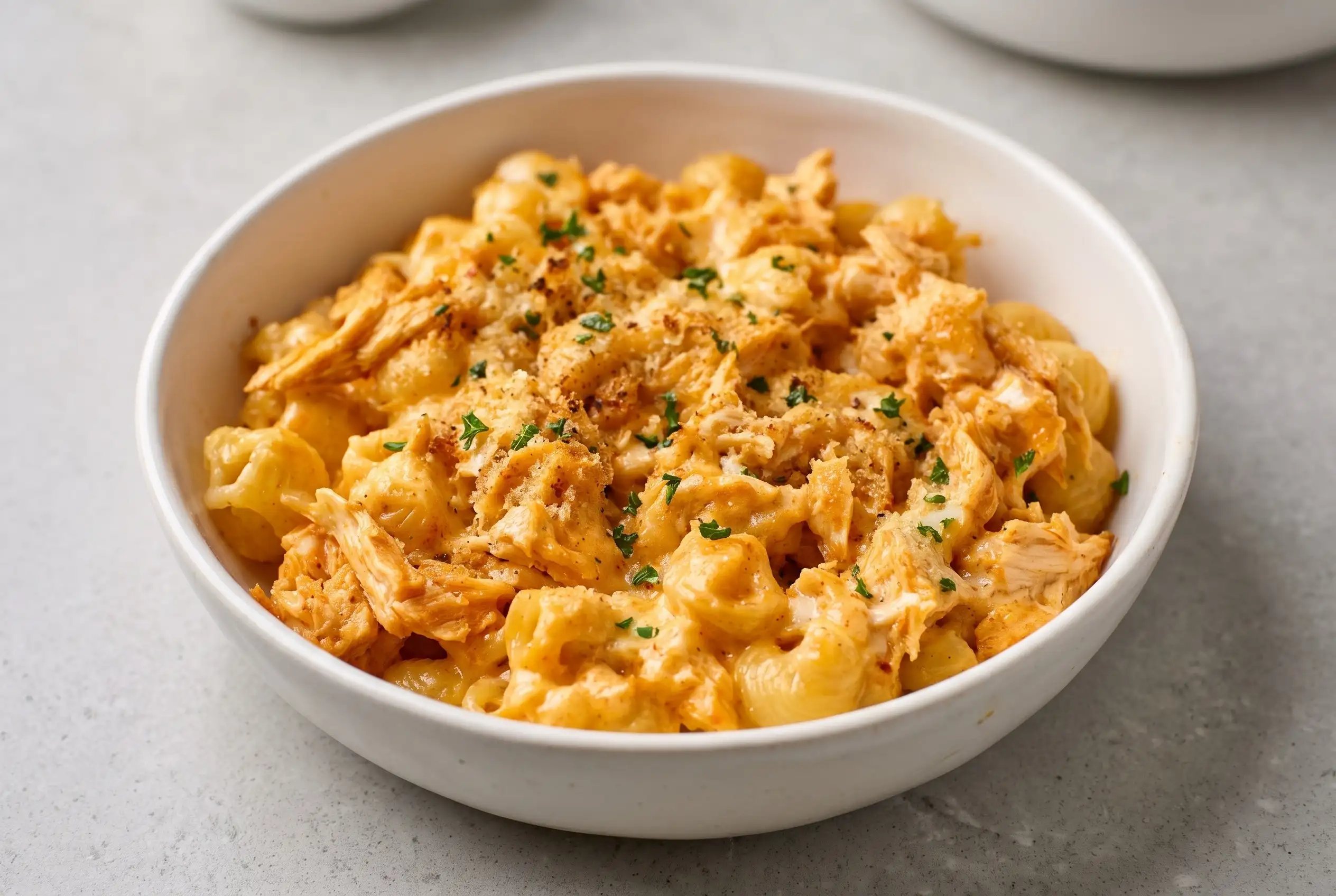
Buffalo Chicken Mac and Cheese with Golden Panko Topping
Ingredients
Method
- Fill a large pot with salted water and bring it to a boil. Add the rotini and cook following the package instructions until al dente. Drain the pasta and reserve it for assembly.
- Place a skillet over medium heat and add the cooked, diced chicken breast. Sprinkle with salt and black pepper, then sauté for 5–7 minutes, stirring occasionally, until the chicken is thoroughly warmed and develops a light golden color.
- Set a saucepan over medium heat and melt the butter. Add the all-purpose flour, whisking continuously to create a lump-free roux.
- Slowly pour in the milk while whisking to incorporate it into the roux. Keep stirring over medium heat until the mixture starts to thicken.
- Stir the cream cheese into the thickened sauce until fully melted. Add the shredded sharp cheddar cheese and buffalo sauce, mixing until the cheeses are incorporated and the sauce has a uniform, creamy consistency.
- Transfer the drained rotini and warmed chicken into the cheese sauce. Fold everything together carefully so the pasta and chicken are coated throughout.
- Preheat the oven to 350°F (175°C). Spoon the buffalo chicken macaroni mixture into a greased baking dish and distribute it in an even layer.
- Scatter the panko breadcrumbs across the surface, covering the pasta mixture evenly.
- Place the baking dish in the preheated oven and bake for 20–25 minutes. The casserole is ready when the sauce bubbles around the edges, the panko develops a golden crust, and the center reaches an internal temperature of 165°F (74°C).
- Take the casserole out of the oven, finish with the sliced green onions, and serve while hot.